Organic Matcha Bioptimal 400 g in Paris: the large pouch of Japanese matcha for the cup and the kitchen
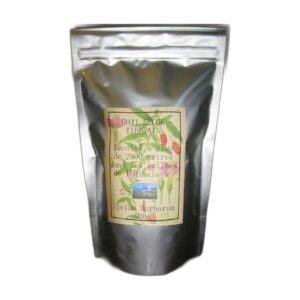
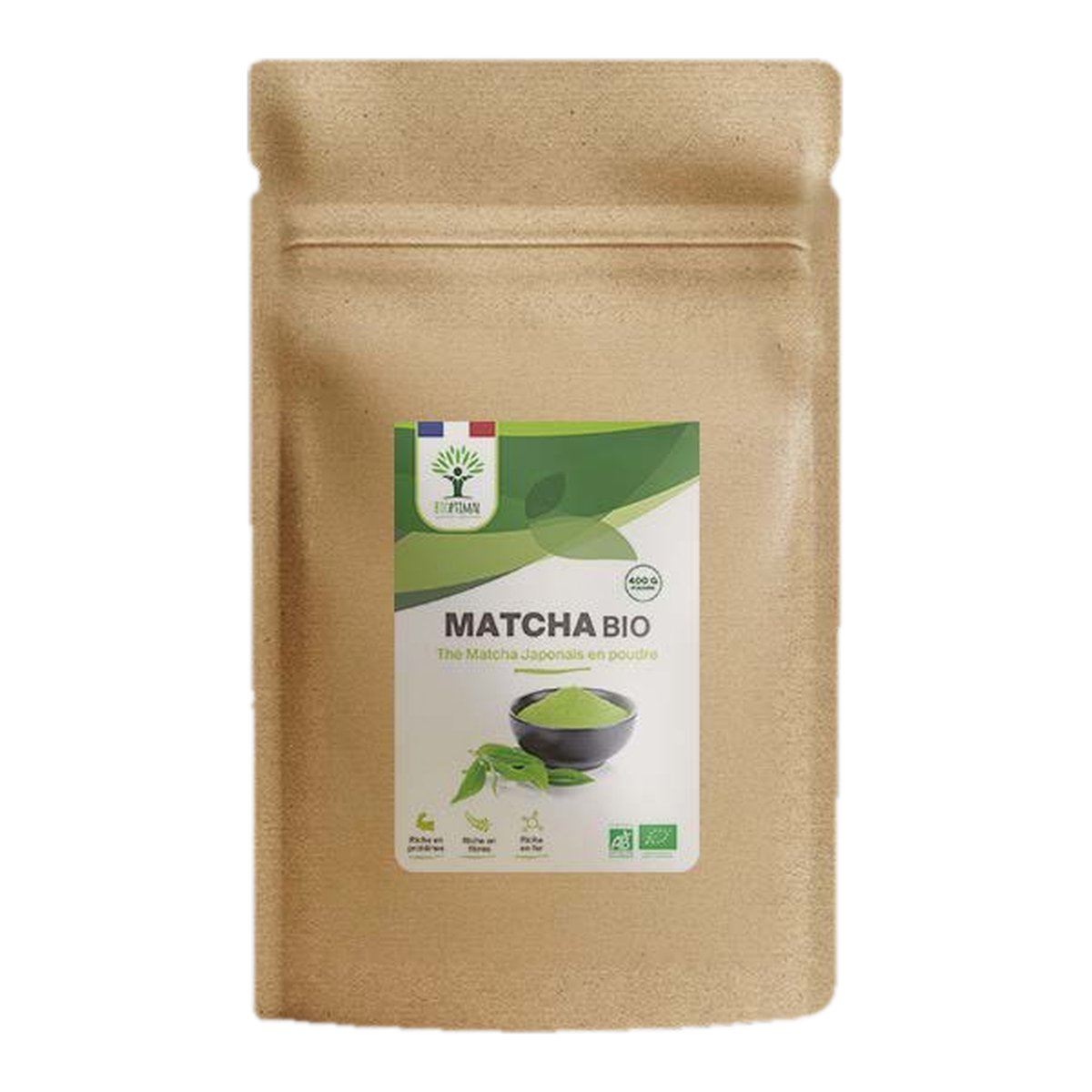
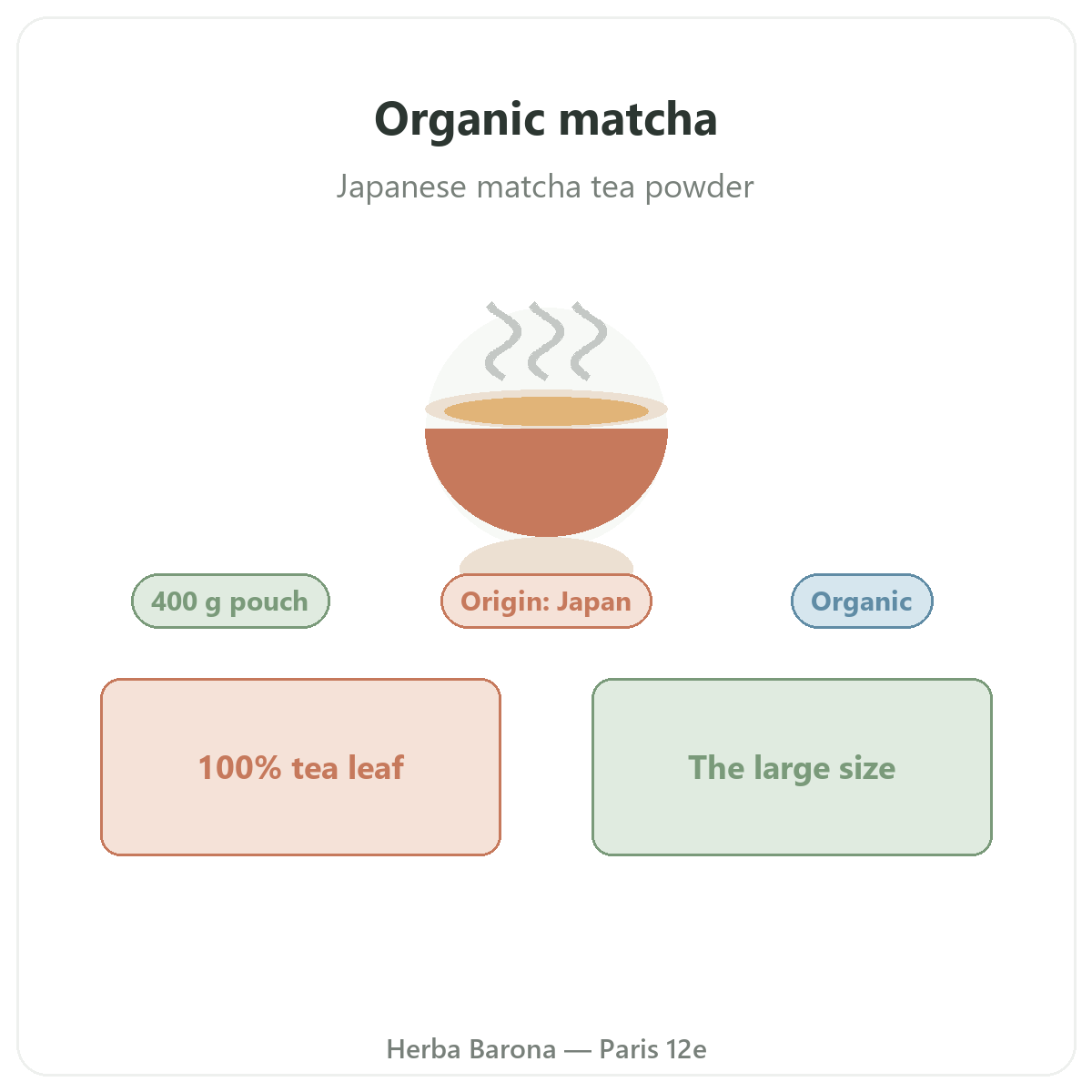
An organic Japanese matcha powder, 100% tea leaf, in a 400 g zip pouch designed for regular use.
For morning bowls, lattes and matcha recipes. Available in Paris at Herba Barona.
The 400 g pouch: who is it for?
The 400 g pouch contains exactly the same powder as Bioptimal’s smaller sizes: only the container changes. It is meant for people who already drink matcha almost every day, for households who share it, and for those who cook with it.
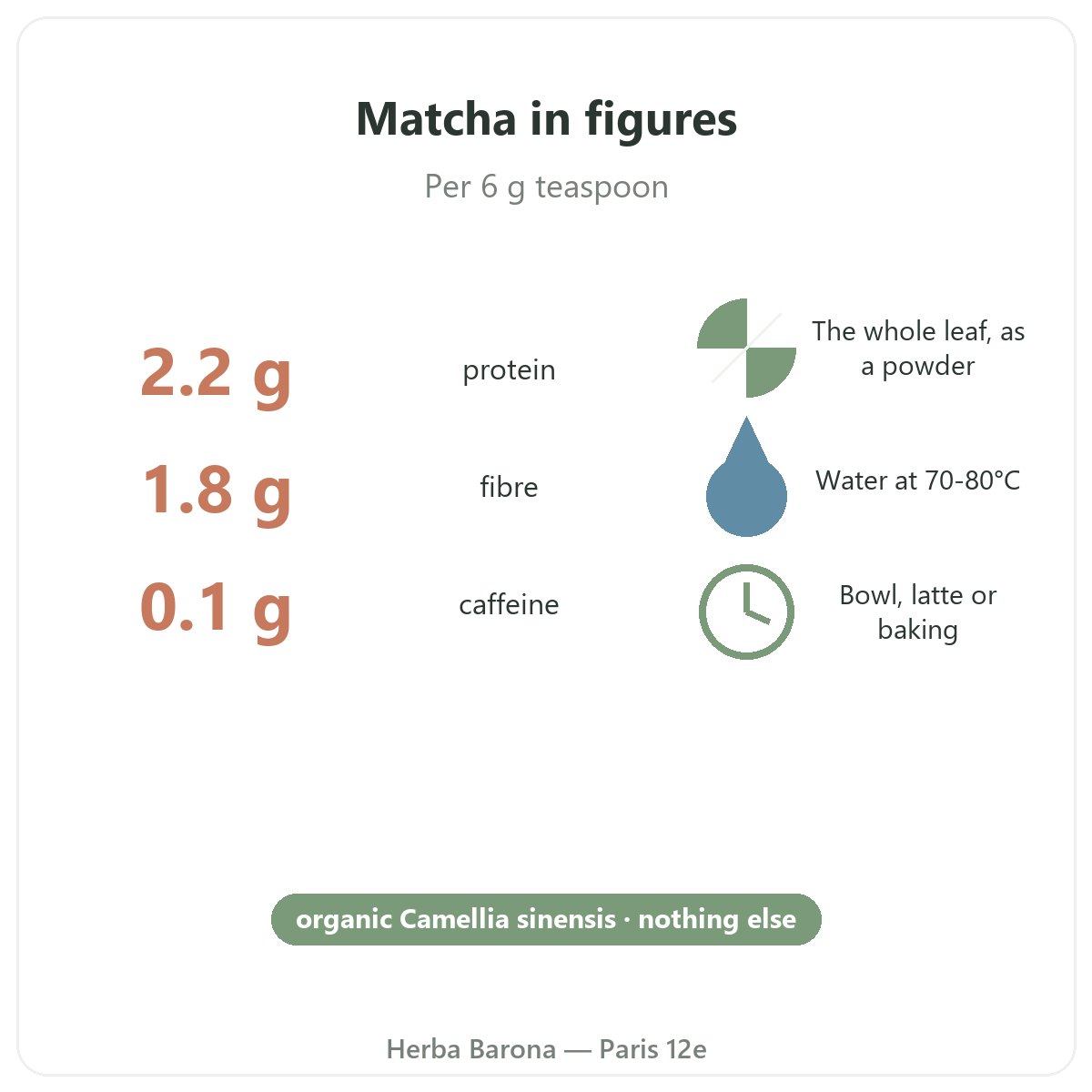
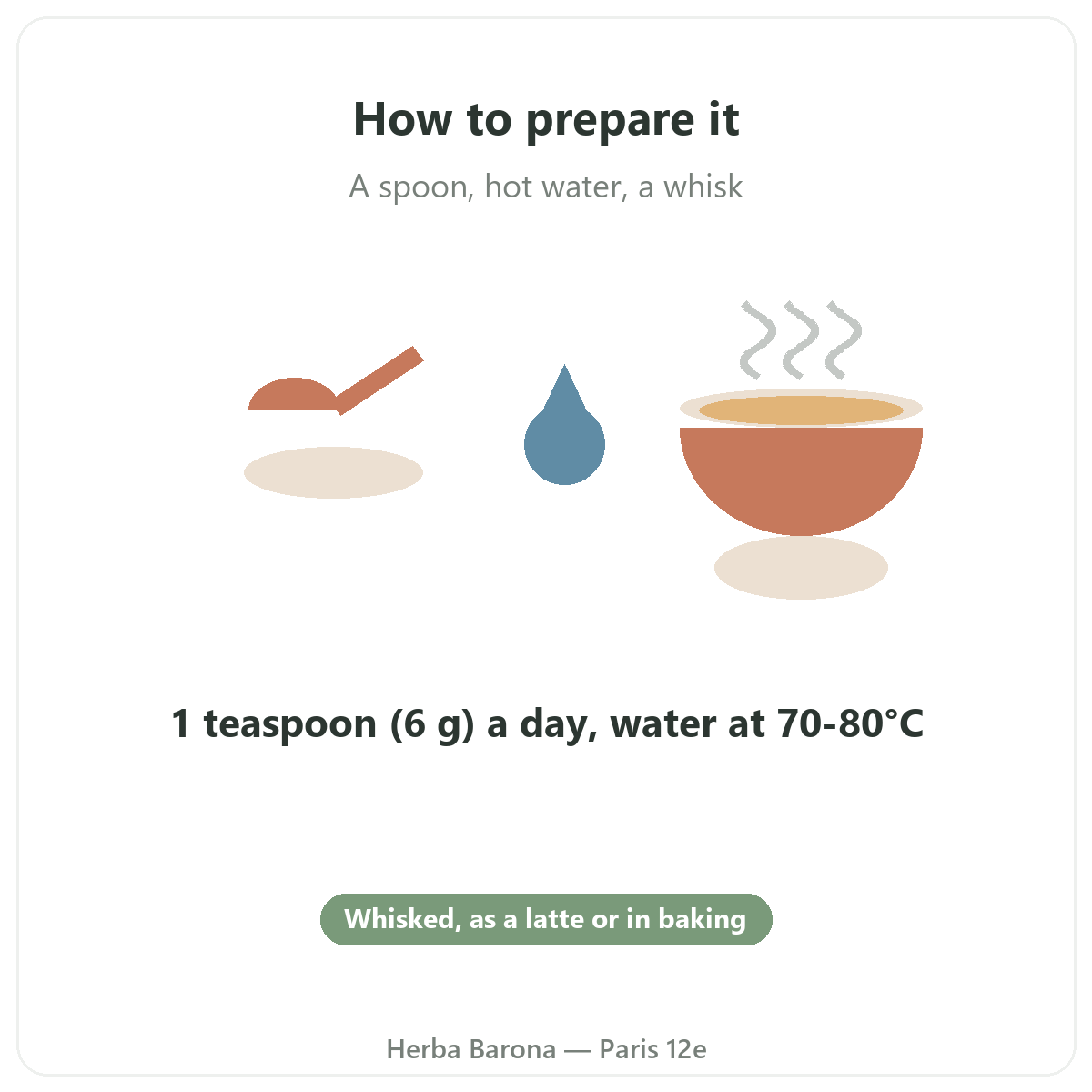
Bioptimal suggests one teaspoon, about 6 g, a day. At that rate, 400 g is a little over sixty teaspoons, so more than two months of bowls or lattes for one person. For a very first try, a small size makes more sense; the 400 g takes over once matcha has become a habit.
Organic matcha from Japan, packed in France
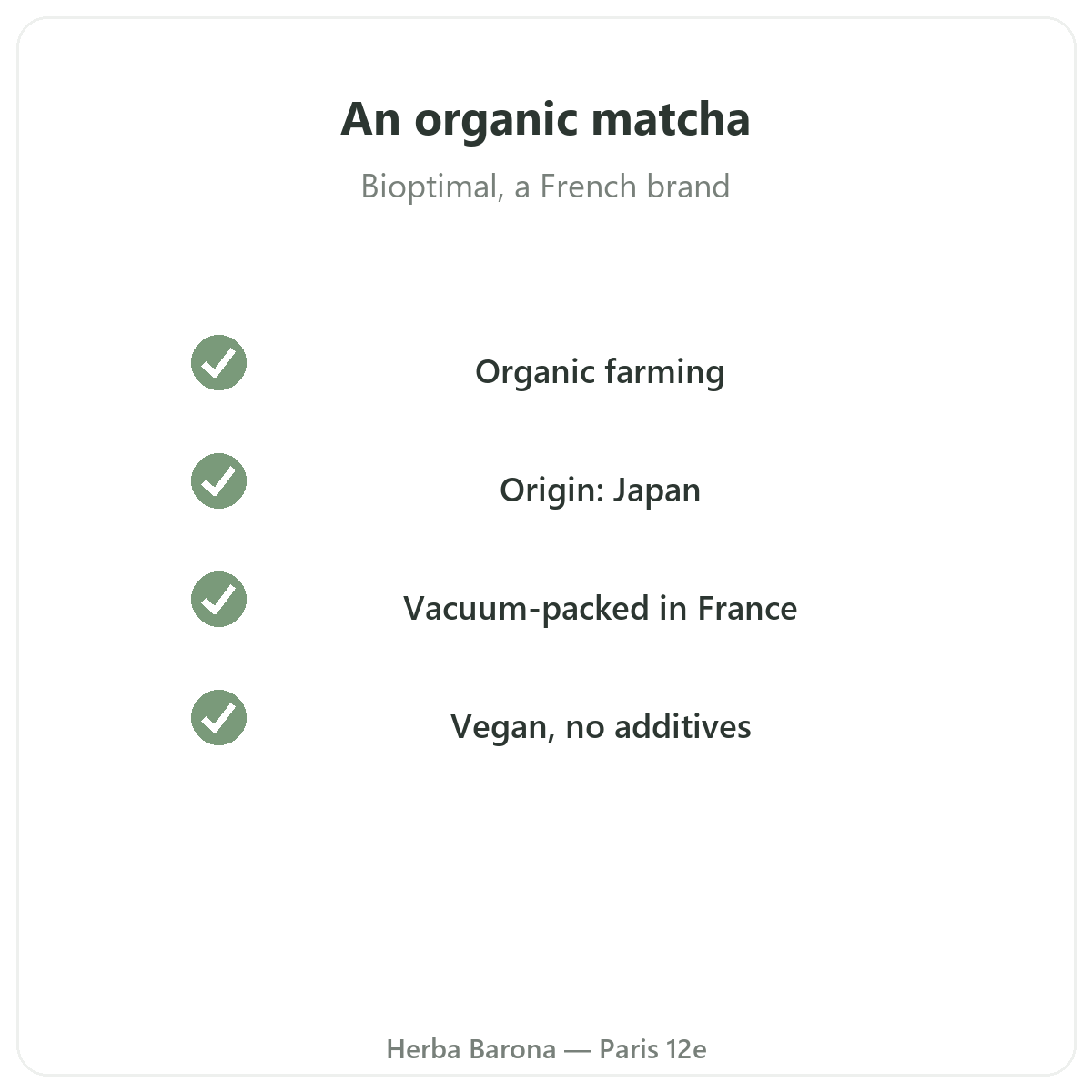
The ingredient list fits on one line: 100% matcha tea from organic farming, Camellia sinensis, the plant behind every tea. Bioptimal states a Japanese origin, from the Uji region near Kyoto, and packing in France, vacuum-sealed, in a kraft pouch with a zip closure.
Bioptimal is a French brand of organic superfoods, herbal teas and supplements, based in Drefféac, in Loire-Atlantique. It describes this matcha as vegan, additive-free, GMO-free and gluten-free, and presents it as an everyday matcha for drinks, lattes, smoothies and baking; a separate ceremonial-grade reference is meant for whisking and drinking pure.
1191: the monk Eisai brings powdered tea to Japan
Matcha was born in China. Under the Song dynasty, tea leaves were ground into powder and whisked in hot water. In 1191, the Japanese monk Eisai returned from his studies in China with tea seeds and this way of preparing tea; in 1211 he wrote the Kissa Yōjōki, one of the first Japanese books devoted to tea.
According to tradition, Eisai gave seeds to the monk Myōe, who planted them near Kyoto. From there, cultivation spread to Uji, south of the city. In the 16th century, the tea master Sen no Rikyū gave the tea ceremony its pared-down form: a bowl, a bamboo whisk and a few precise gestures.
Tencha, shade and stone mill: what makes a matcha
Matcha is not simply ground green tea. Traditionally, the tea bushes are covered for a few weeks before harvest: deprived of part of the light, the leaves become more tender, a deeper green and milder in taste. They are picked, steamed to keep their colour, then dried.
The stems and veins are then removed; the resulting leaf is called tencha, the raw material of matcha. It is ground, traditionally between two slowly turning granite millstones. Bioptimal does not detail the process for its own batch; its technical sheet describes a fine, light green powder with a grassy taste.
In the kitchen: what a large pouch makes possible
The 400 g is the cook’s size. Bioptimal itself mentions smoothies, yoghurts, ice creams, cakes and toppings. In baking, matcha colours and flavours financiers, madeleines, shortbread or crêpes, and pairs very well with white chocolate, sesame, raspberry and lemon. Sift it with the flour and avoid long, very hot baking, which dulls the green.
To vary your green powders, Bioptimal’s organic moringa in 300 g slips into the same smoothies, and our cocoa range completes the baking cupboard. At our shop in Paris 12th, it is often keen bakers who leave with the large pouch of matcha.
Preparing a whisked bowl or a matcha latte
For a traditional bowl, Bioptimal recommends one teaspoon of powder, hot water between 70 and 80 °C, never boiling, and a bamboo whisk, the chasen. Whisk briskly in zigzags rather than circles until a fine foam forms. For a latte, dissolve the powder in a little hot water, whisk, then top up with hot dairy or plant milk.
Matcha naturally contains caffeine: the label states 1.2 g per 100 g, i.e. 0.1 g per 6 g teaspoon. Bioptimal does not recommend it for children, teenagers, or pregnant or breastfeeding women. If you watch your caffeine intake, count matcha along with the day’s coffee and tea.
Storing 400 g of matcha properly
Matcha is a delicate powder: light, heat, moisture and air gradually take away its colour and aroma. Bioptimal recommends a cool, dry place away from UV light; its technical sheet specifies below 20 °C, away from light and moisture, and advises against freezing. Press the air out before closing the zip and keep the pouch in a cupboard, away from the oven and the kettle.
A practical tip: fill a small opaque tin for the week and keep the large pouch tightly closed. Unopened, the product keeps for 24 months after production according to the technical sheet. At our shop in Paris 12th, we keep our pouches away from the window and direct light.
Frequently asked questions
Does the 400 g pouch contain the same matcha as the smaller sizes?
Yes. Bioptimal sells the same organic matcha powder in several sizes; the 400 g simply holds more, in the same vacuum-packed kraft zip pouch.
How much should I use?
Bioptimal suggests one teaspoon, about 6 g, a day, in a drink or in a sweet or savoury recipe.
Does matcha contain caffeine?
Yes, naturally: 1.2 g per 100 g according to the label, i.e. 0.1 g per 6 g. It is not recommended for children, teenagers, or pregnant or breastfeeding women.
Where can I buy this matcha in Paris?
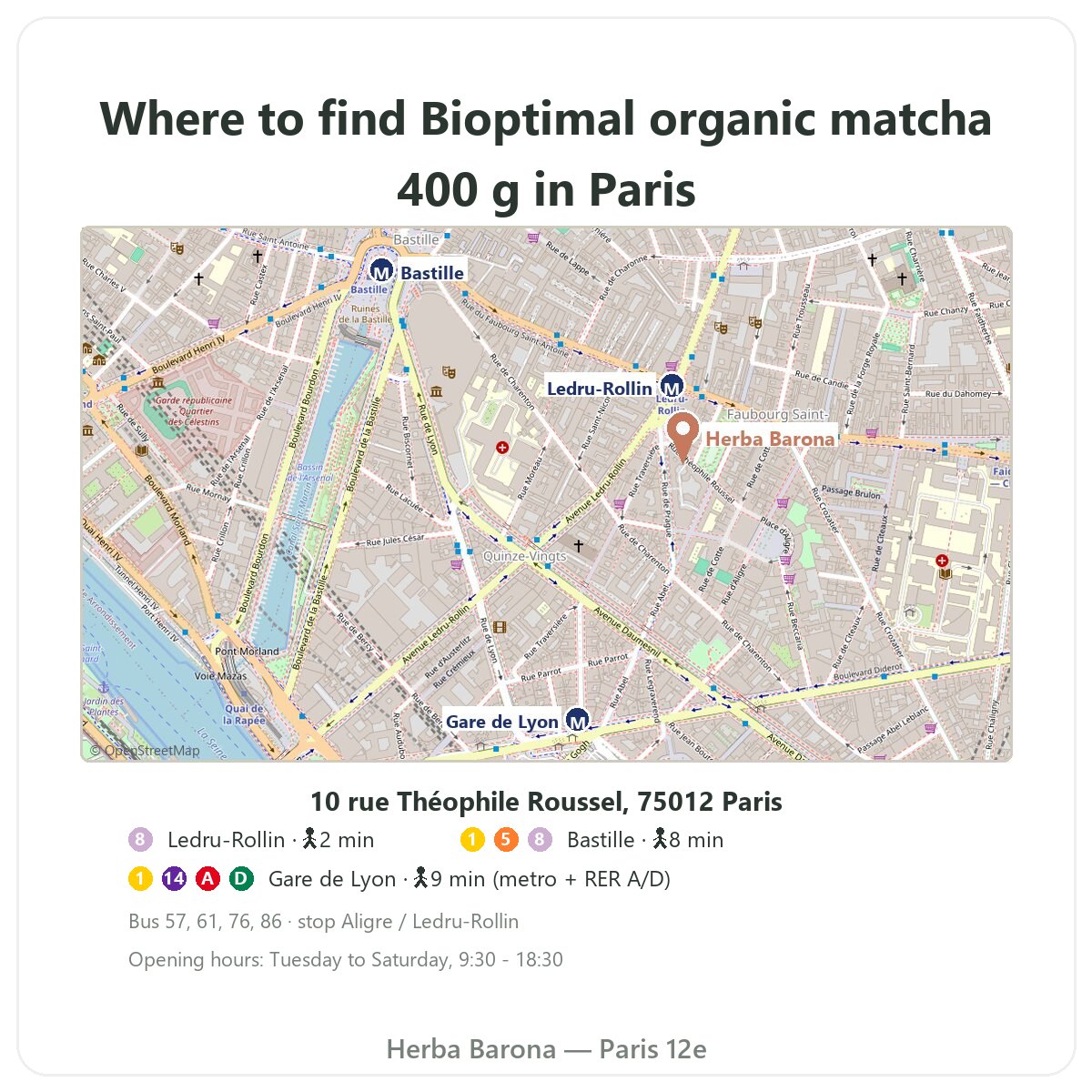
At our Herba Barona shop in Paris 12th, 10 rue Théophile Roussel, between Ledru-Rollin (line 8) and Bastille (lines 1, 5, 8) metro stations, Tuesday to Saturday, 9:30 am to 6:30 pm.
Herba Barona’s tip — with a large pouch, always scoop your matcha with a perfectly dry spoon and press the air out before closing the zip. For baking, add the powder to the dry ingredients and sift it: it will not form any lumps in the batter.