Organic Matcha Tea Bioptimal 50 g in Paris: the discovery size of Japanese powdered green tea
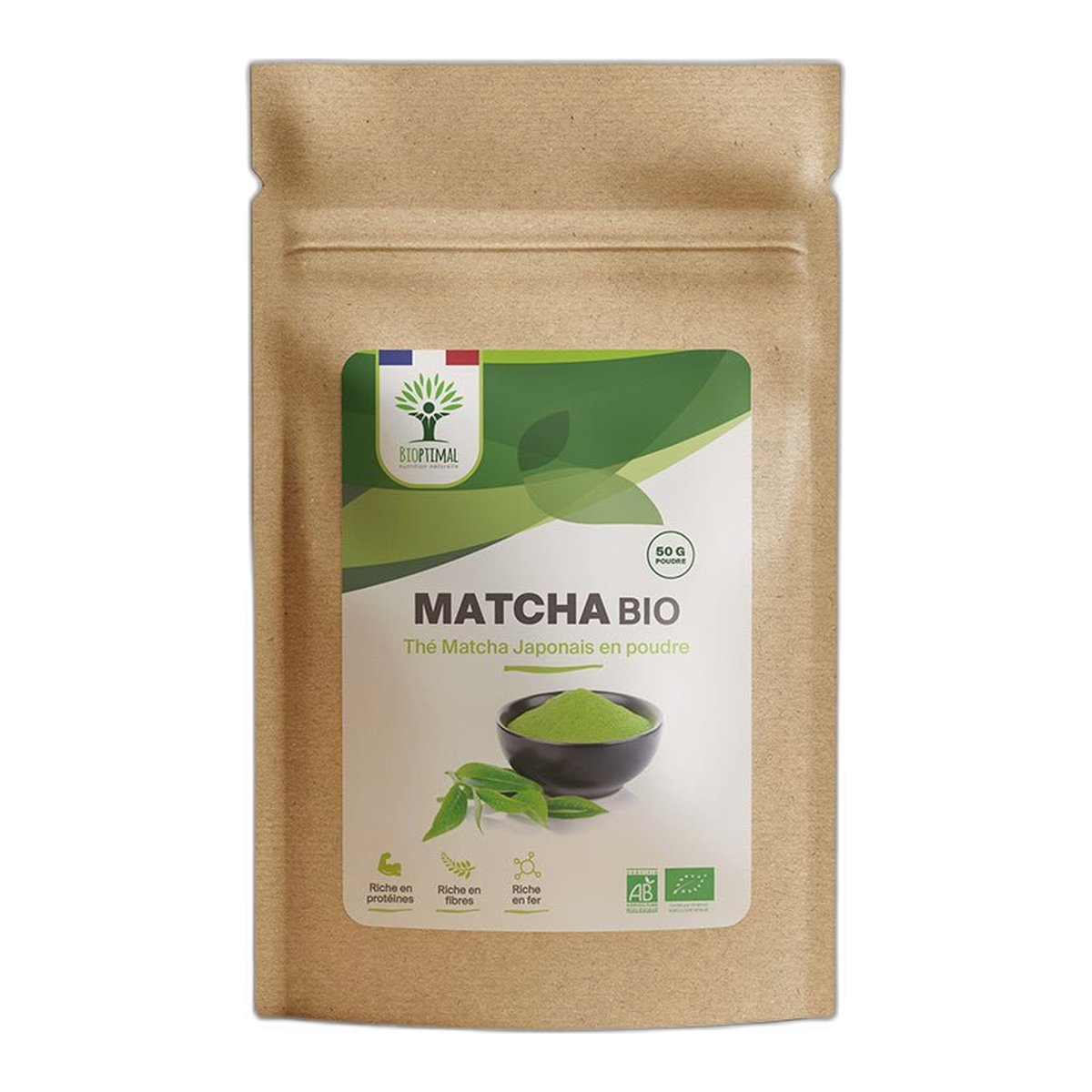
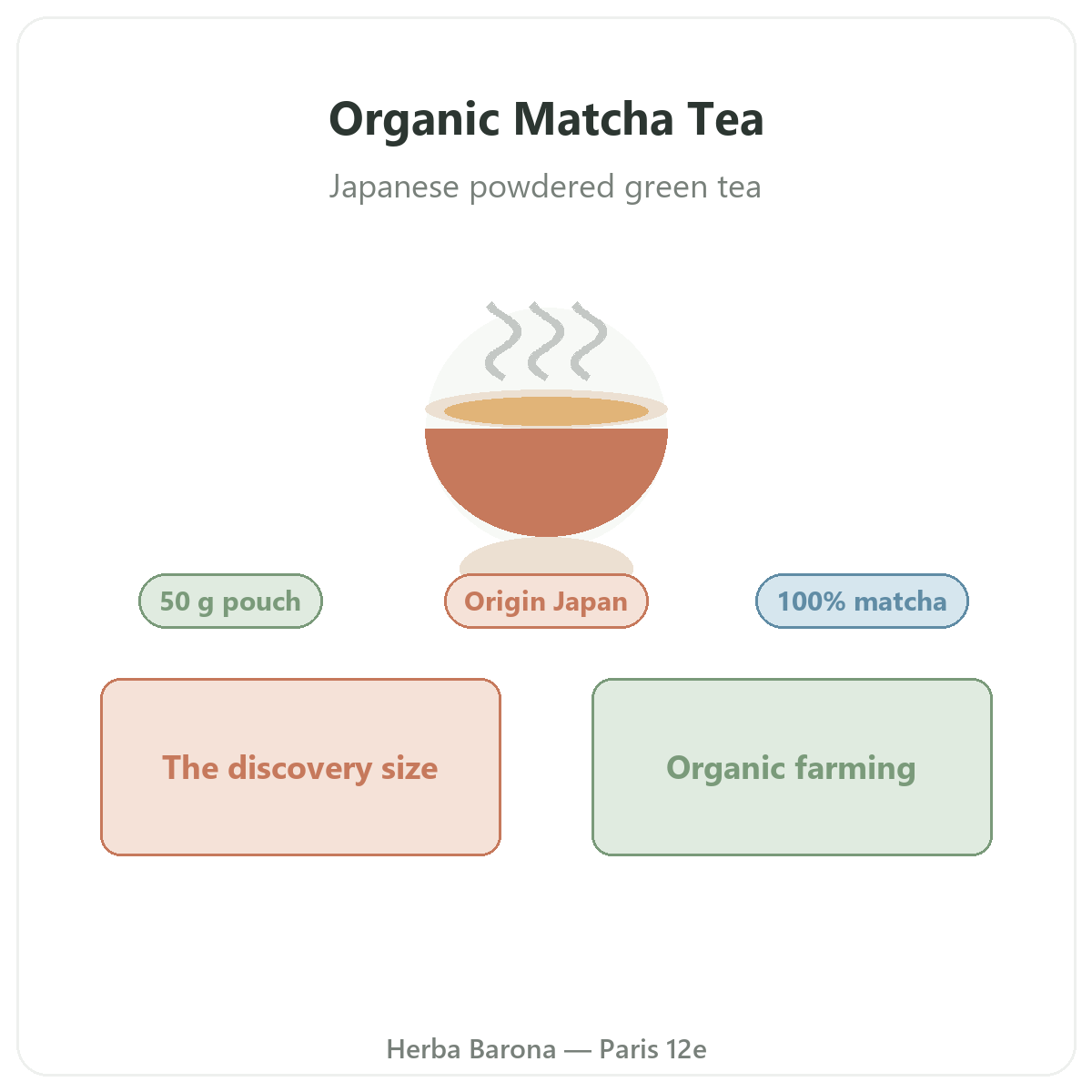
Organic matcha tea from Japan, ground into a fine powder and packed in France by Bioptimal, in a 50 g zip pouch to try it out.
Whisk it in a bowl, make a latte or bake with it. Available in Paris at Herba Barona.
Matcha, a tea you drink whole
The Japanese word matcha literally means “powdered tea”. That is the whole difference with an ordinary green tea: instead of steeping leaves and throwing them away, you whisk the leaf itself, ground into a very fine powder, into water. In the bowl, you drink the entire leaf.
Matcha comes from the same plant as every tea, Camellia sinensis. Bioptimal explains that its leaves are picked very young to keep their emerald colour, then dried and ground into a very fine powder. This way of drinking tea reached Japan at the end of the 12th century, brought from China by Buddhist monks, and the Uji region near Kyoto has been one of the most renowned for it ever since.
What Bioptimal says about its matcha
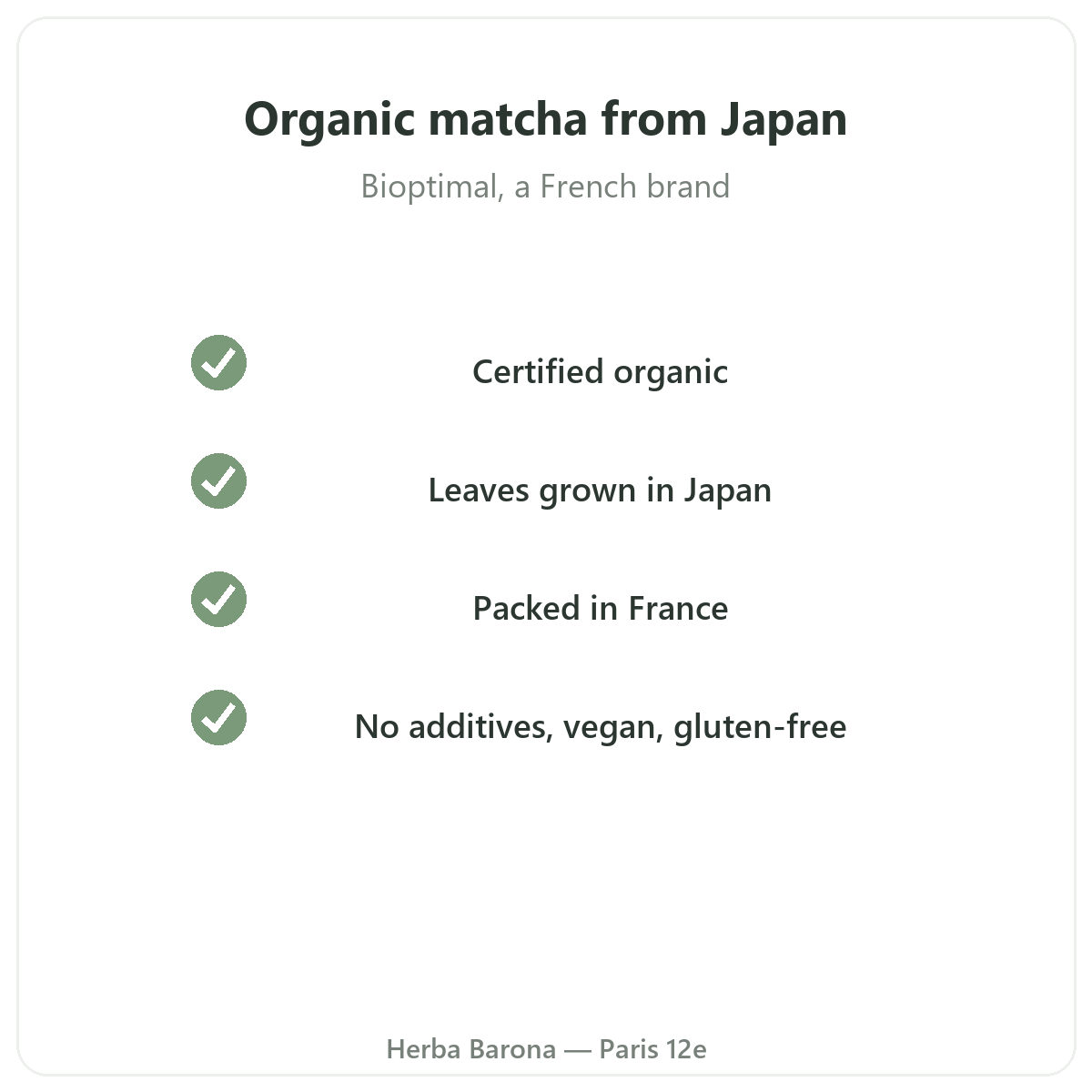
The ingredient list fits on one line: 100% organic matcha tea, Camellia sinensis, origin Japan. Bioptimal states on its website that this matcha comes from the Uji region in Kyoto and that it is certified organic; the pouch carries the French AB logo and the EU organic leaf. It is grown and ground in Japan, then packed in France, with no additives, vegan and gluten-free according to the brand.
Bioptimal is a French brand of organic superfoods, herbal teas and food supplements, based in Drefféac, in Loire-Atlantique. In our shop in Paris 12th, you will find its organic moringa powder next to this matcha, in the same kraft pouch.
Shade growing and stone mills: the matcha tradition
Traditionally, tea bushes grown for matcha are covered for a few weeks before harvest. With less light, the young leaves become more tender and take on a deep green colour. After picking, the leaves are steamed, dried and stripped of stems and veins, then ground slowly between stone mills into an ultra-fine powder.
These steps describe the classic Japanese method. Bioptimal does not detail the process of its own matcha beyond picking young leaves, drying them and grinding them very finely, so we present them as background on what matcha is, not as a technical sheet for this pouch.
How to prepare matcha with a whisk
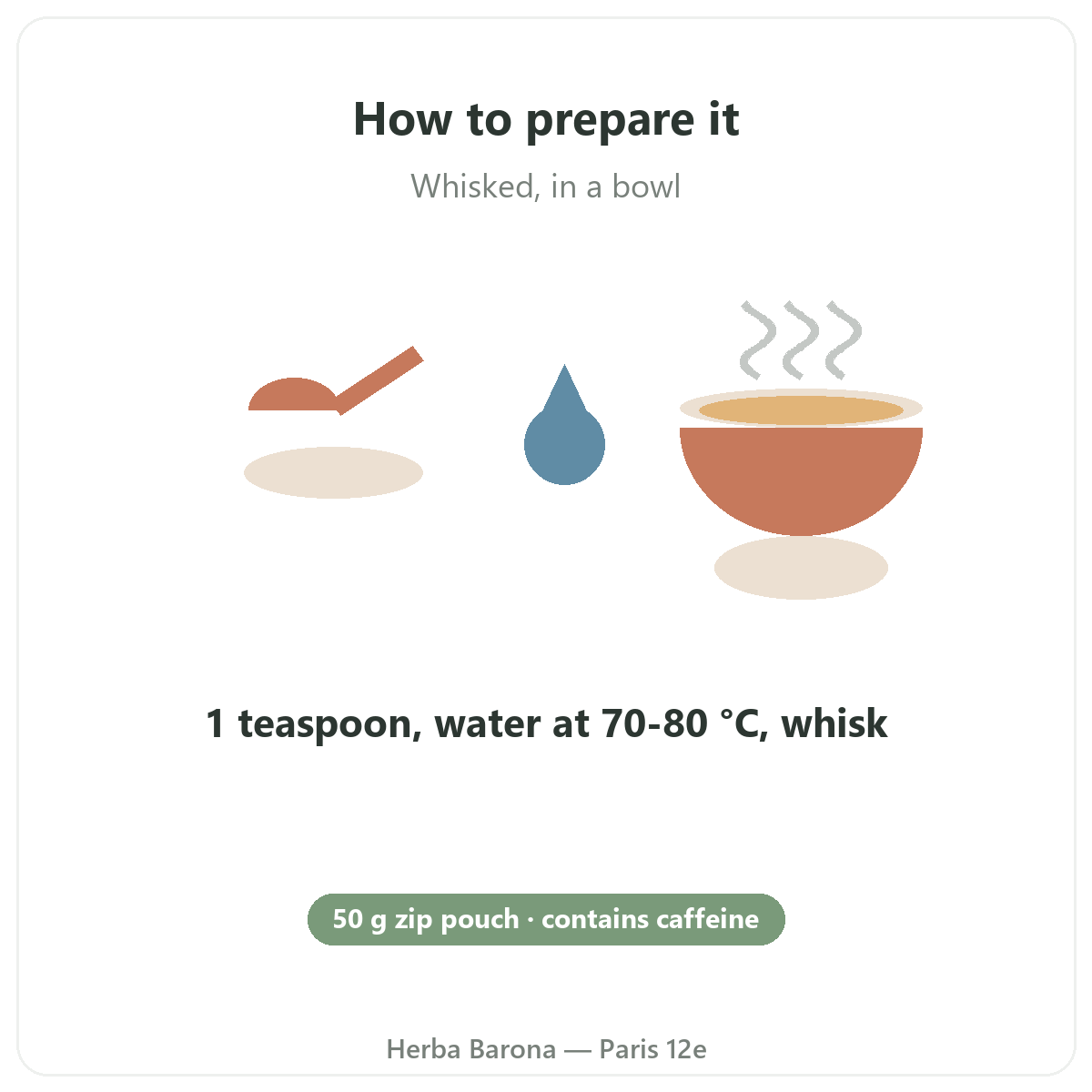
Bioptimal recommends the Japanese method: put one teaspoon of powder in a bowl, add hot water at 70-80 °C, never boiling, then whisk with a bamboo whisk, the chasen, in quick zigzag movements until a light foam forms. Water that is too hot or too plentiful brings out bitterness; a smaller amount of gentler water gives a rounder cup.
A chasen is not essential. According to Bioptimal, a small electric whisk, a milk frother or a simple hand whisk will do; a spoon also works, although the foam will be less fine. For a quick version, simply stir the powder into a cup of hot water.
Latte, baking and smoothies: matcha in the kitchen
This matcha is designed for everyday, versatile use. The best known is the matcha latte: whisk the powder into a little hot water, then top up with hot or cold milk, dairy or plant-based. In baking, a spoonful turns a cake, biscuits or a cream bright green, with a hint of bitterness that balances the sugar. Bioptimal also suggests yoghurts, smoothies, ice cream and savoury dishes.
You will also find matcha in ready-to-eat products, such as our matcha collagen bar. For a green smoothie, it pairs easily with organic moringa powder.
Taste, caffeine and the 50 g pouch
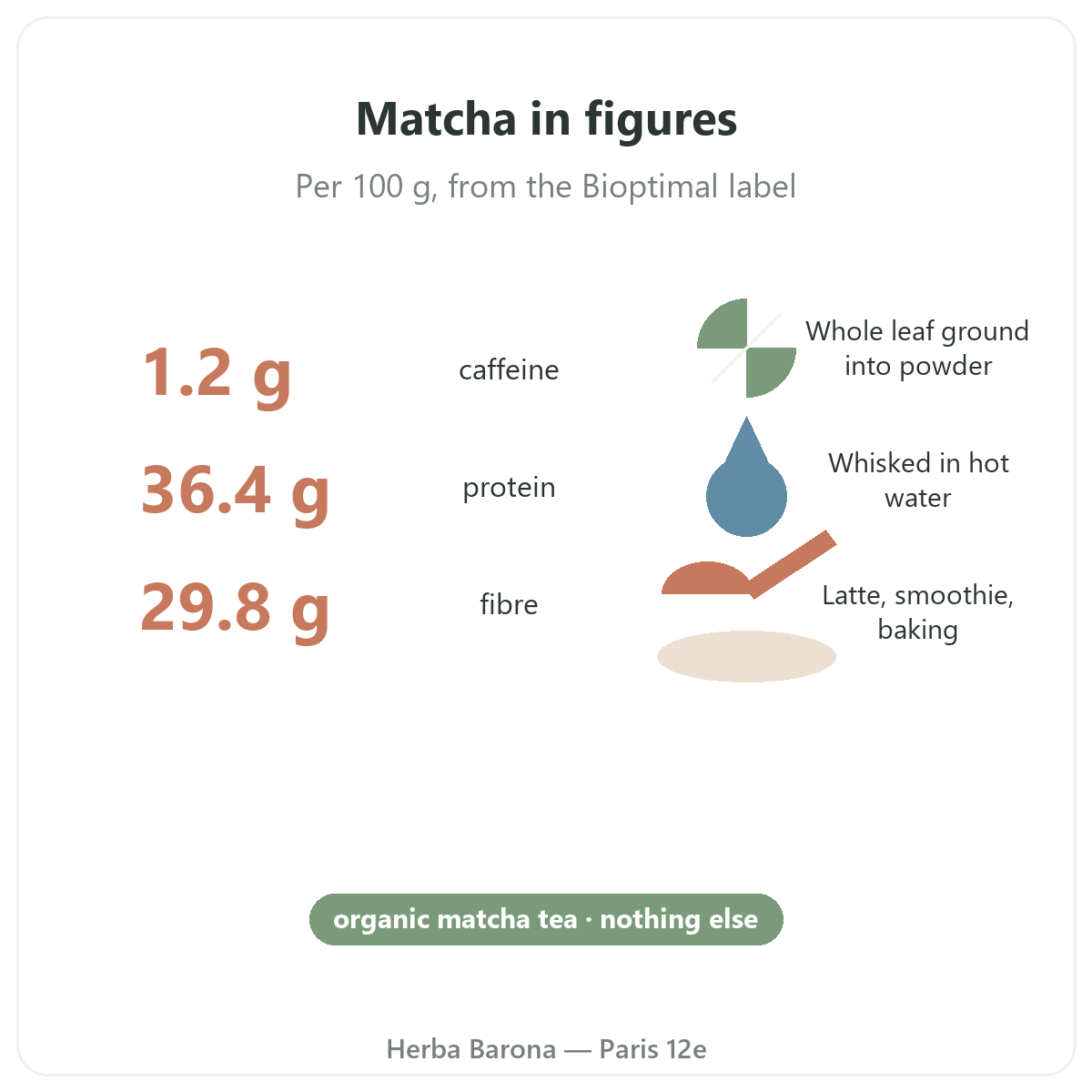
Matcha tastes vegetal, like fresh grass, slightly bitter if the water is too hot, with a round umami note. Like all tea, it naturally contains caffeine, also called theine: 1.2 g per 100 g according to the Bioptimal label. Tea leaves also contain L-theanine, an amino acid also sold on its own, such as our L-theanine. Because of the caffeine, the brand advises against it for children, teenagers and pregnant or breastfeeding women.
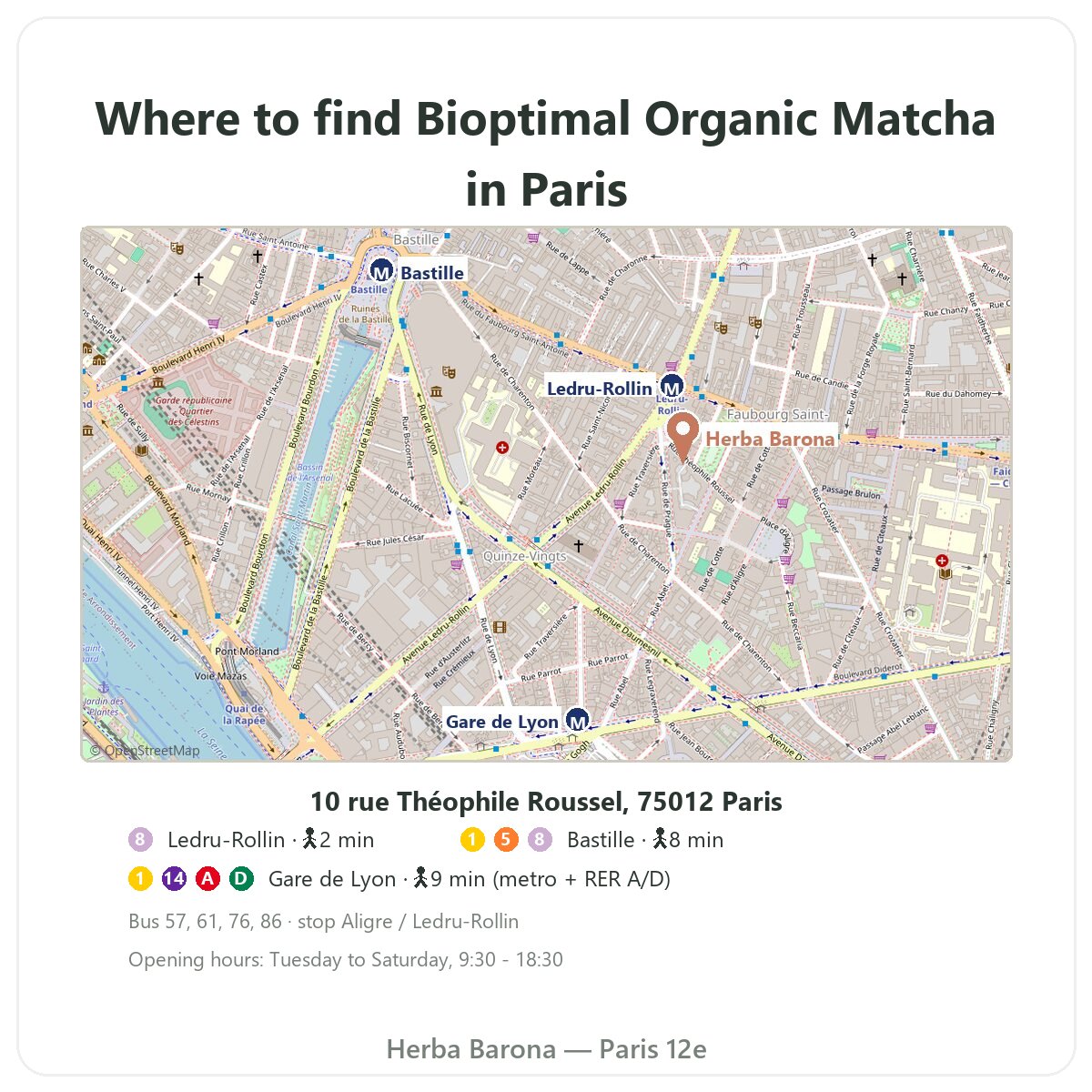
The 50 g pouch is the smallest size in the Bioptimal matcha range: the right choice to discover the taste and learn the whisking technique before moving to a larger pouch. Close the zip after each use and keep it somewhere cool and dry, away from UV light. You will find it in our shop in Paris 12th, at 10 rue Théophile Roussel, two minutes from Ledru-Rollin metro station.
Frequently asked questions
Where does this matcha come from?
The tea is grown in Japan; Bioptimal names the Uji region in Kyoto. The powder is then packed in France by the brand, in a kraft zip pouch.
Does matcha contain theine?
Yes. Theine and caffeine are the same molecule. The Bioptimal label states 1.2 g of caffeine per 100 g of powder. It is not recommended for children, teenagers or pregnant or breastfeeding women.
Do I need a bamboo whisk?
No. The chasen gives the finest foam, but a hand whisk, a milk frother or even a spoon will do. What matters most is water at 70-80 °C, never boiling.
Where can I buy organic matcha in Paris?
At Herba Barona, 10 rue Théophile Roussel, Paris 12th, Tuesday to Saturday from 9:30 am to 6:30 pm, near Ledru-Rollin (line 8) and Bastille (lines 1, 5, 8) metro stations. You can also order online and collect it in store.
Herba Barona’s tip — for your first matcha, use less water than you think and water that has stopped simmering. A bowl of 70 to 80 ml, whisked briskly, gives a rounder taste and a finer foam than a large mug of very hot water.