Bioptimal Organic Matcha Tea 150 g in Paris: the everyday size, one bowl a day
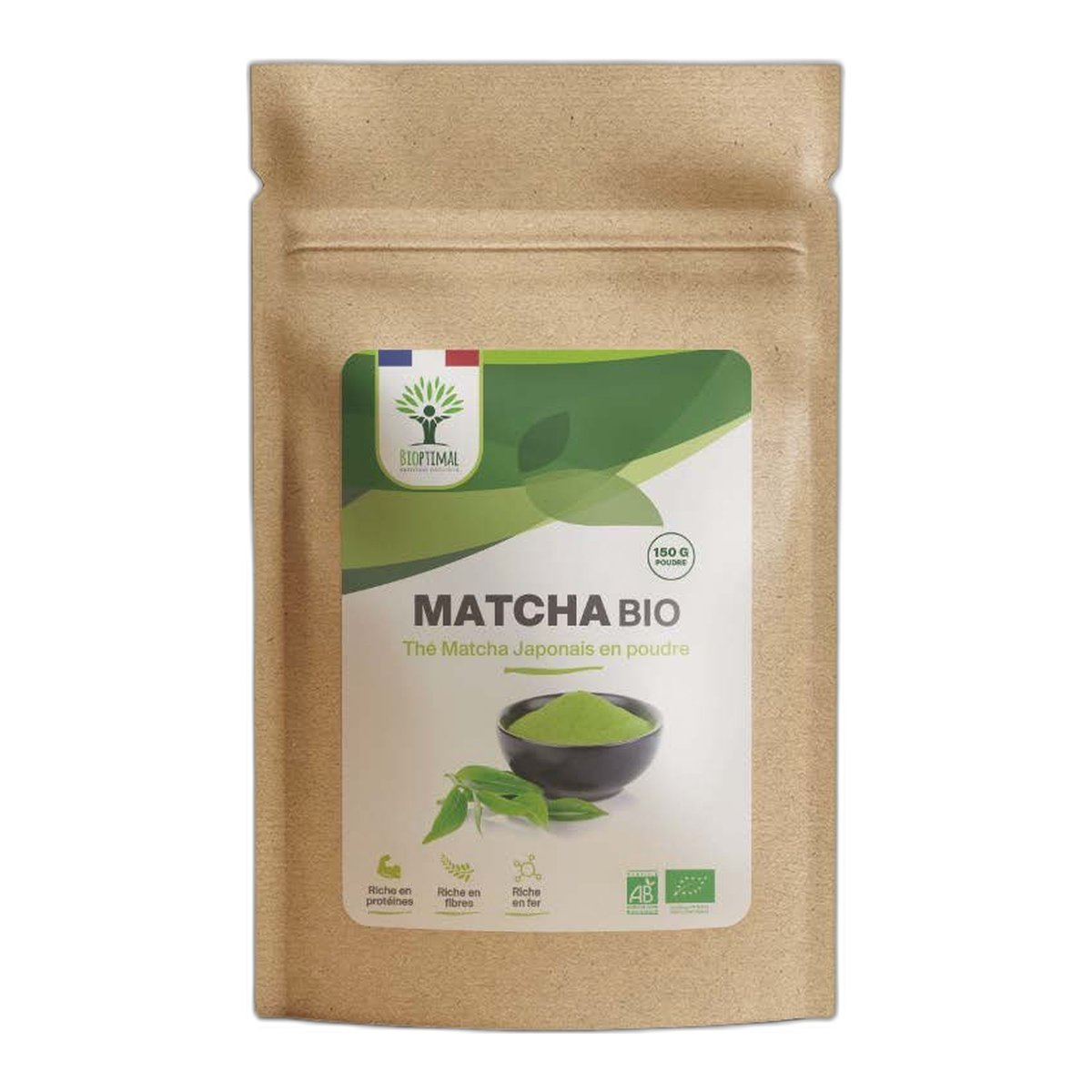
An organic Japanese green tea ground into a fine powder, from the Uji area near Kyoto, in a 150 g kraft zip pouch.
The size designed for a bowl of matcha every day. Available in Paris at Herba Barona.
150 g: the size of a habit
The 150 g pouch is meant for people for whom matcha has become a daily ritual: the morning bowl, the afternoon break, the weekend latte. Bioptimal offers the same powder in several sizes; this one sits between the small discovery pouch and the large formats designed for heavy use, especially in the kitchen.
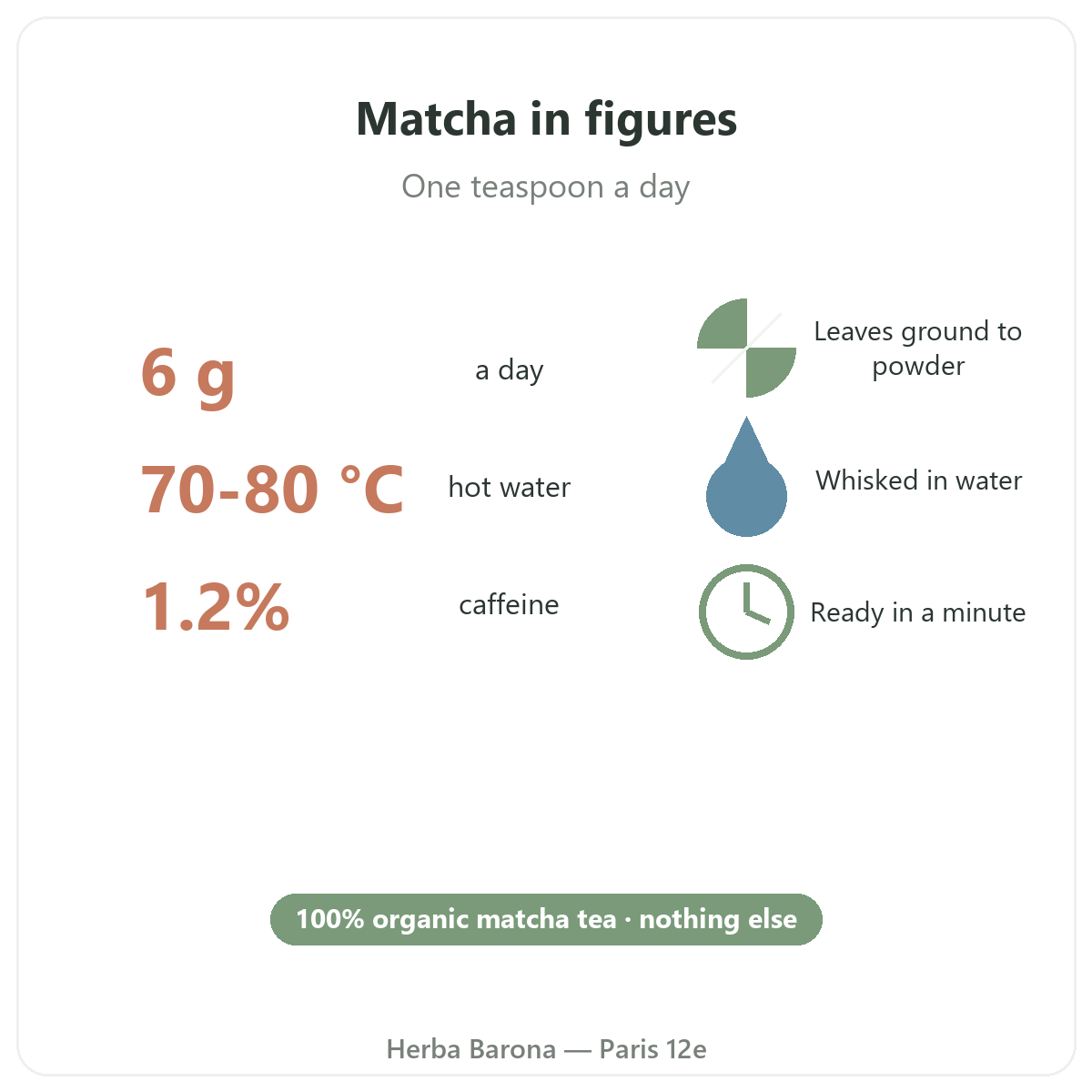
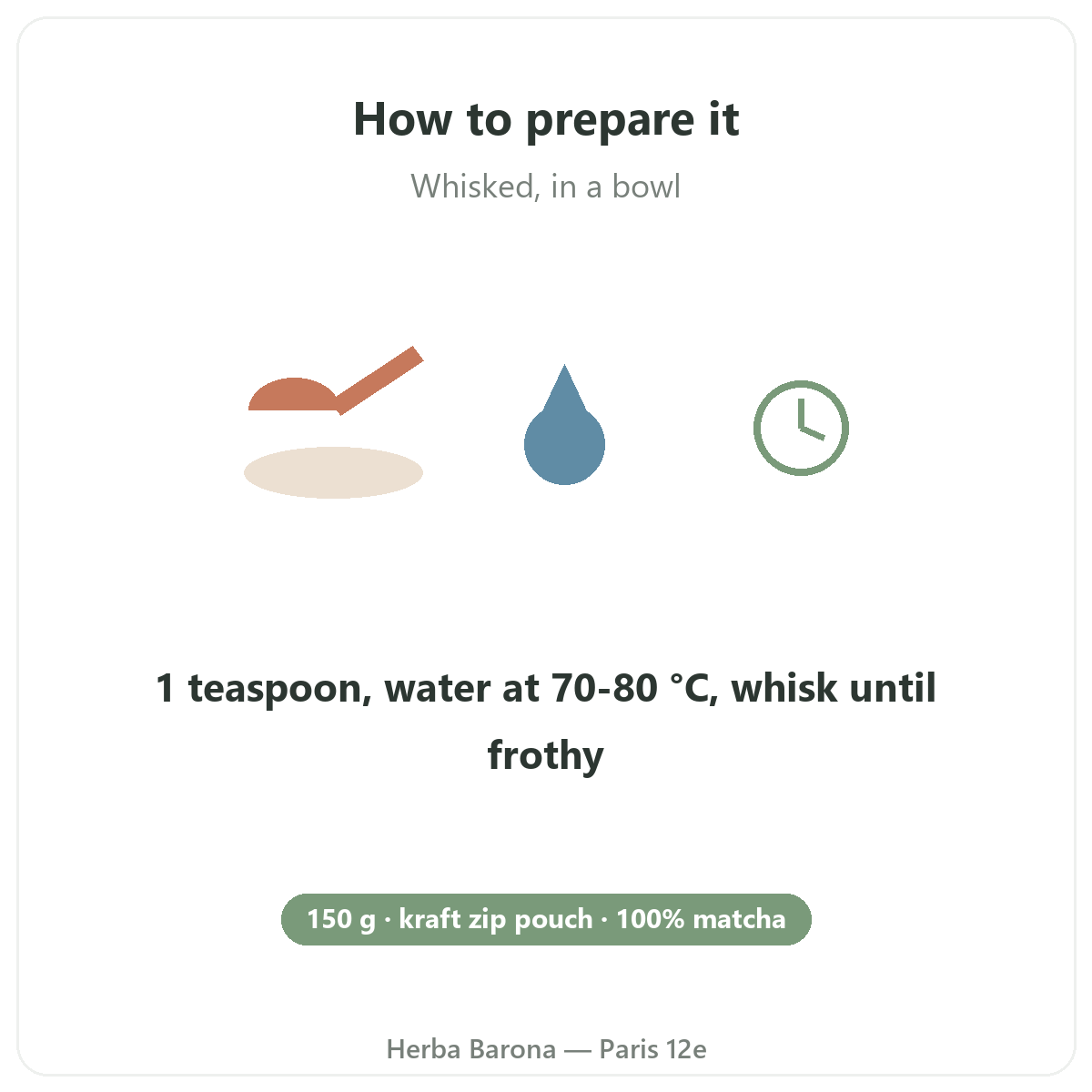
Bioptimal recommends one teaspoon a day, mixed into a drink or a sweet or savoury recipe, so the pouch lasts several weeks of this ritual and is finished while the powder keeps its bright colour. The kraft pouch closes with a zip, and Bioptimal states that it is vacuum-packed in France. At our shop in Paris 12th, this is often the size people choose once they have adopted the taste of matcha.
Organic matcha from Uji, packed in France
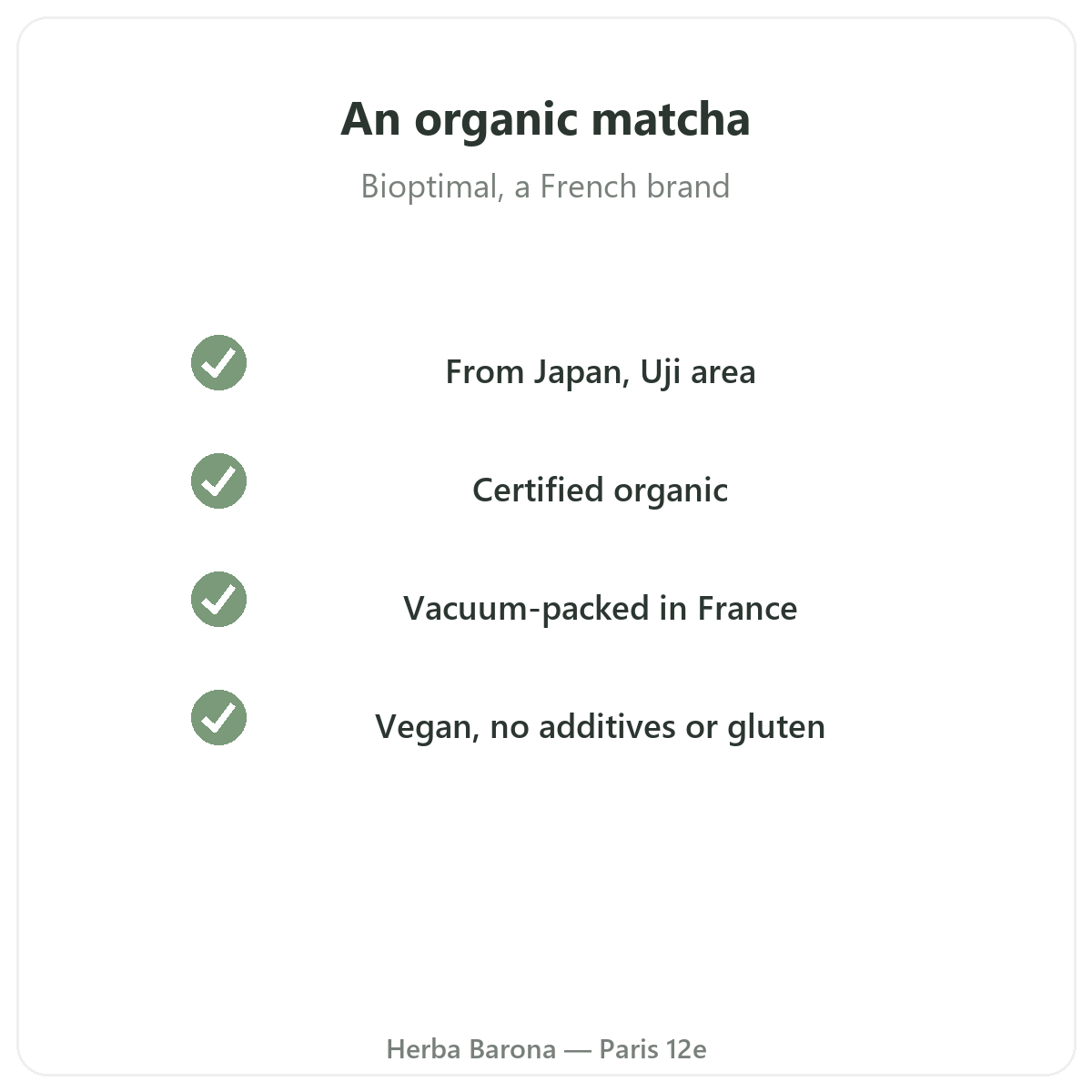
Bioptimal gives a precise origin: Uji, in the Kyoto area of Japan, a small town associated with tea since the Middle Ages. The ingredient list fits in one line: 100% organic matcha tea, Camellia sinensis. The pouch carries the French AB and EU organic logos, and Bioptimal describes the powder as vegan, additive-free, GMO-free and gluten-free.
Bioptimal is a French brand of organic superfoods, food supplements and herbal teas. It publishes a technical sheet and a certificate of analysis: the sheet states contaminant levels below EU limits, a non-irradiated product and none of the regulated allergens. At our shop in Paris 12th, we value this transparency: origin, analyses and label can all be checked before opening the pouch.
From shade to millstone: what makes a matcha
Matcha comes from the same plant as all teas, Camellia sinensis, but follows a particular path. Traditionally, the tea bushes are covered for a few weeks before harvest; with less light, the young leaves turn a deeper green and develop a softer, rounder flavour. They are then steamed, dried and stripped of stems and veins: this is tencha, a dry leaf that is not meant to be brewed.
Tencha is then ground very finely, with a stone mill in the Japanese tradition, into the soft green powder we know. That is the whole difference with an ordinary green tea: you do not brew the leaf, you drink all of it, suspended in water. Bioptimal states that its leaves are picked young, dried and turned into a very fine powder; the brand does not detail its shading or grinding methods.
Usucha and koicha: two ways to drink it
In Japan, there are two preparations. Usucha, “thin tea”, is the most common: a little powder, more water and brisk whisking that raises a fine foam on the surface. Koicha, “thick tea”, uses roughly twice as much powder with much less water; it is gently kneaded rather than whisked, and is reserved for ceremonial-grade matcha, the finest and least bitter.
Bioptimal says so itself: this powder is designed for versatile use, quick drinks, lattes, baking, smoothies. For pure whisked tasting by the rules, the brand offers a separate ceremonial-grade matcha. The 150 g pouch is therefore suited to a simple usucha, a latte or a recipe rather than a koicha.
Preparing it with a chasen, step by step
Bioptimal recommends hot but not boiling water, between 70 and 80 °C: water that is too hot brings out bitterness. Put one teaspoon of powder in a bowl, ideally sifted to avoid lumps, then add a little water. The chasen, the bamboo whisk carved from a single piece, is moved with a quick zigzag of the wrist rather than in circles; when a light foam covers the surface, the matcha is ready.
No chasen? Bioptimal points out that a milk frother, a small whisk or even a spoon will do, with a less fine foam. After use, rinse the whisk in lukewarm water and let it air-dry, tines down: its fine bamboo strands keep their shape that way.
The tea ceremony in a few landmarks
Powdered tea reached Japan at the end of the 12th century, brought back from China by the monk Eisai, who in 1211 devoted one of the first Japanese books on tea to it. First a drink of Zen monasteries, it gradually became the heart of an art in its own right, chanoyu, literally “hot water for tea”. In the 16th century, the tea master Sen no Rikyū set its spirit: a plain room, simple utensils, precise gestures and full attention to the guest.
Without going as far as the full ritual, many people keep the idea of a real break from this tradition. In the bustle of Paris, preparing your bowl slowly, watching it foam and drinking it without doing anything else is already enough to change the pace of a day: one bowl at a time.
Lattes, baking and what to know about caffeine
Beyond the bowl, the powder blends with dairy or plant milk for a matcha latte, goes into a smoothie or yoghurt, and gives crêpes, financiers or ice cream their soft green colour. For a latte, first dissolve the powder in a little hot water before adding the milk. Chocolate pairs well with matcha: our full range has ideas to go with it.
Like all tea, matcha naturally contains caffeine, also called theine: it is the same molecule. Bioptimal’s label states 1.2 g of caffeine per 100 g, i.e. 0.1 g per recommended 6 g teaspoon. The pouch therefore advises against it for children, teenagers and pregnant or breastfeeding women. Bioptimal also offers an organic moringa powder, found in our energy and vitality section in Paris.
Frequently asked questions
What is the difference with ceremonial-grade matcha?
This organic matcha is a versatile powder for everyday drinks, lattes and cooking. Bioptimal keeps its ceremonial-grade matcha, finer and less bitter, for pure whisked tasting and koicha.
How much should I use per day?
Bioptimal recommends one teaspoon a day, 6 g according to the label, in a drink or a recipe. It contains caffeine and is not recommended for children, teenagers or pregnant or breastfeeding women.
How should I store the pouch once opened?
In a cool, dry place away from UV light, with the zip tightly closed. Bioptimal’s technical sheet recommends keeping it below 20 °C and not freezing it.
Where can I buy this matcha in Paris?
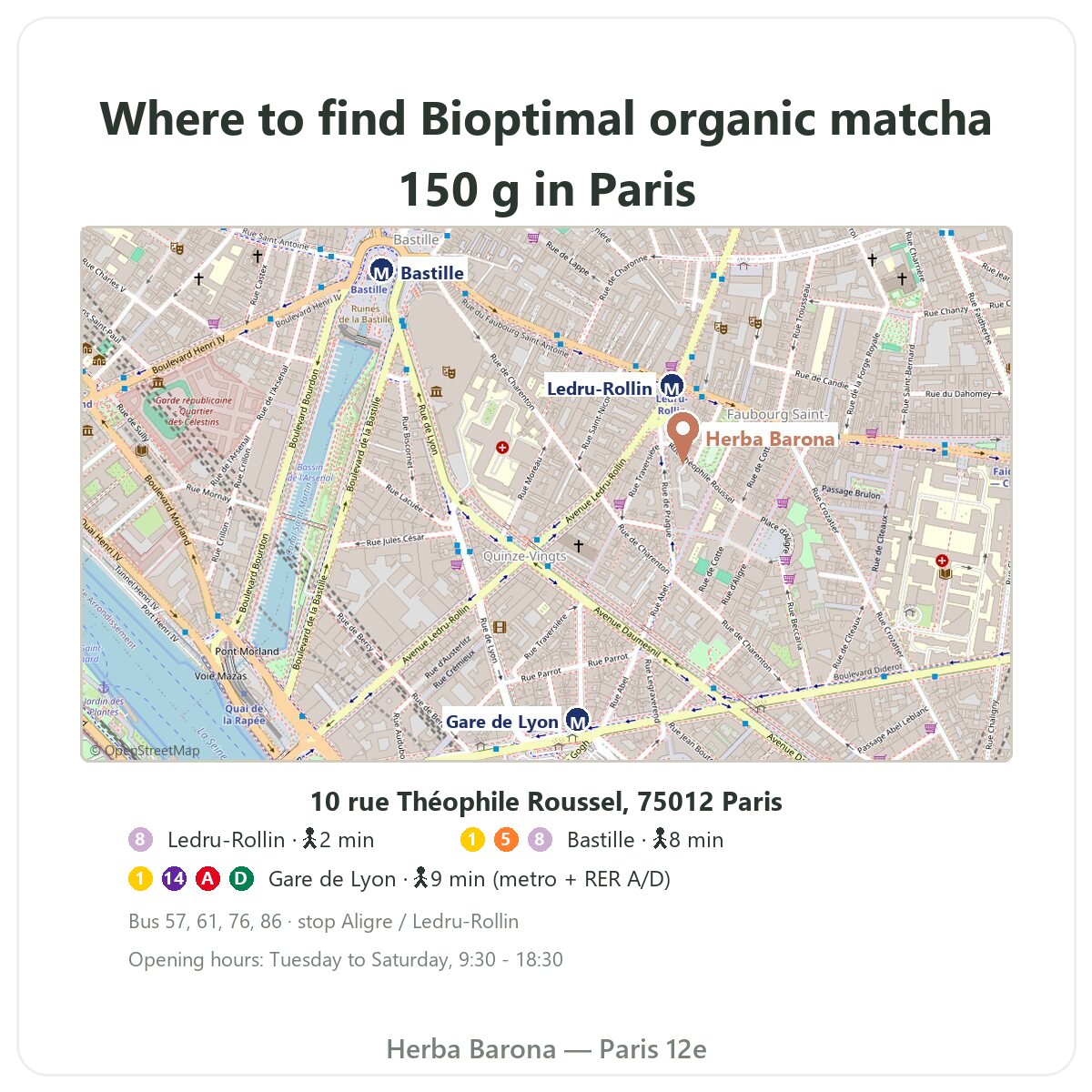
At our shop in Paris 12th, 10 rue Théophile Roussel, between Ledru-Rollin (line 8) and Bastille (lines 1, 5, 8) metro stations, Tuesday to Saturday, 9:30 am to 6:30 pm. You can also order it on this website and collect it at the shop.
Herba Barona’s tip — sift the powder through a small fine strainer, straight over the bowl, before adding the water. Matcha easily forms tiny lumps; once sifted, it whisks in a few seconds and the foam is more even.