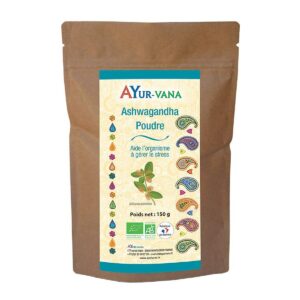

Buy Organic Ashwagandha Powder: the Ayurvedic adaptogen
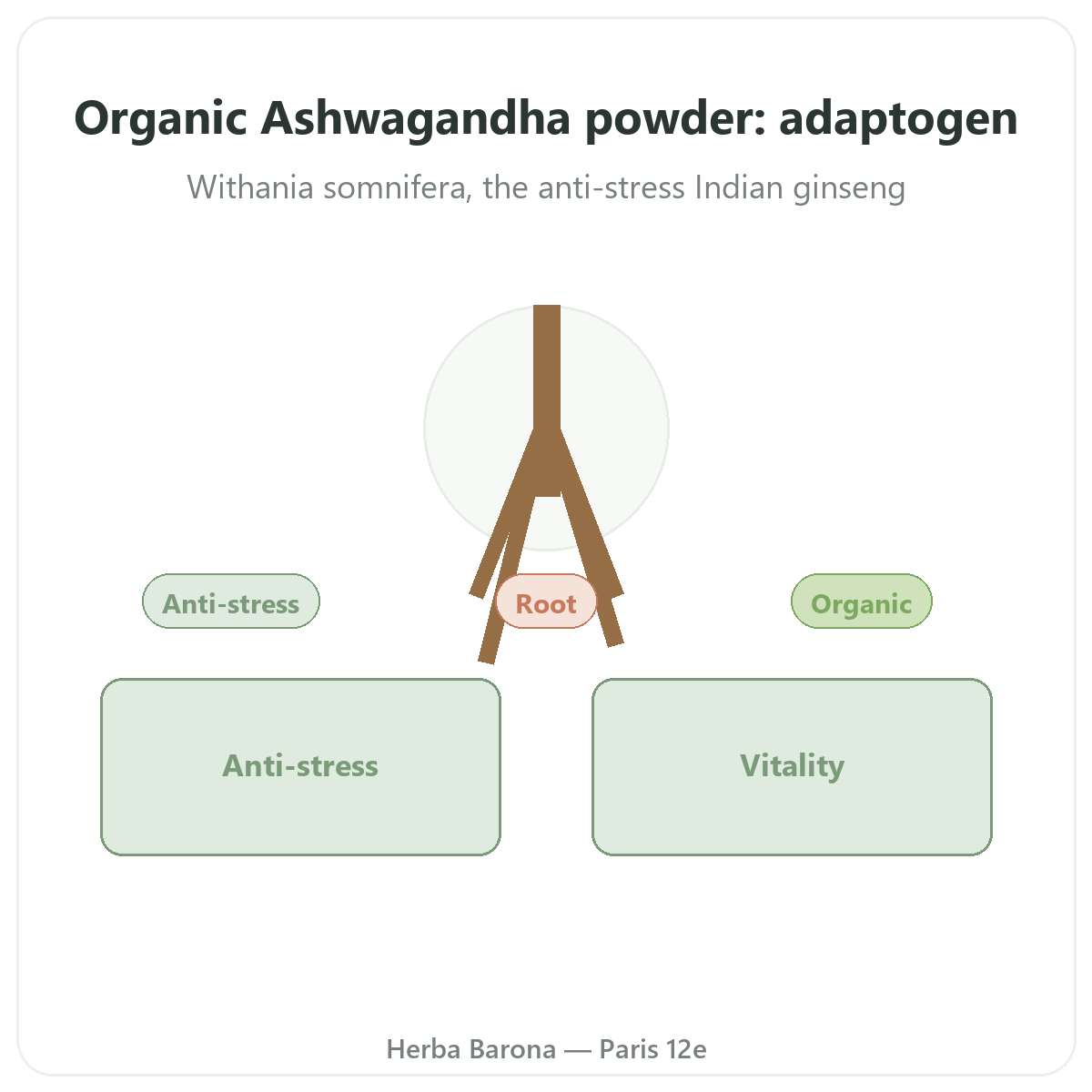
Organic Ashwagandha powder (Withania somnifera), also known as Indian ginseng or winter cherry, is one of the most iconic plants in Ayurvedic tradition. Available at our Paris shop, with Click & Collect and delivery across France and Europe.
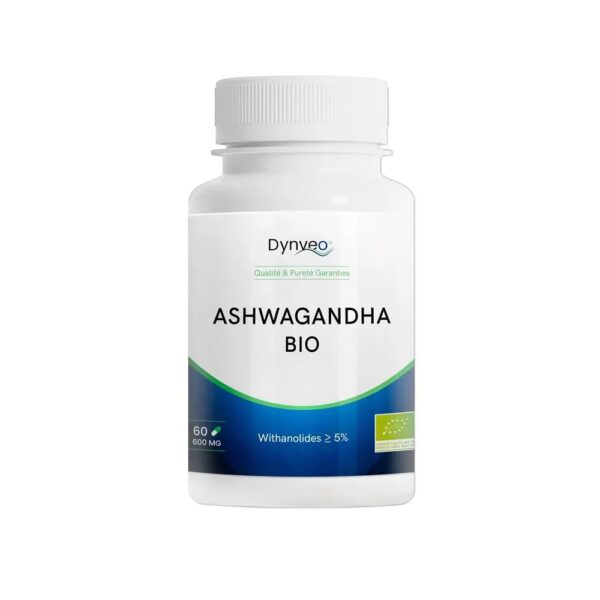
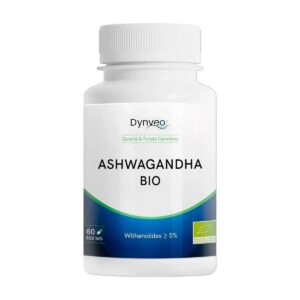
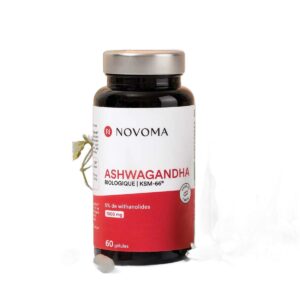
Organic Ashwagandha KSM-66® 5% Withanolides – Dynveo – 60 Capsules
The same active ingredient, as capsules.
What is Ashwagandha?
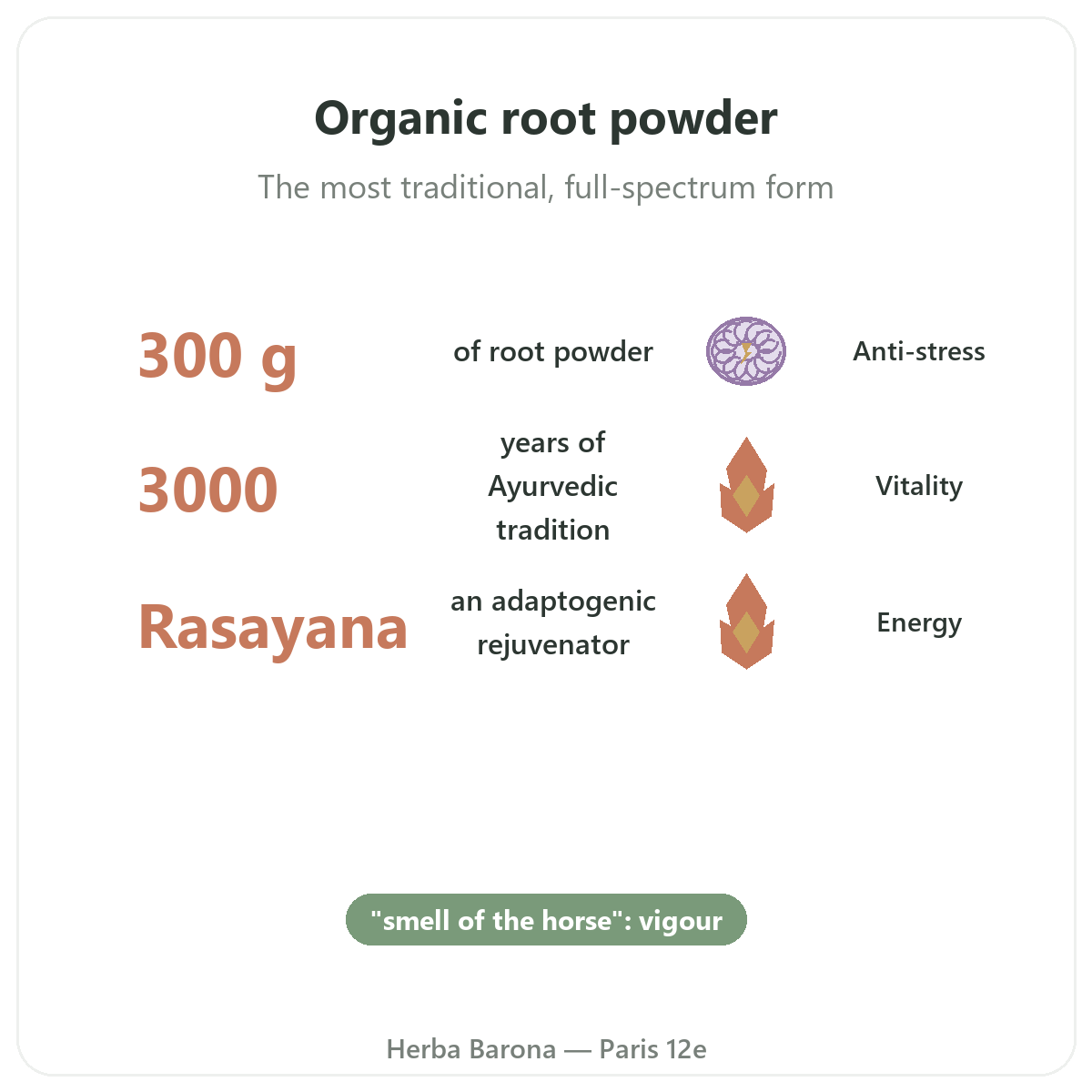
Ashwagandha belongs to the nightshade family, the same family as tomatoes and peppers, and grows mainly in India, the Middle East and parts of Africa. Used for more than 3,000 years in traditional Indian medicine, it is classed among the adaptogenic herbs — plants that help the body adapt to different forms of stress. The Sanskrit name means “smell of the horse,” referring to the root’s characteristic scent and the vigour tradition attributes to it. In the Ayurvedic system, it is considered a “rasayana,” a rejuvenating tonic. The root contains bioactive compounds called withanolides, the subject of extensive scientific research worldwide; raw root powder retains the plant’s full natural spectrum of compounds in their preserved synergistic ratio.
Adaptogenic properties
The concept of an “adaptogen,” defined by pharmacologist Nikolai Lazarev in the 1940s, describes a natural substance that helps the body resist physical, chemical or biological stress. To qualify, a plant must be non-toxic at normal doses, act non-specifically on the body, and help normalise physiological functions. Ashwagandha meets all three criteria and is among the most studied adaptogens in the scientific literature, with randomised, placebo-controlled clinical trials conducted on various forms of the herb.
Traditional Ayurvedic use & how to prepare it
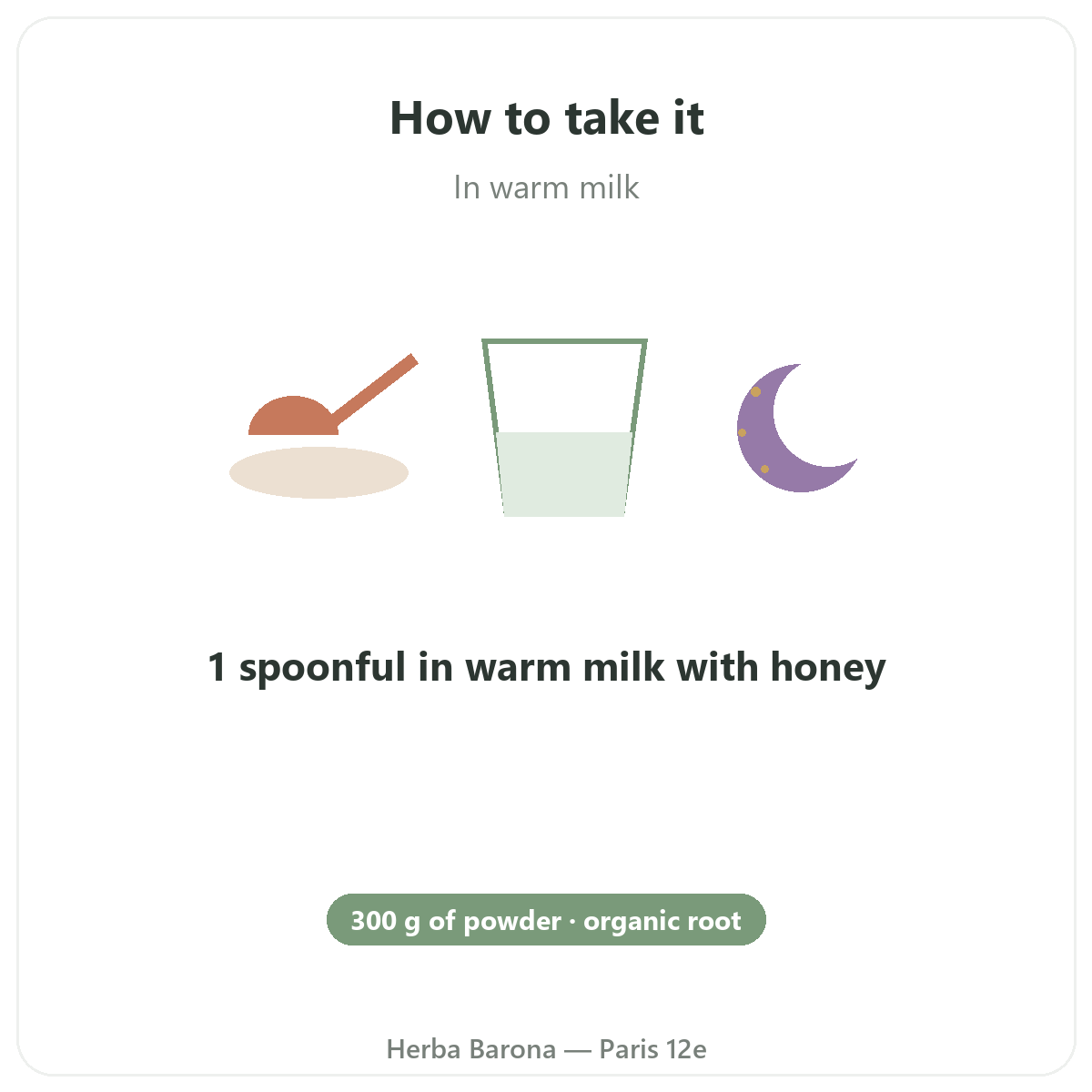
Ashwagandha is mentioned in the Charaka Samhita, one of Ayurveda’s foundational texts, among the “balya” (strength-giving) and “vajikara” (vitality tonic) plants. The most traditional preparation, called “Ashwagandha Ksheerapaka,” mixes the powder into warm milk (ideally almond or oat milk), with a touch of honey and a pinch of cardamom or cinnamon, which aids absorption thanks to the milk’s fat content — 1 to 2 teaspoons (about 3–6 g) a day is typically recommended. The powder can also go into a smoothie, golden milk, porridge or plant-based yoghurt, or be mixed with ghee or coconut butter. Its earthy, slightly bitter taste pairs well with sweet or spiced preparations; if the taste is too strong, mix it with fruit compote or raw cacao. It’s best taken in the evening, as Ashwagandha is traditionally linked to relaxation and restful sleep.
Raw powder vs. standardised extract (KSM-66)
The market mainly offers two forms: raw root powder (churna) and standardised extracts like KSM-66. Raw powder is simply dried and ground whole root, with no chemical extraction, retaining all the root’s compounds in their natural proportion. KSM-66 is a patented extract obtained via a milk-based extraction process, standardised to a minimum 5% withanolides, usually sold in capsules for a more concentrated, targeted approach. The choice is a matter of preference — raw powder for a traditional, culinary approach, standardised extract for a more precise, targeted one — and the two forms can be complementary.
How to use & precautions
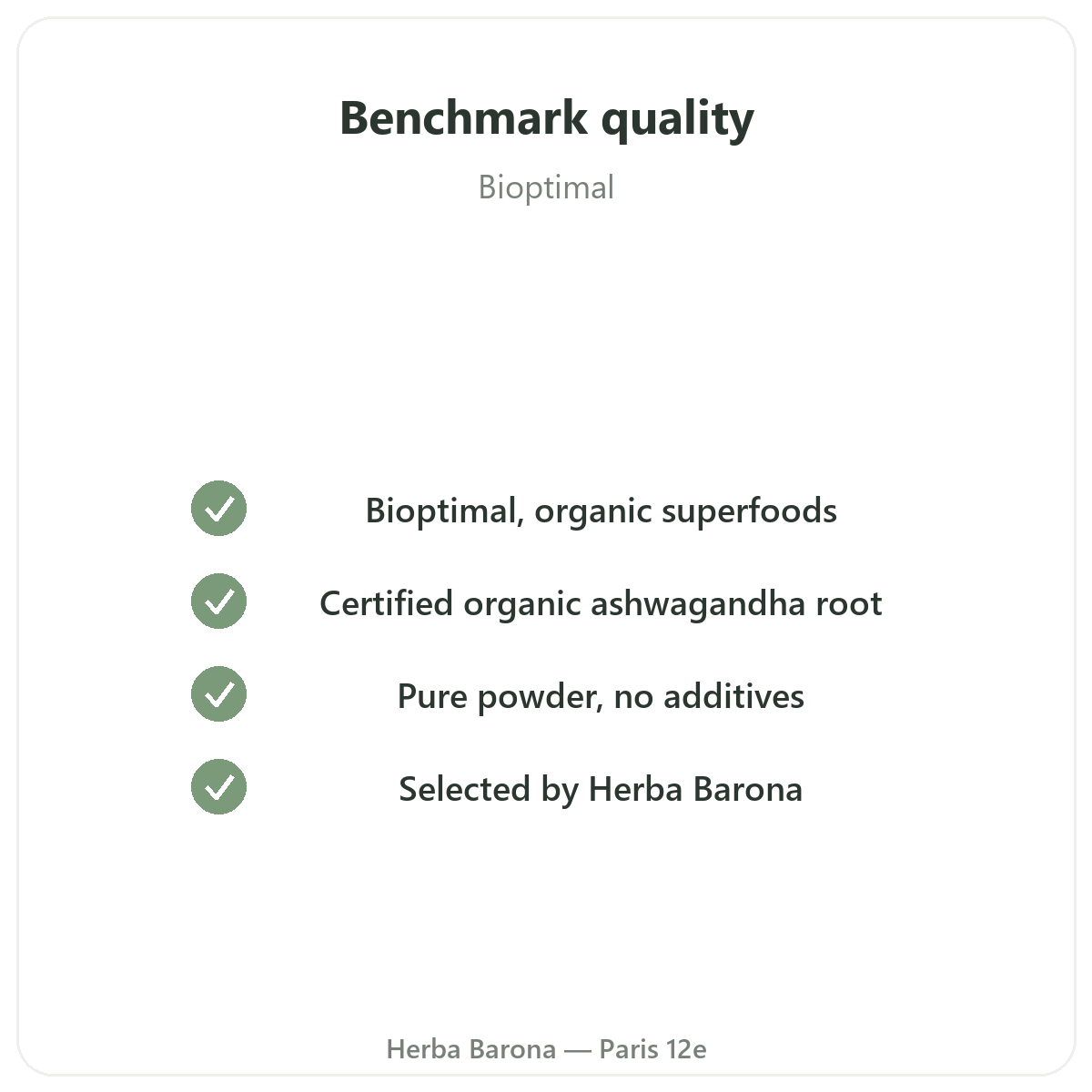
Our organic Ashwagandha powder is 100% organically farmed Withania somnifera root, with no additives, excipients or preservatives. Store in a cool, dry place away from direct light.
Pregnant or breastfeeding women should avoid Ashwagandha unless advised otherwise by a healthcare professional. People on thyroid treatment should consult their doctor before use, as the plant may interact with thyroid hormones. People taking immunosuppressants, sedatives or blood-pressure medication should also seek medical advice first, as should anyone with an autoimmune condition. Do not exceed the recommended daily dose.
Frequently asked questions
What is an adaptogenic plant?
An adaptogen helps the body adapt to stress and restore balance. Ashwagandha is one of the best-known and most studied adaptogens in the world, alongside rhodiola, ginseng and tulsi.
Powder or capsules — what’s the difference?
Raw root powder offers the plant’s full profile and works well in culinary preparations (plant milk, smoothies). Capsules often contain a more concentrated standardised extract and are more convenient for daily use. The two forms are complementary.
How long does an Ashwagandha course last?
Typically 4 to 12 weeks. Ayurvedic tradition recommends extended courses for best results, followed by rest periods. Ask a healthcare professional to define what suits your situation.
Why buy from Herba Barona?
Herba Barona is an independent specialist supplement shop in the heart of Paris — established in 2006. What you order is genuinely on our shelves: we ship from our own stock, with no dropshipping and no long waits.
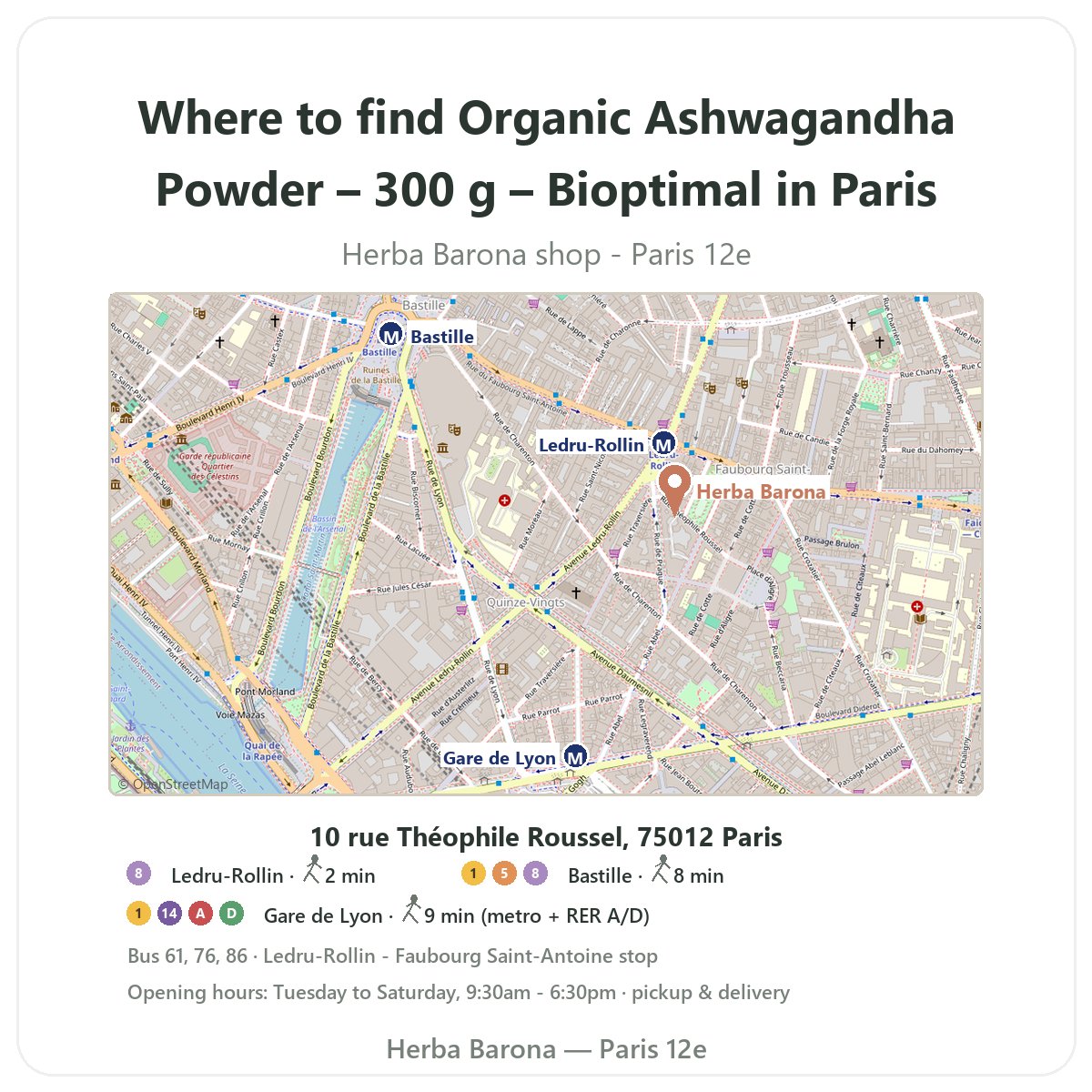
Visit us at 10 rue Théophile Roussel, Paris 12 — or use Click & Collect and pick up your order in-store. We also deliver across France and Europe. Friendly, expert advice in English from our team.
Delivery & collection
Where is the shop?
Herba Barona is at 10 rue Théophile Roussel, 75012 Paris — a two-minute walk from Ledru-Rollin (line 8), close to Bastille. Open Tuesday to Saturday, 9:30 am–6:30 pm.
Can I order online or collect in store?
Yes. We ship across France and Europe under the same conditions as our French store, or choose Click & Collect to pick up your order for free at our Paris shop.
Guide: Ashwagandha in Paris: where to buy the best KSM-66 ashwagandha in 2026
You may also like
Food supplement. Does not replace a varied, balanced diet or a healthy lifestyle. Do not exceed the recommended daily dose. Keep out of reach of children.