
Greenwhey Probiotics & Prebiotics in Paris: 10 strains and 40 billion CFU
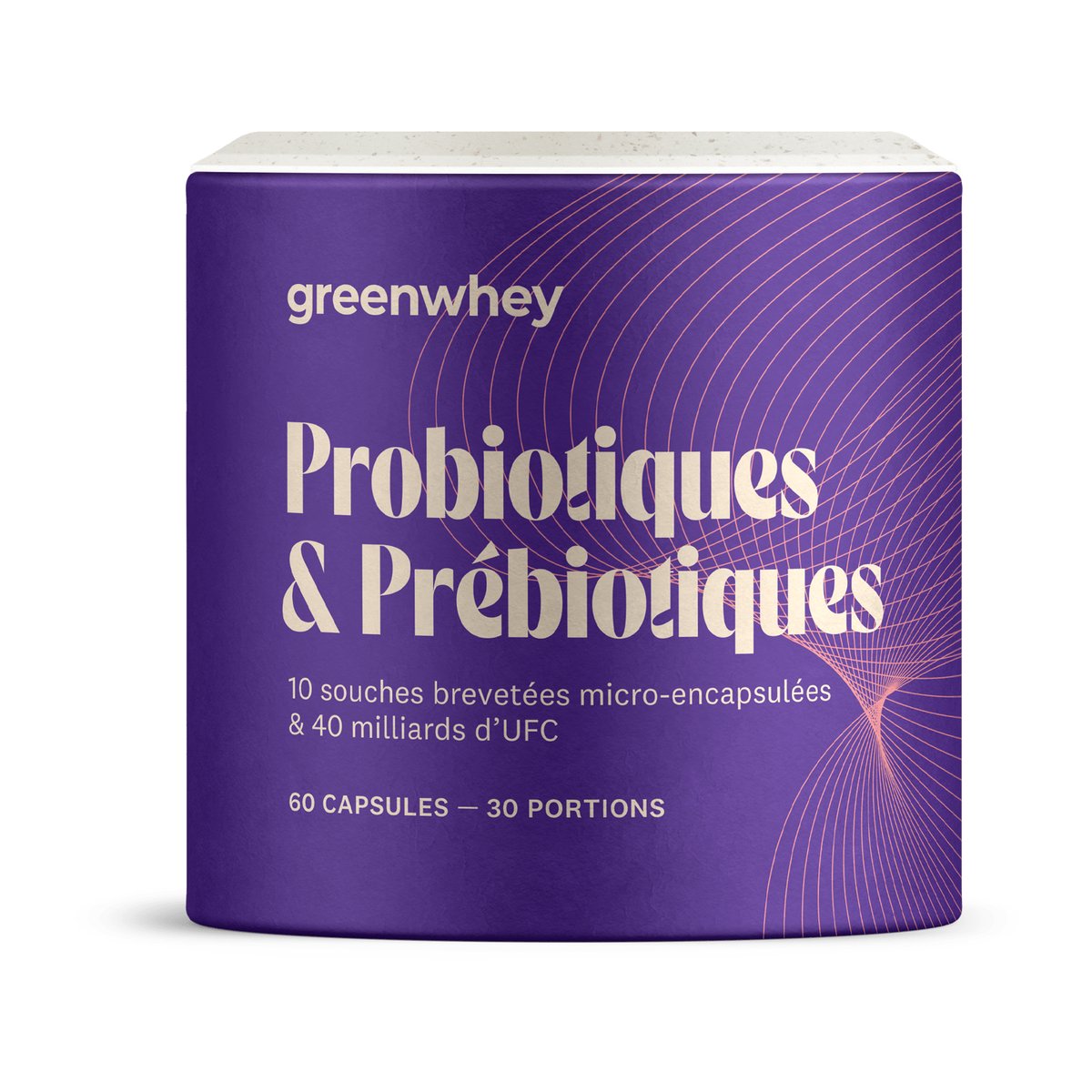
Ten strains of lactobacilli and bifidobacteria, each identified by its code, with chicory inulin and acacia fibre, in an acid-resistant capsule. Available in Paris at Herba Barona.
▶ Probiotiques & Prébiotiques Greenwhey : la vidéo en 3 min 09
A formula that lists all ten strains
On a jar of probiotics, the first thing to look for should be the full name of the strains. A bacterium is identified by three elements: its genus (Lactobacillus, Bifidobacterium), its species (plantarum, rhamnosus, lactis…) and a strain code, which identifies one precise lineage. Two products can contain the “same” species without containing the same strain, and it is strains that have been described and studied, not species in general.
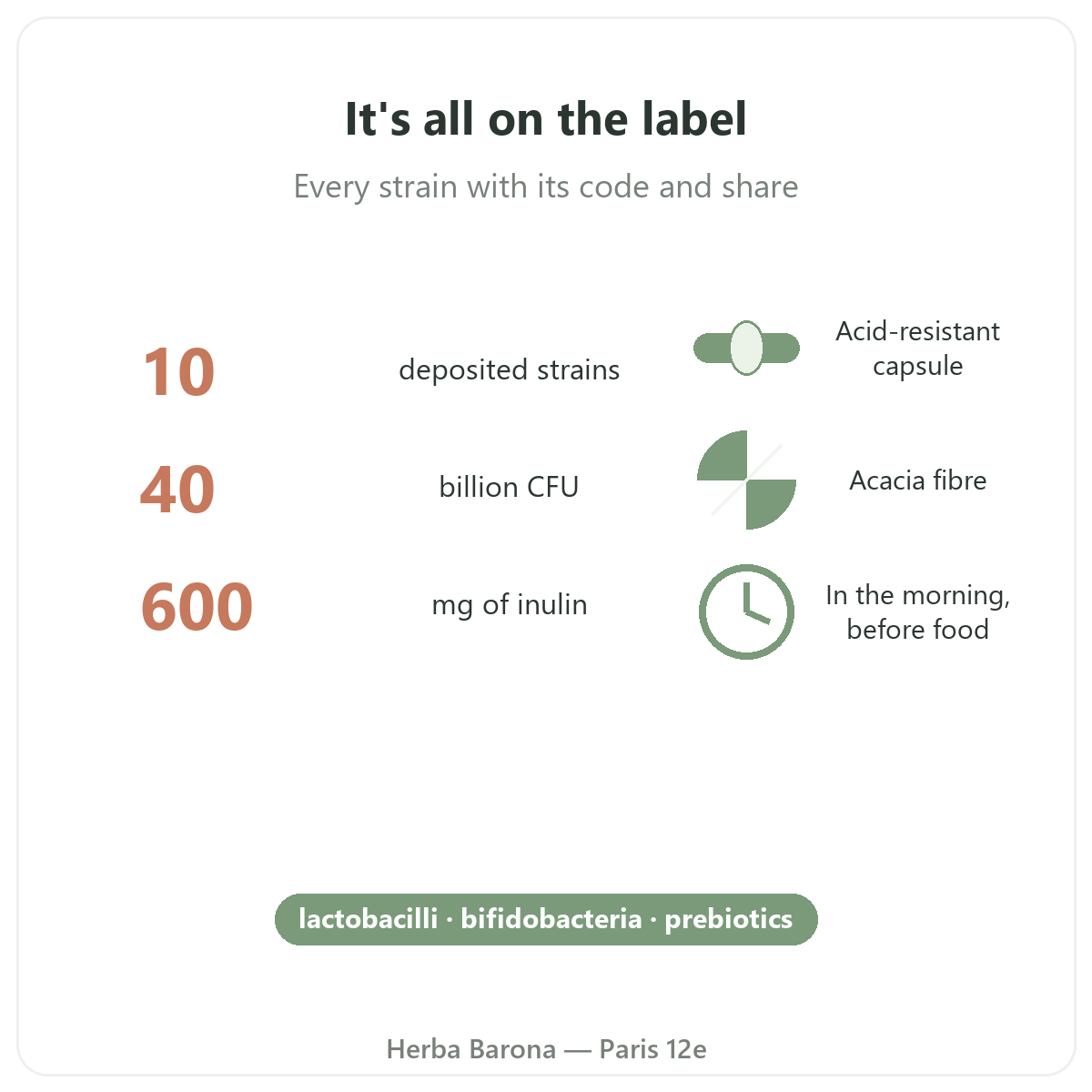
Greenwhey gives this level of detail for each of its ten strains, with their share of the blend: L. plantarum UALp-05™ (34%), L. rhamnosus UALr-18™ (20%), B. bifidum UABb-10™ (17%), L. acidophilus DDS-1 (8.5%), L. reuteri UALre-16™ (7.5%), B. lactis UABla-12™ (5%), L. paracasei UALpc-04™ (3%), B. breve UABbr-11™ (2%), B. longum UABl-14™ (2%) and L. salivarius UALs-07™ (1%).
That makes six lactobacilli and four bifidobacteria. These strains are deposited: they are registered in official collections, so you know exactly which lineage is meant. This transparency is what made us bring the product into our shop in Paris 12th.
40 billion CFU: reading the figure correctly
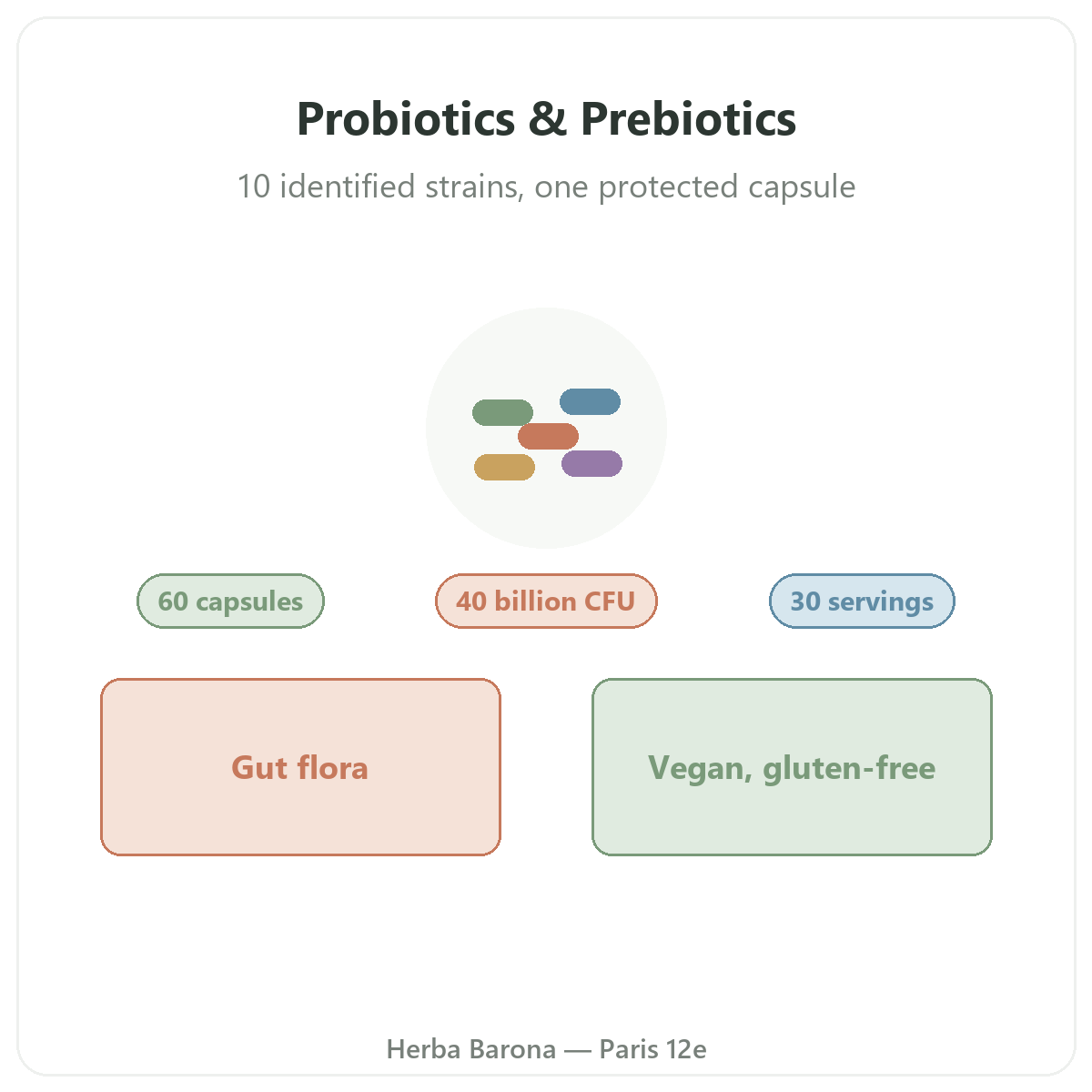
CFU stands for “colony-forming units”. It is the unit used to count micro-organisms that are alive and able to multiply. A serving of two capsules provides 40 billion of them, for 215 mg of lactic ferment blend.
This total is divided according to the percentages on the label. The main strain, L. plantarum UALp-05™, accounts on its own for about 13.6 billion CFU per serving; the smallest, L. salivarius UALs-07™, for about 0.4 billion. Each strain is therefore present in a defined quantity, not as a mere trace.
A high figure is not an end in itself. What matters is knowing which strains are present, in what quantity, and how they are protected on their way to the gut. That is why we prefer a complete label to a big promise on the packaging.
Probiotics and prebiotics: what is the difference?
Probiotics are live micro-organisms supplied in a defined quantity. Prebiotics are compounds that our body does not digest, most often fibres, which some gut bacteria use as a source of energy.
The Greenwhey formula combines both. Each serving contains 600 mg of chicory inulin, a soluble fibre extracted from chicory root, the same plant used for the breakfast drink. Acacia fibre is added, taken from the gum of Acacia senegal and known for being very gentle. According to the brand, these fibres accompany the strains in the capsule and help keep them in good condition.
If you are new to prebiotic fibres, a short adjustment period with a little wind in the first few days is common with inulin. It usually fades quickly. To explore the subject further, our probiotics section brings the different approaches together.
The DRcaps® capsule: protecting the strains on the way to the gut
A probiotic’s journey starts in the stomach, a very acidic environment that can destroy part of the micro-organisms before they reach the intestine. How the strains are packaged therefore matters as much as their number.
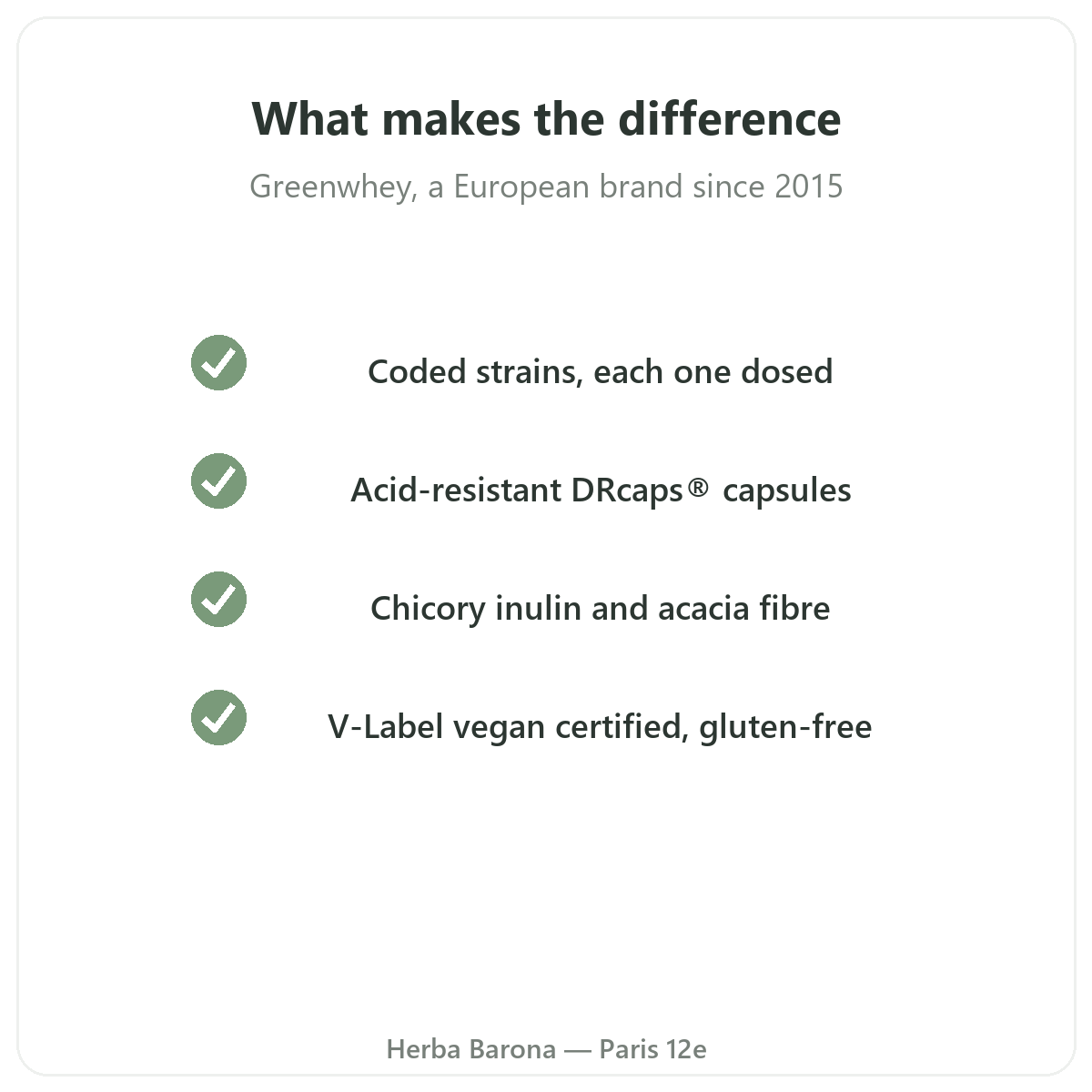
Greenwhey uses DRcaps® capsules, designed to withstand stomach acidity and release their contents further along the digestive tract. They are made of hypromellose, a cellulose derivative of plant origin, with no animal gelatine. The strains themselves are micro-encapsulated, as stated on the jar.
For this protection to work, simply swallow the capsules whole with a glass of water, without opening or chewing them.
How to take these probiotics every day
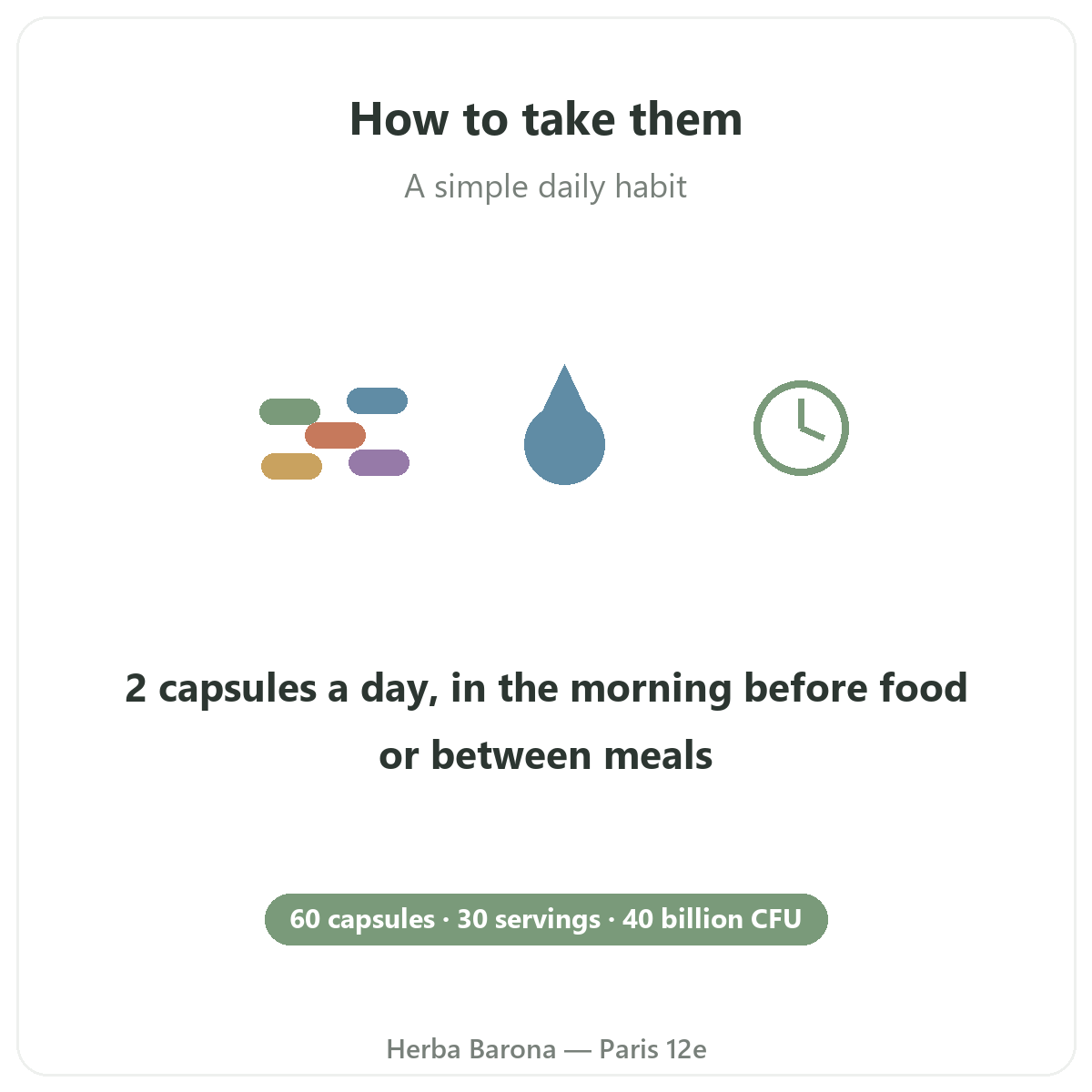
The amount recommended by Greenwhey is two capsules a day, in the morning on an empty stomach or between meals. The 60-capsule jar therefore holds 30 servings, one month of use.
The best time is the one you can stick to every day. Many of our customers take them when they get up, with their first glass of water, a quarter of an hour before breakfast. Others prefer mid-morning. Regularity is what matters: the strains are found in the gut while you take them, and their presence decreases after you stop. It is therefore a matter of regular intake, not of permanent settlement.
The brand presents its product as designed for use all year round. If you are unsure about the duration, take stock at the end of the first jar. At our shop in Paris 12th, we are happy to take the time to talk it over with you.
A plate that goes with the capsules
A supplement does not replace your diet, it complements it. To support the diversity of your gut flora, nothing beats a varied plate: vegetables, fruit, pulses, wholegrains and fibre-rich foods such as garlic, onion, leek or chicory.
Fermented foods also have their place: yoghurt, kefir, raw sauerkraut, unpasteurised kimchi. They do not necessarily provide the same strains or the same quantities as a supplement, but they are part of a diverse diet. For a larger intake of fibre, acacia fibre powder mixes easily into a glass of water or a yoghurt.
Sleep, stress management and regular, moderate physical activity matter too. All our products for digestive comfort are gathered in our digestion and transit section.
Greenwhey, vegan and a compostable jar
Greenwhey is a European brand founded in 2015, first known for its milk proteins from farms in the Alps. Its health range follows the same line: short formulas, precisely named ingredients and a label that is easy to read.
This complex is certified vegan by V-Label: all the strains were chosen to be compatible with a plant-based diet, which is not the case for every strain on the market, and the capsule is entirely plant-based. It is also gluten-free.
The jar is made of cardboard, with a compostable lid. Keep it closed, in a dry place, away from heat and light: a kitchen cupboard away from the hob is ideal, and the fridge is not necessary. The best-before date and batch number are printed under the jar.
Frequently asked questions
Do these probiotics need to be kept in the fridge?
No. Greenwhey simply recommends storing the jar in a dry place, away from heat and light, at room temperature.
Can I take them with a meal?
The brand recommends taking them in the morning on an empty stomach or between meals. If that time does not suit you, choose a fixed time that you can keep to every day.
Are these capsules suitable for vegans?
Yes. The product is certified vegan by V-Label: the strains are compatible with a plant-based diet and the capsule is made of hypromellose, with no gelatine. It is also gluten-free.
Where can I find them in Paris?
Greenwhey Probiotics & Prebiotics are listed at our shop in Paris 12th, 10 rue Théophile Roussel, between Ledru-Rollin (line 8) and Bastille (lines 1, 5, 8) metro stations. Their current availability is shown on this page. If you have a known illness or a weakened immune system, ask a healthcare professional for advice before starting.
Herba Barona’s tip — take your two capsules at the same time every morning, before breakfast, and keep the jar next to the kettle or the coffee maker rather than at the back of a cupboard: regularity counts far more than the exact time. To learn how to read a probiotic label, see our article Probiotics: how to choose the right strains.