
Electrolytes
Electrolytes in Paris: sodium, potassium, magnesium, calcium and chloride, as effervescent tablets, powders to dissolve or capsules, for exercise, heat or everyday use. Available in Paris at Herba Barona, in store and online.


Electrolytes: which minerals are we talking about?
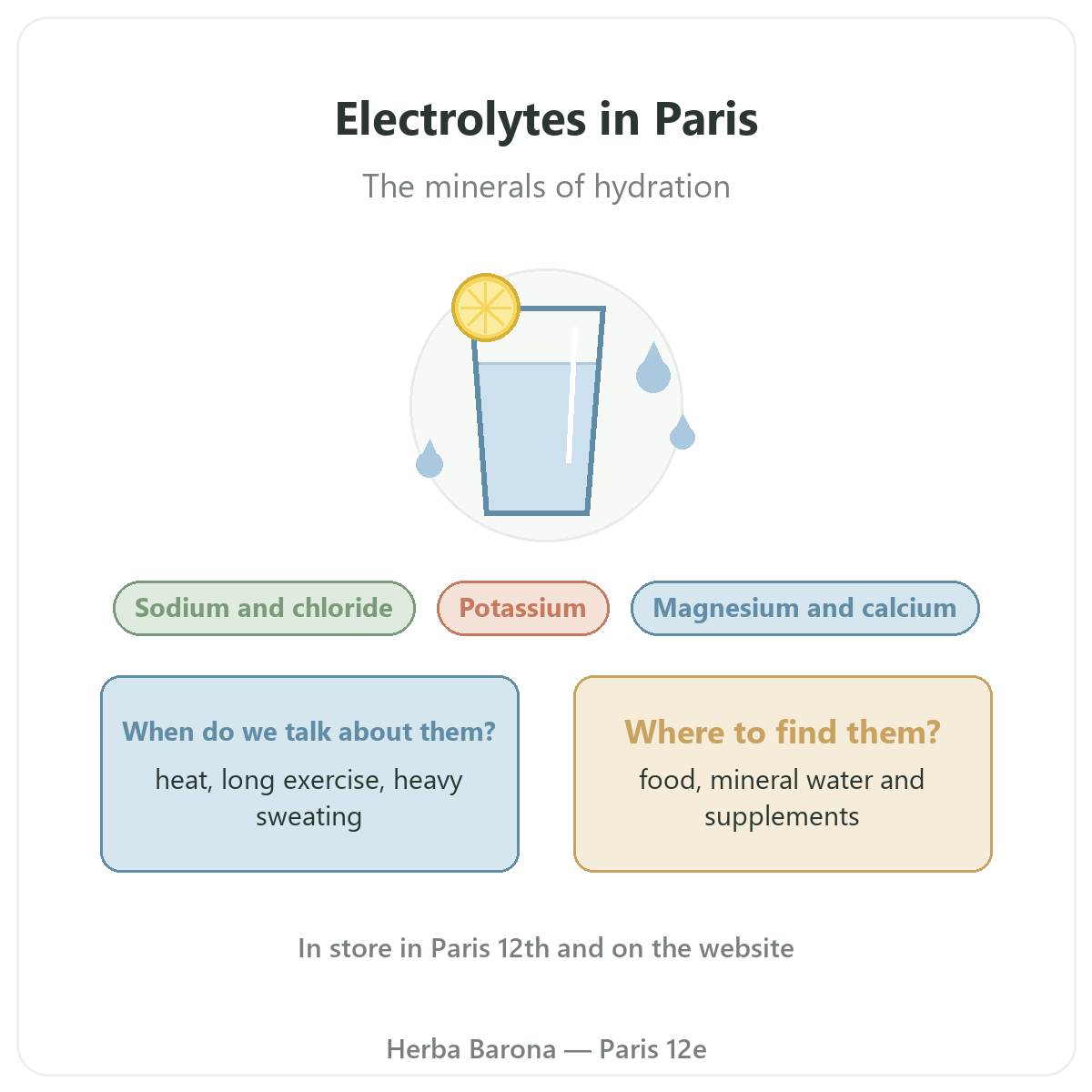
Electrolytes are minerals that, once dissolved in water, carry a small electric charge. In the body these are mainly sodium, potassium, magnesium, calcium and chloride, sometimes joined by bicarbonate and phosphate. They are found in the blood, between cells and inside them, and the body constantly works to keep their proportions stable.
Each has its recognised role. Potassium contributes to the normal functioning of the nervous system and muscles, and to the maintenance of normal blood pressure. Magnesium contributes to electrolyte balance, to normal muscle function and to the reduction of tiredness. Calcium also contributes to normal muscle function. Sodium and chloride together make up table salt, which modern diets often provide in abundance.
Electrolytes come up mostly when sweating heavily: sweat isn’t just water, it also carries away sodium and, to a lesser extent, potassium and magnesium. That’s why electrolytes come up in conversation among runners, cyclists, hikers and anyone going through a hot summer.
Exercise, heat, endurance sport: when to think about it
For most ordinary days, a varied diet and water are enough. Electrolytes matter more in three situations: long exercise (more than an hour of running, cycling or hiking), strong heat that causes sweating even at rest, and repeated sessions with heavy sweat loss. Trail runners, triathletes and marathon runners often have their own habits.
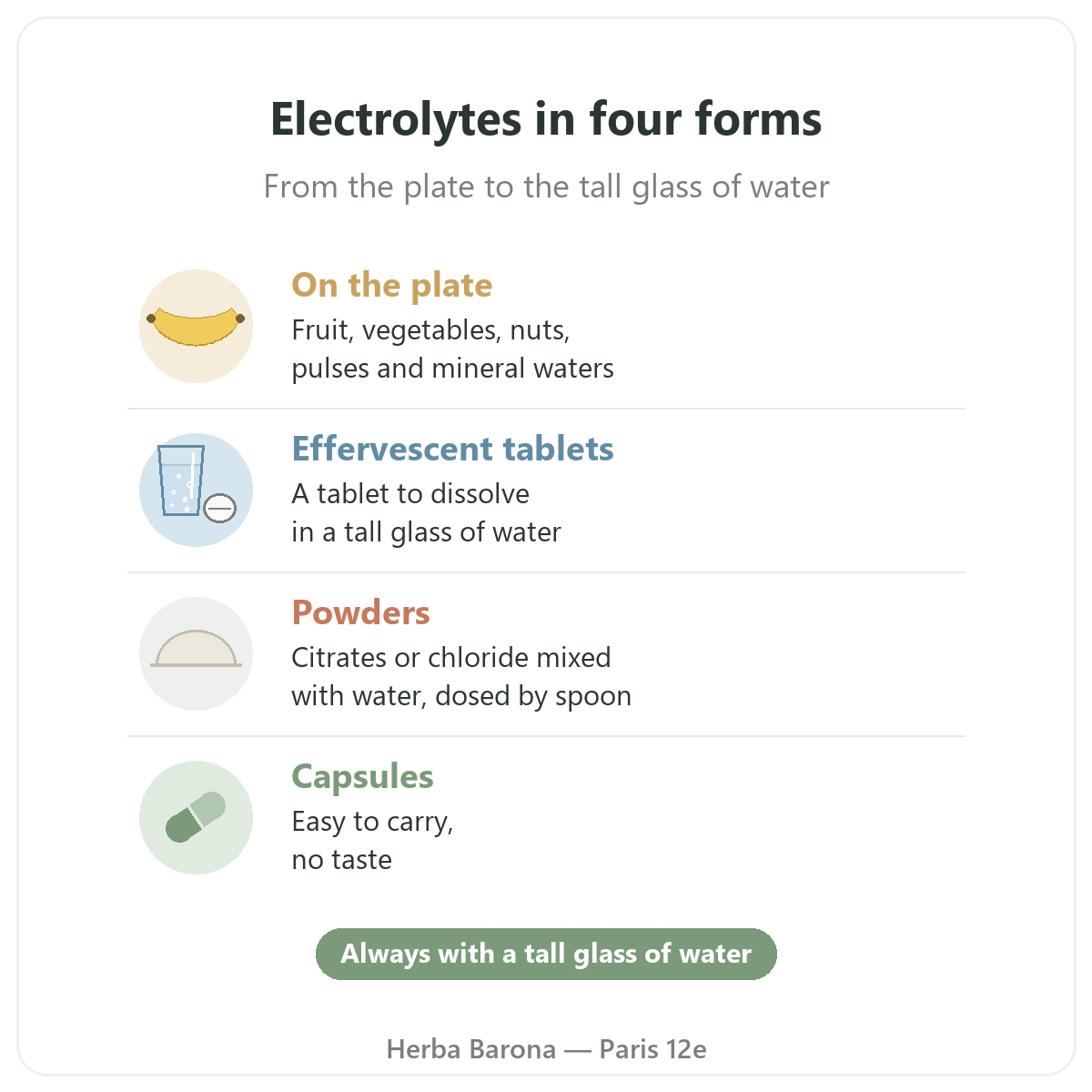
On the plate, sources are numerous. Banana, avocado, green vegetables, potatoes, pulses and dried fruit provide potassium; nuts, cocoa and whole grains provide magnesium; dairy products, almonds and some mineral waters provide calcium. Coconut water and salty broths are also appreciated during or after exercise. A good mineral water, with contents detailed on the label, is already a first source.
Supplements act as a top-up, when you want a precise and easy-to-carry intake. They are often paired with the rest of physical preparation: our sport and endurance range brings together exercise drinks, amino acids and proteins, and the energy and vitality page offers further pointers for demanding periods.
Tablets, powders, capsules: choosing the right electrolytes
Effervescent tablets are the most practical: one tablet in a tall glass of water or in a bottle, and the drink is ready. The Hydrapure electrolytes Nutripure red berries provide five minerals and three vitamins per dose, with natural flavouring. Powders are dosed by spoon, letting you adjust the amount yourself: Dynveo potassium citrate powder or magnesium chloride (nigari), as crystals to dissolve in water, are two examples. Capsules, finally, have no taste and slip easily into a sports bag.
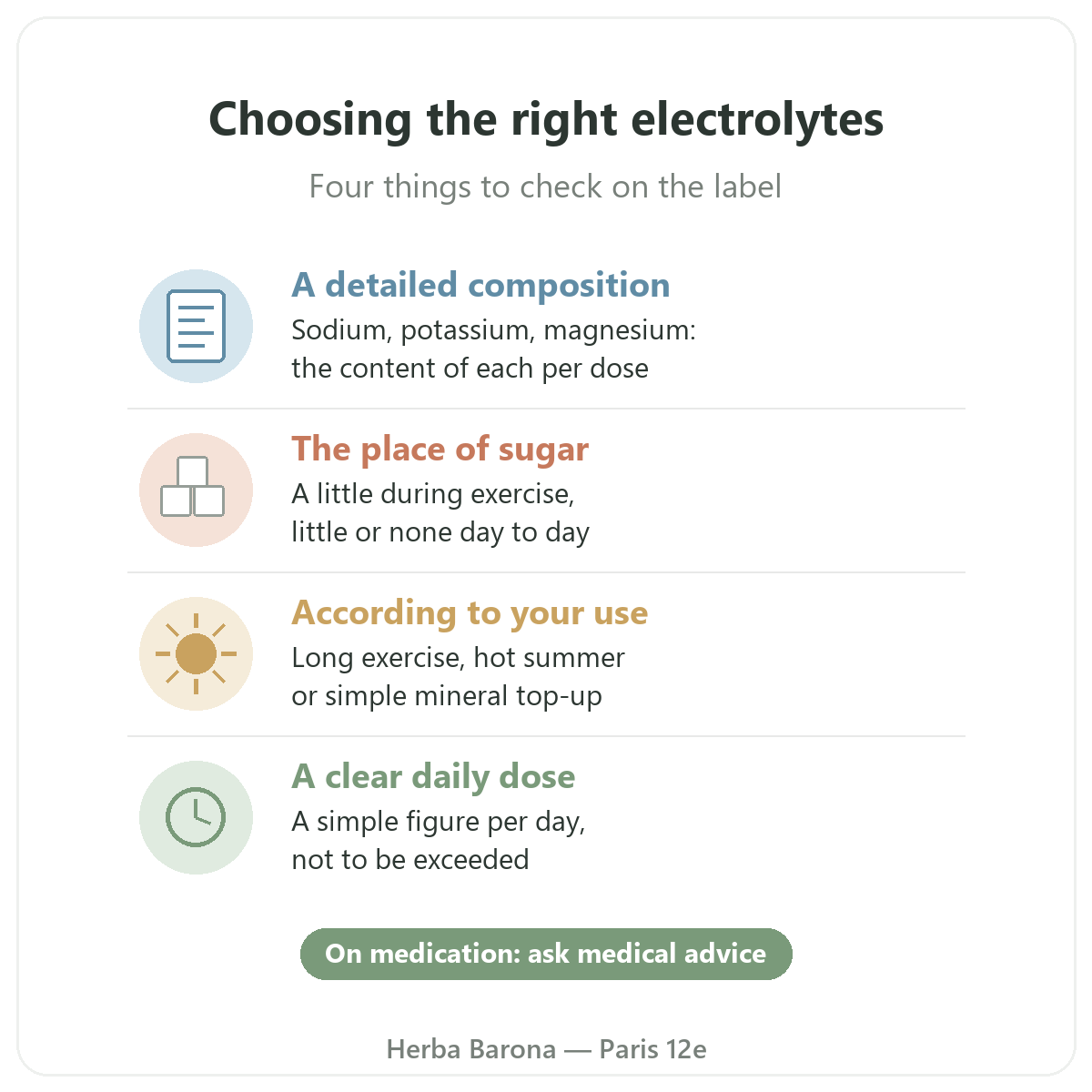
On the label, three things to check. First a detailed composition, with the content of each mineral per dose rather than a simple “complex”. Then the place of sugar: a little carbohydrate makes sense during long exercise, much less so day to day. Finally a clear daily dose, to be respected without exceeding it. To compare forms of magnesium, our guide which magnesium to choose will help, and our team is happy to read labels with you.
A few precautions apply. A supplement does not replace a varied and balanced diet. If you are on medication (diuretics, medicines for blood pressure, heart or kidneys), have high blood pressure, kidney insufficiency, are pregnant or breastfeeding, ask your doctor’s advice before taking potassium, magnesium or mineral salts. Those watching their salt intake should check the sodium content closely. Keep products out of reach of young children.
Frequently asked questions
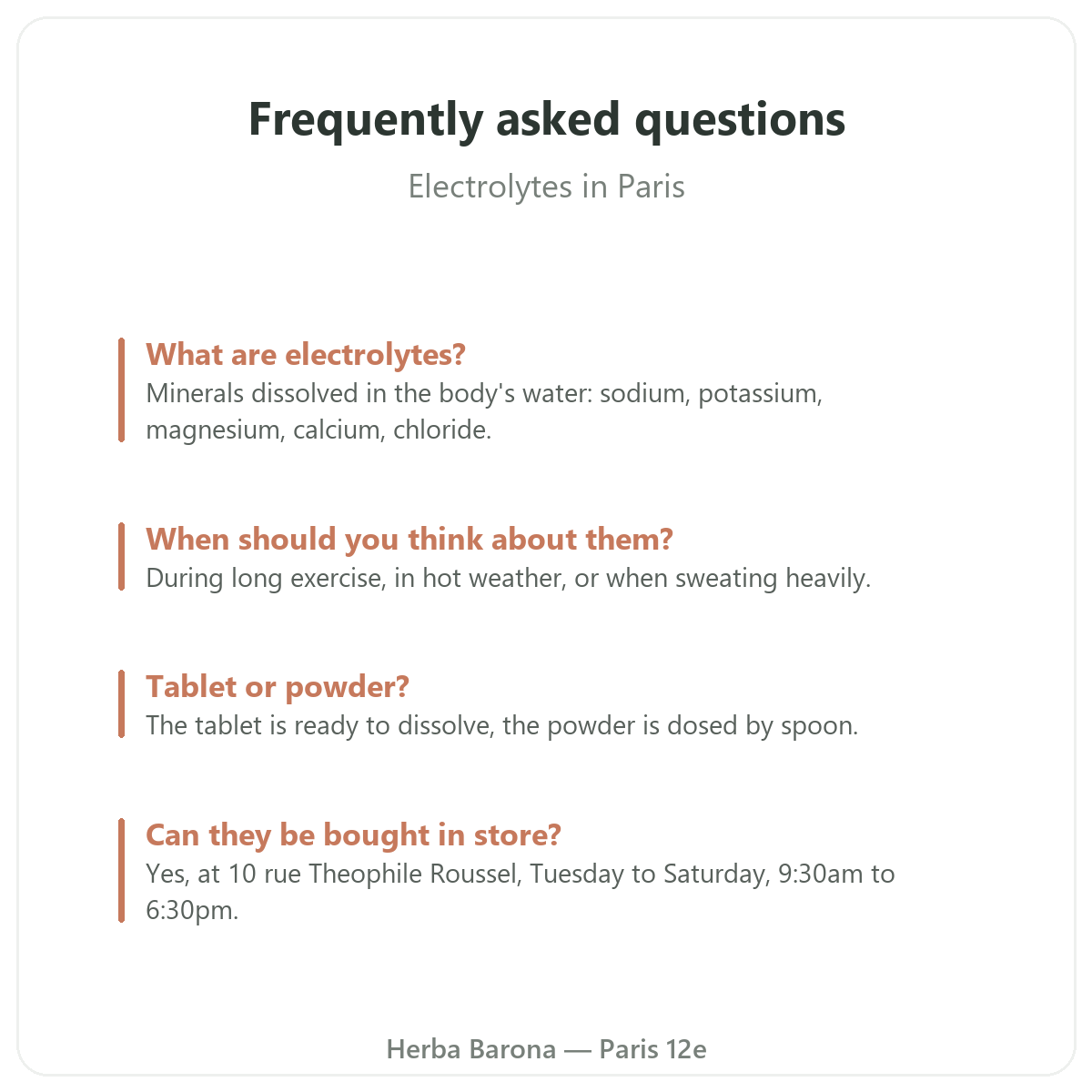
What exactly are electrolytes?
They are minerals dissolved in the body’s water: mainly sodium, potassium, magnesium, calcium and chloride. They are found in food, in mineral waters and in some supplements.
Do you need to take electrolytes every day?
Not necessarily. A varied diet already provides some. Supplements are mostly used during long exercise, strong heat or heavy sweating. In any case, follow the dose stated on the packaging.
Effervescent tablet or powder?
The tablet is ready to use and easy to carry. The powder lets you adjust the amount by spoon and often works out cheaper per dose. Both are taken in a tall glass of water.
Where can I find out more?
Our team is at 10 rue Theophile Roussel in Paris, Tuesday to Saturday, 9:30am to 6:30pm.
Showing all 10 results
-

Alkaline Formula – Dr. Jacob’s – 200g Powder
17,50 € incl. VAT Add to cart -
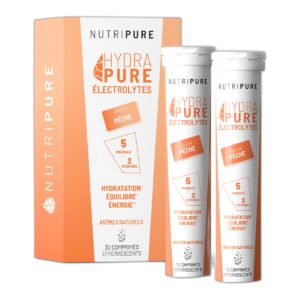
Hydrapure Electrolytes Nutripure – peach – 30 tablets
13,90 € incl. VAT Add to cart -
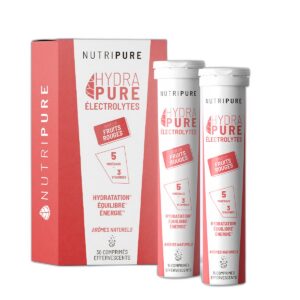
Hydrapure Electrolytes Nutripure – red berries – 30 tablets
13,90 € incl. VAT Add to cart -
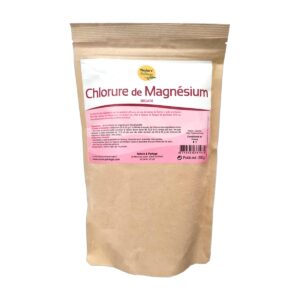
Magnesium Chloride (Nigari) 500 g – Nature et Partage
9,80 € incl. VAT Add to cart -

Magnesium³ Powder Nutripure 51 g
16,90 € incl. VAT Add to cart -

Potassium Citrate – Dynveo – 60 capsules – 1000mg
19,50 € incl. VAT Add to cart -
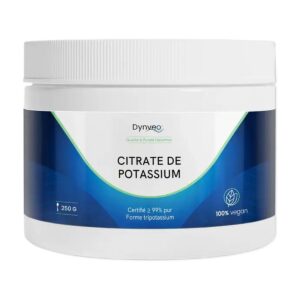
Potassium Citrate Powder – Dynveo – 250g
17,90 € incl. VAT Add to cart -

Potassium Citrate Powder – Now Foods – 340 g
23,50 € incl. VAT Add to cart -

Pure Magnesium Citrate Powder – Now Foods 227g
26,50 € incl. VAT Add to cart -
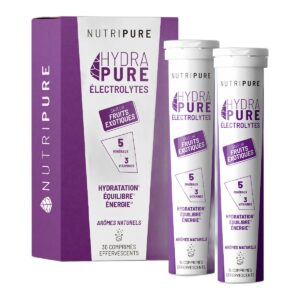
Hydrapure Electrolytes Nutripure – tropical fruit – 30 tablets
13,90 € incl. VAT Read more