Blond Psyllium Husk in Paris: 100% husk, no additives
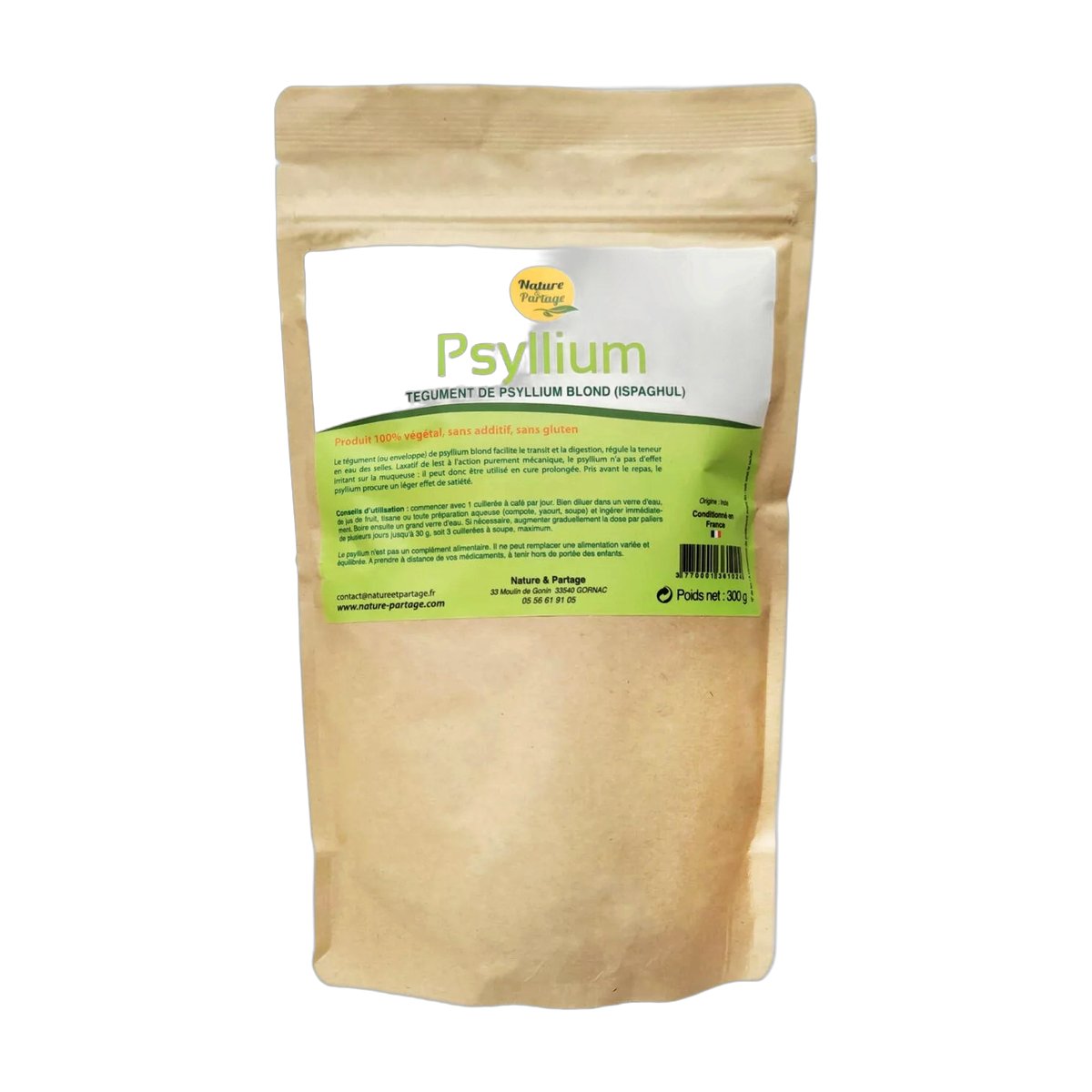
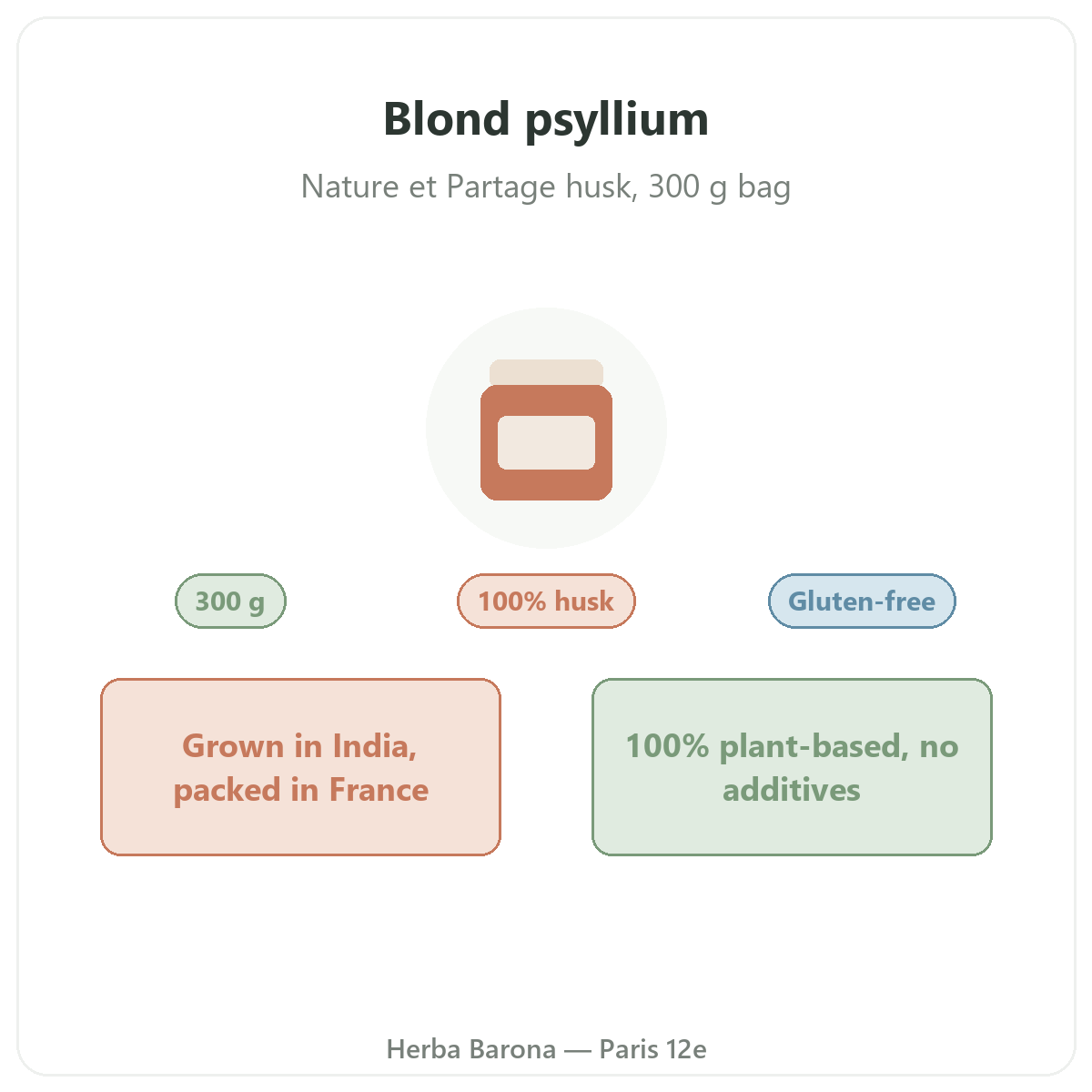
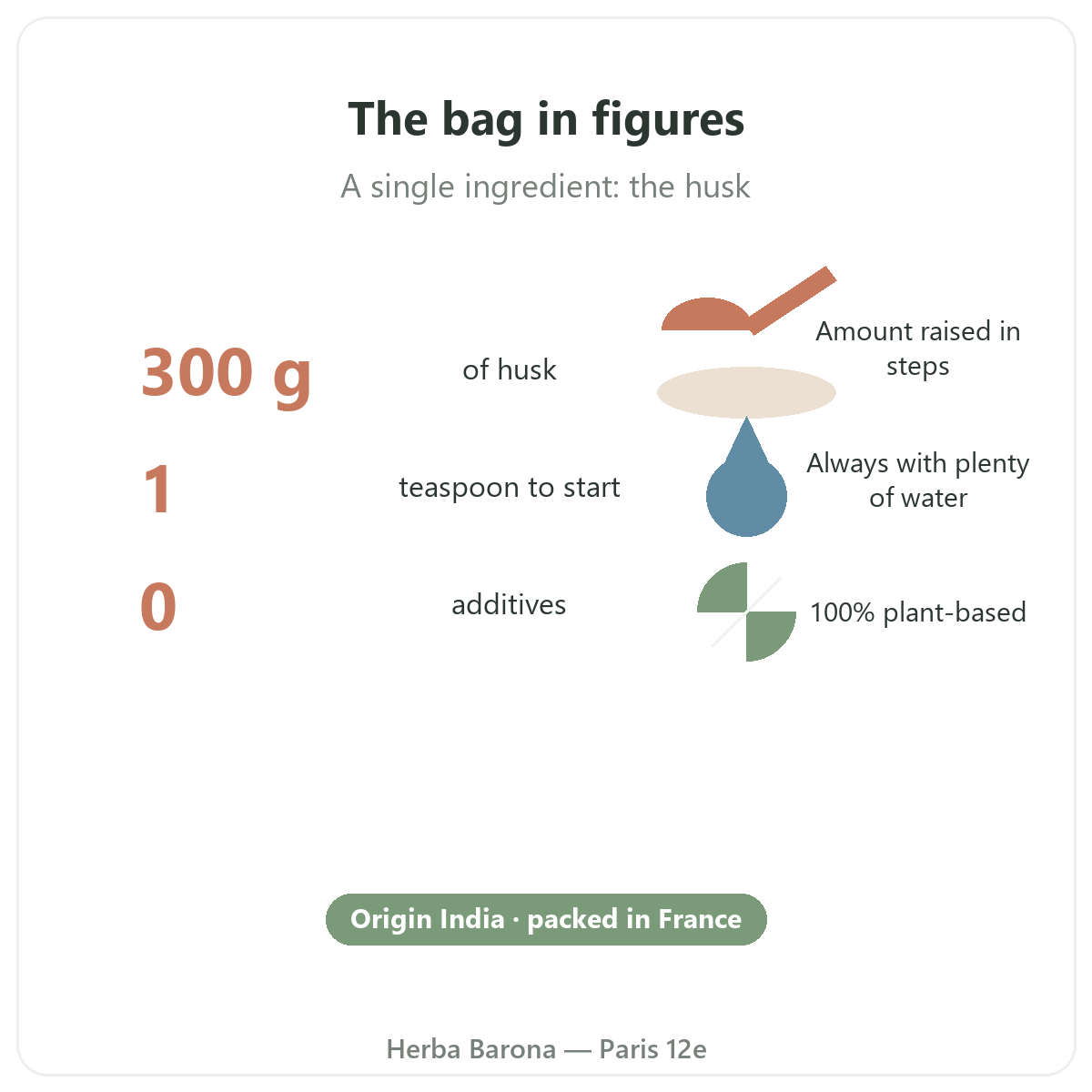
Nature et Partage blond psyllium is the husk alone, the thin coat of the seed that swells on contact with water. A 300 g kraft bag, with no additives and no gluten, to stir into a large glass or slip into your bread dough. Available in Paris at Herba Barona.
The husk, the thin part of the seed
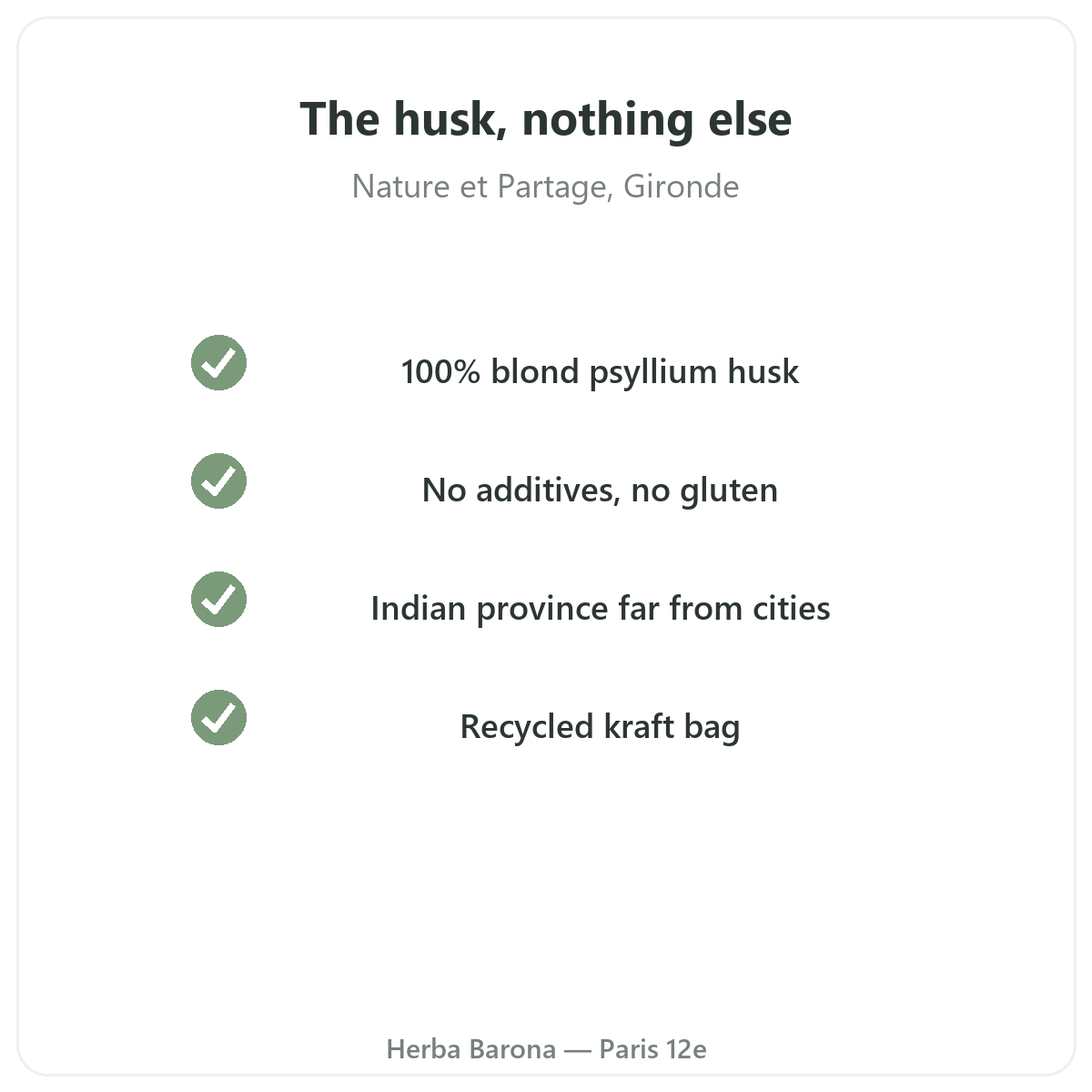
Blond psyllium, also called ispaghula, is a small plantain grown in India, Plantago ovata by its Latin name. Its seed is surrounded by a very thin coat: the husk. This coat, and nothing else, is what Nature et Partage puts in this bag. The label lists a single ingredient: 100% blond psyllium husk, with no additives.
The husk is very rich in mucilage. On contact with water, it soaks up liquid and forms a soft, thick gel. This explains the two rules for this product: it is always taken with plenty of water, and it is genuinely useful in the kitchen, where it binds doughs that lack hold.
The brand states that its psyllium comes from an Indian province far from any urban or industrial centre. It is then packed in France, in the Gironde, in a recycled kraft bag.
Taking it well: water, then more water
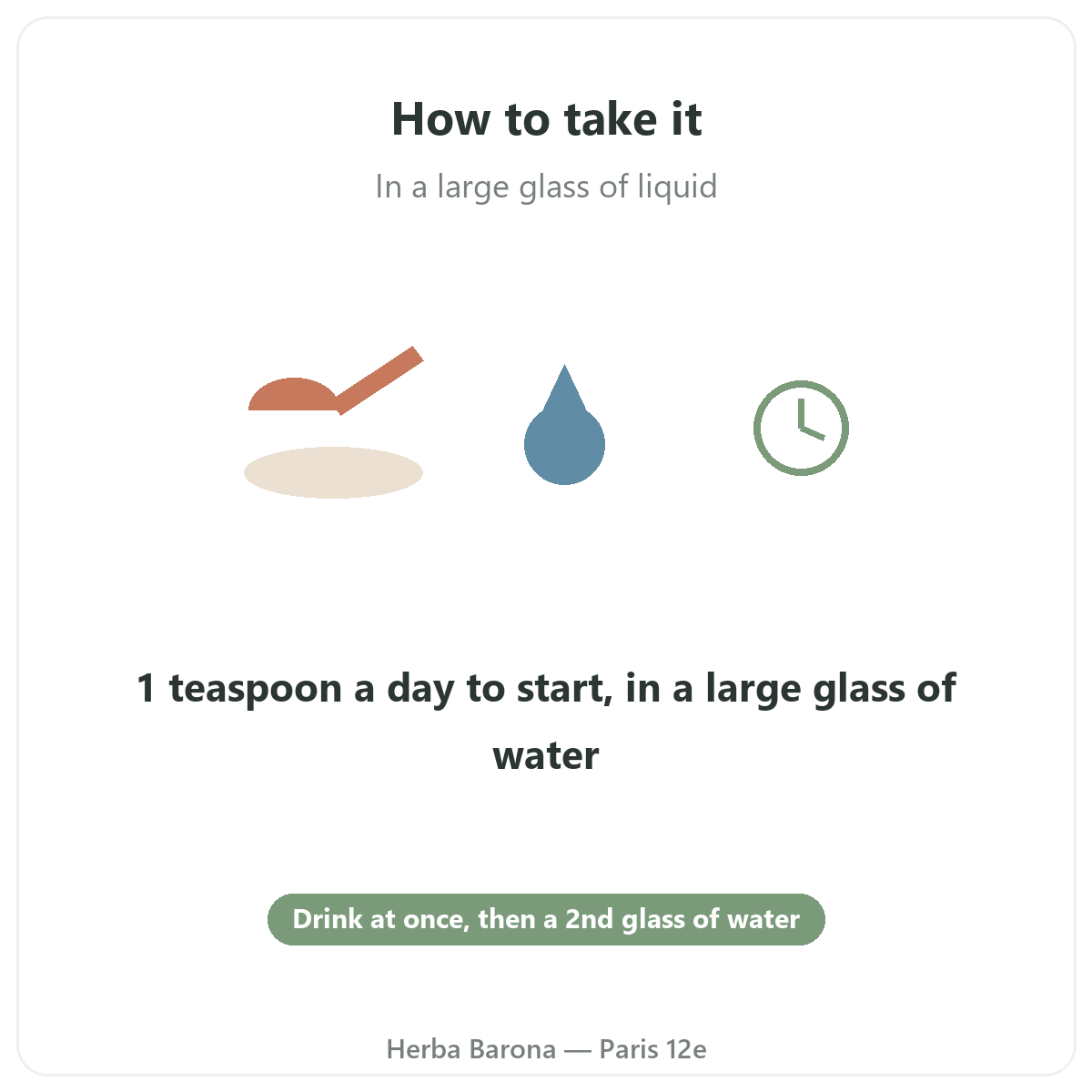
Nature et Partage advises starting gently, with one teaspoon a day for several days. Stir it well into a large glass of liquid, water, fruit juice, tea or herbal tea, and drink right away, before the mixture sets. Then rinse the glass with water and drink that too.
If you wish, the amount can be raised in steps over several days, up to 30 g a day, which is three tablespoons at most. The husk can also be stirred into a thicker preparation, such as compote, yoghurt or soup, as long as you drink a large glass of water afterwards.
A detail we often explain in the shop: prepare your glass at the last moment. Left for five minutes on the table, it turns into a jelly that is much less pleasant to drink.
In the kitchen: gluten-free bread and pie dough
Blond psyllium is also a cooking ingredient. In gluten-free recipes, it provides the binding that flour lacks: the dough kneads better and, according to the brand, the bread stays fresh and soft. It also helps to roll out a pie dough without it tearing.
The method is always the same: mix the husk into the dry ingredients, flour, salt, yeast, before adding the water or any other liquid. Poured straight into water, it forms lumps of gel that are hard to rescue. For a smoother crumb, the organic extra fine psyllium powder from the same brand disperses even more easily.
Low-flour breads in ketogenic eating often hold together thanks to psyllium; our keto and ketogenic section brings together the other products for this kind of cooking.
Husk, powder or capsules: how to choose in Paris
The flaked husk is the classic form: it is measured by the spoon, drunk in a glass and used in cooking. If you prefer a smooth texture in a drink or a sauce, the extra fine powder, ground from the whole husk, mixes in without visible flakes.
For those who do not like drinking a thick glass, Nature et Partage also offers organic psyllium capsules at 500 mg, also to be taken with a large glass of water. And for a large organic bag, the Ethnoscience organic blond psyllium powder, 600 g is also on our shelves.
These products are gathered in our shop in Paris 12th, rue Théophile Roussel: come by to compare the formats before you choose.
The precautions given by the brand
Take psyllium at a distance from your medication. If you are following a course of medication, ask a health professional for advice before starting: the brand advises against use at the same time as taking medication.
It is not recommended for children under 6, for pregnant or breastfeeding women. It is also not recommended in cases of swallowing difficulty, disease of the oesophagus or cardia, abnormal narrowing of the digestive tract, possible or existing intestinal blockage, intestinal paralysis or megacolon, undiagnosed rectal bleeding, or inability to pass stools linked to the use of a laxative.
Do not exceed the recommended daily amount and keep the bag out of the reach of children. The label reminds you: psyllium is not a food supplement, and it does not replace a varied, balanced diet or a healthy lifestyle.
Nature et Partage, a house from the Gironde
Nature et Partage is based in Gornac, in the Gironde. The brand has made psyllium one of its best-known products and offers it in several forms, from the husk in a bag to capsules, always packed in France.
At Herba Barona, in Paris, you will also find its malic acid powder, in the same kraft bag. The 300 g husk is easy to store in a kitchen cupboard: close it tightly after each use.
Frequently asked questions
Do I need to drink a lot of water with blond psyllium?
Yes. Nature et Partage advises stirring each spoonful well into a large glass of liquid, drinking at once, then drinking a second glass of water while rinsing the first.
Is this psyllium organic?
No, the brand does not present this husk as organic. It is 100% plant-based, with no additives and no gluten. If you are looking for organic, the extra fine powder and the capsules from the same brand are.
Can I use it in gluten-free bread?
Yes, that is one of its uses. Mix the husk into the dry ingredients before adding the liquid: the dough kneads better and the bread stays soft.
Where can I buy Nature et Partage blond psyllium in Paris?
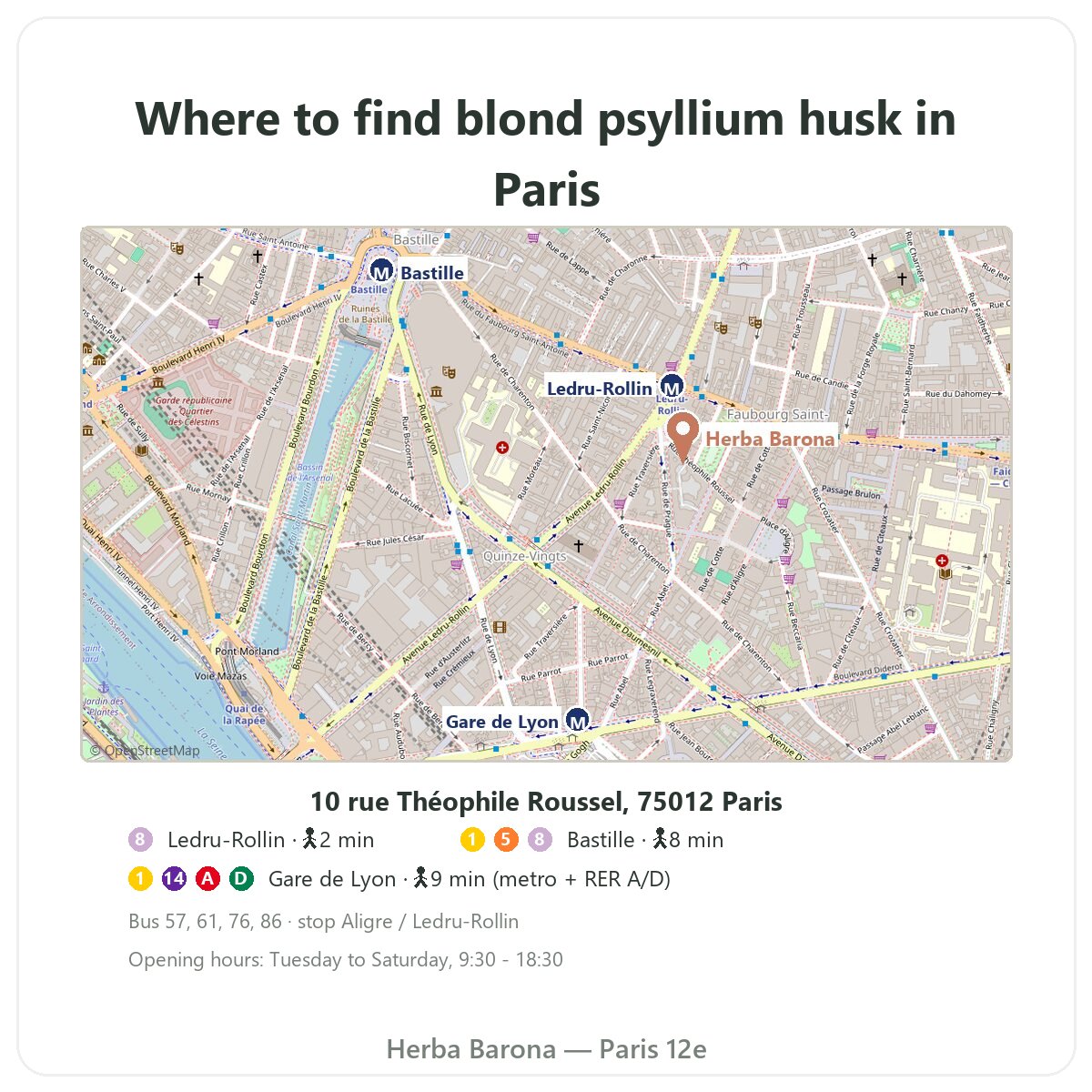
At Herba Barona, 10 rue Théophile Roussel in Paris 12th, a short walk from the Ledru-Rollin (line 8) and Bastille metro stations, Tuesday to Saturday, 9:30 am to 6:30 pm. You can also order it on our website and collect it in the shop.