Organic Extra Fine Psyllium Powder in Paris: the binder for gluten-free recipes
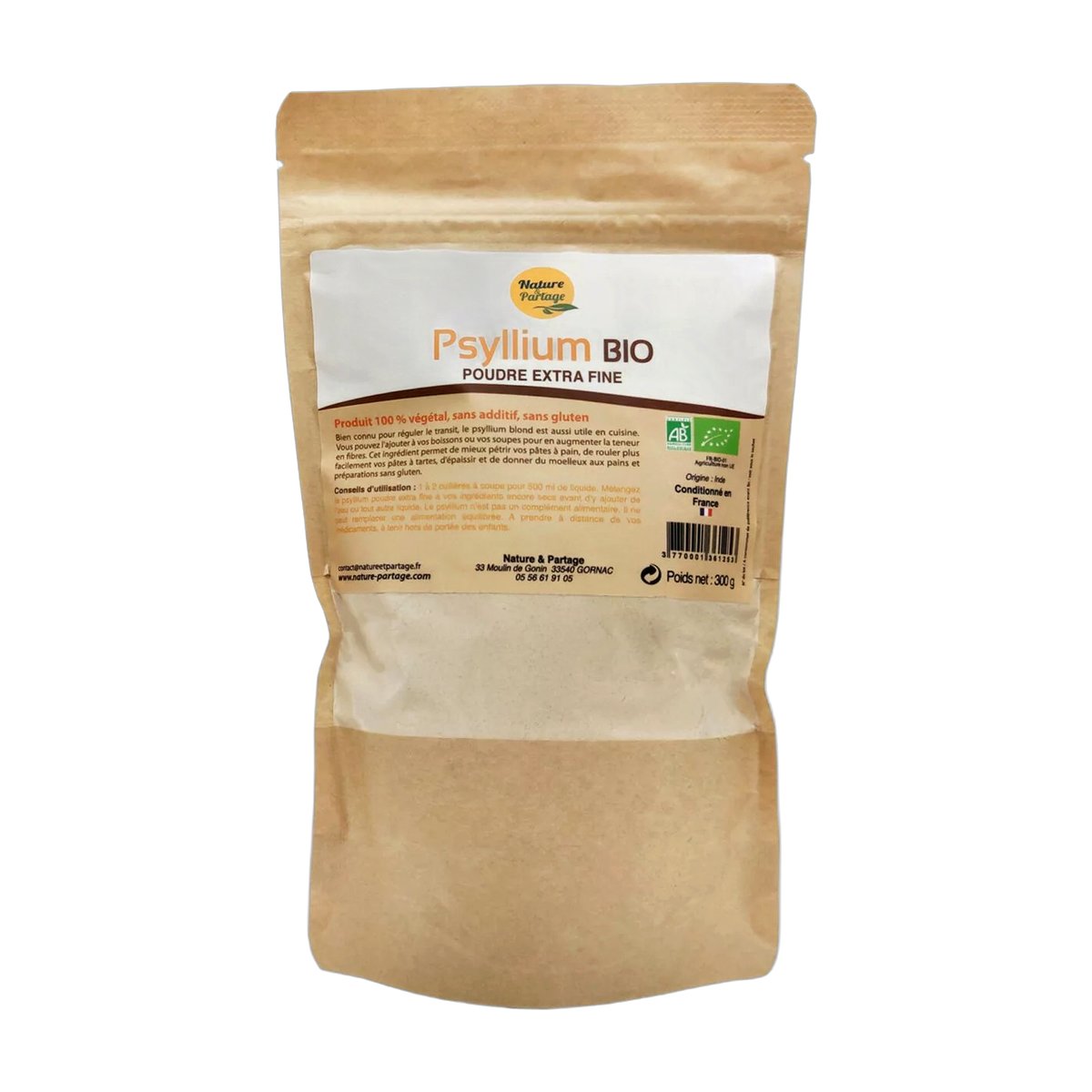
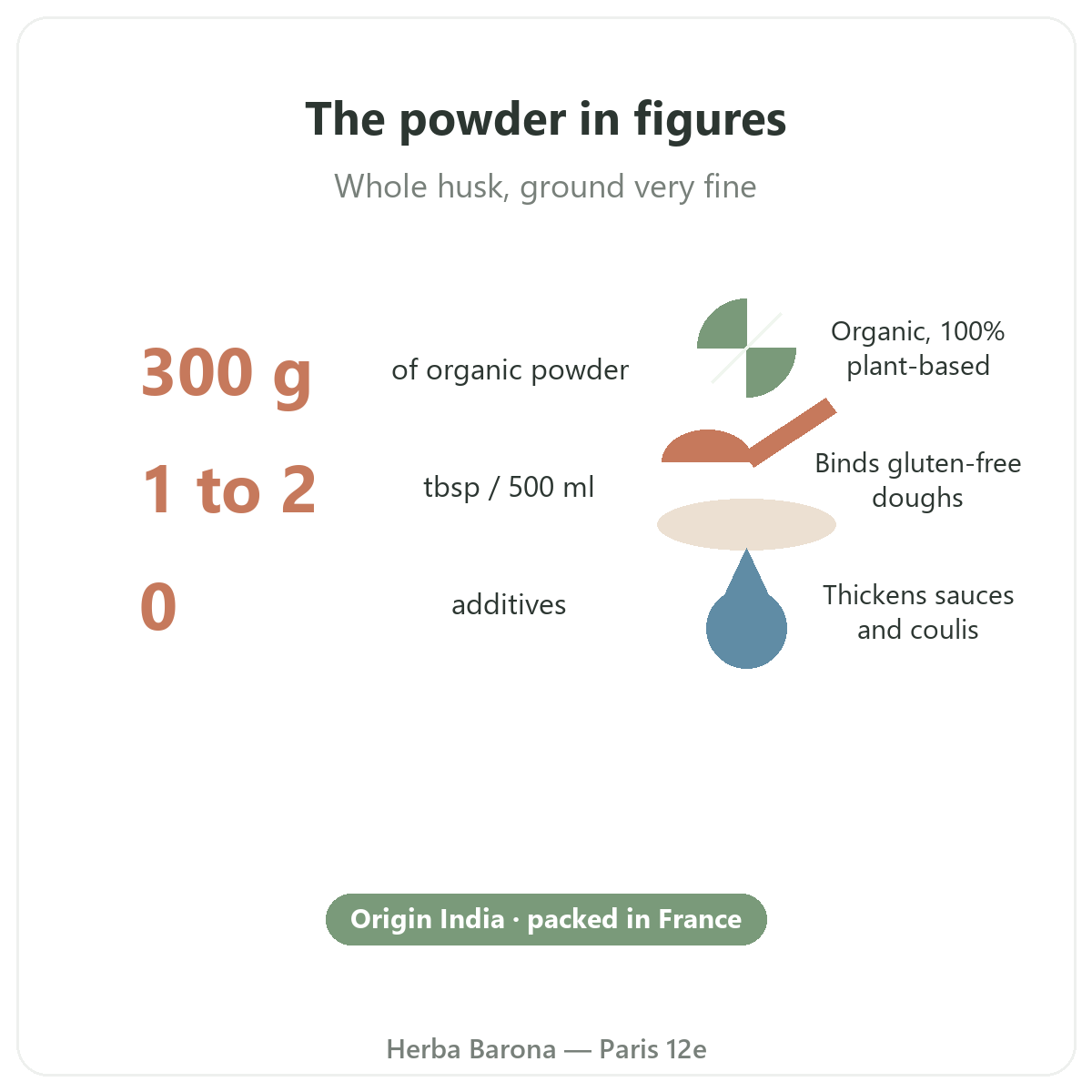
Nature et Partage organic extra fine psyllium powder is blond psyllium husk ground very finely. It is also called husk flour: it makes gluten-free breads and pizza doughs softer and mixes into drinks, soups and compotes. Available in Paris at Herba Barona.
Whole husk, ground into a very fine flour
This powder is made from the whole husk of blond psyllium, the coat of the seed, ground until it becomes an ultra fine flour. It is therefore also called psyllium husk flour. It keeps what makes psyllium worthwhile: a high content of plant mucilage, which soaks up water and thickens whatever it touches.
Compared with the flaked husk, the difference shows at once: no little flakes, a smooth texture, a powder that disperses into a dough without leaving specks. In our shop in Paris, it is the form we recommend first for cooking.
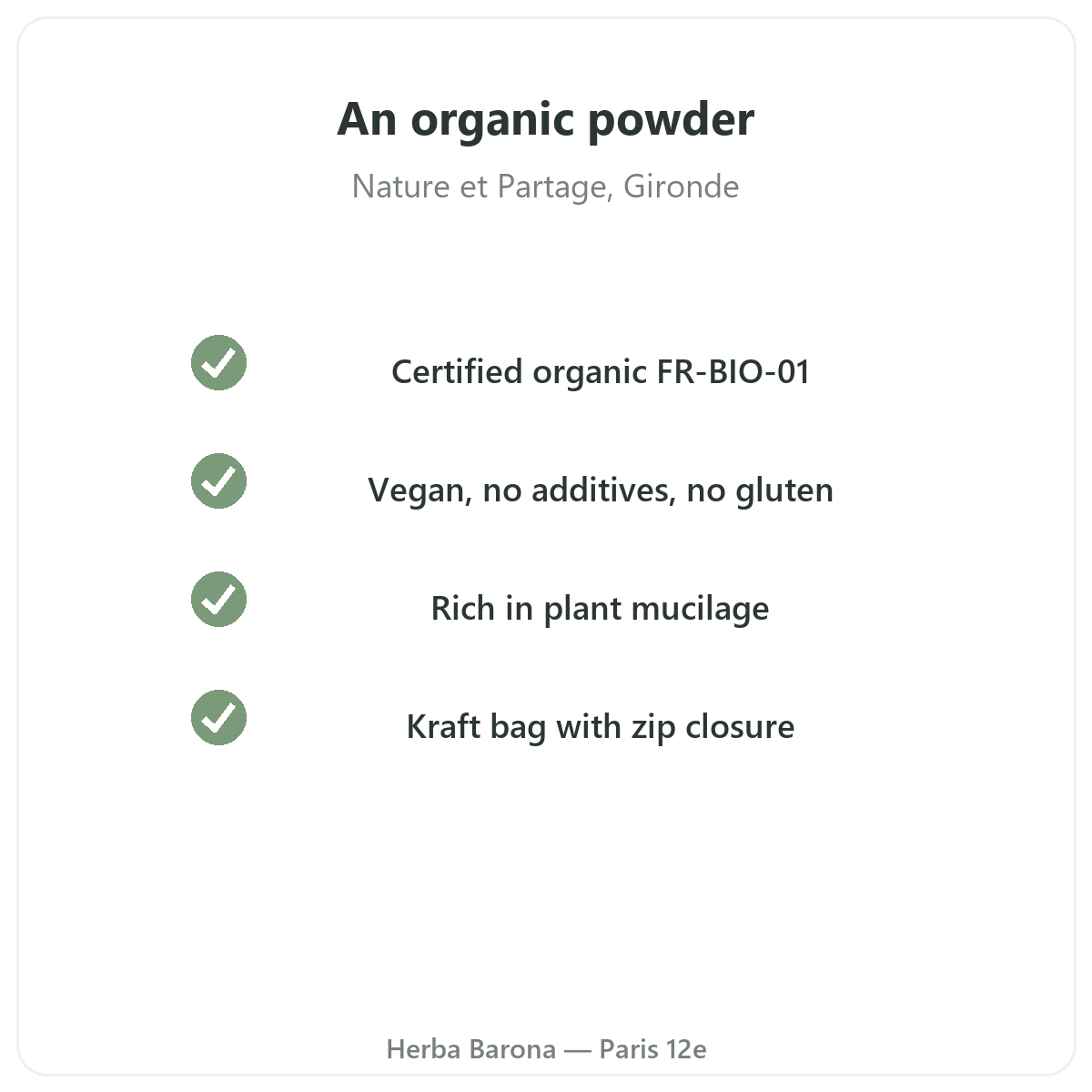
The product is 100% plant-based, vegan, with no additives and no gluten.
Gluten-free breads, pizzas and pastries
Gluten-free flours lack binding: the dough breaks and the crumb falls apart. Added in a small amount, psyllium powder supplies what is missing. The dough kneads better, gains volume, and breads and pizza doughs become softer. Pie doughs also roll out more easily.
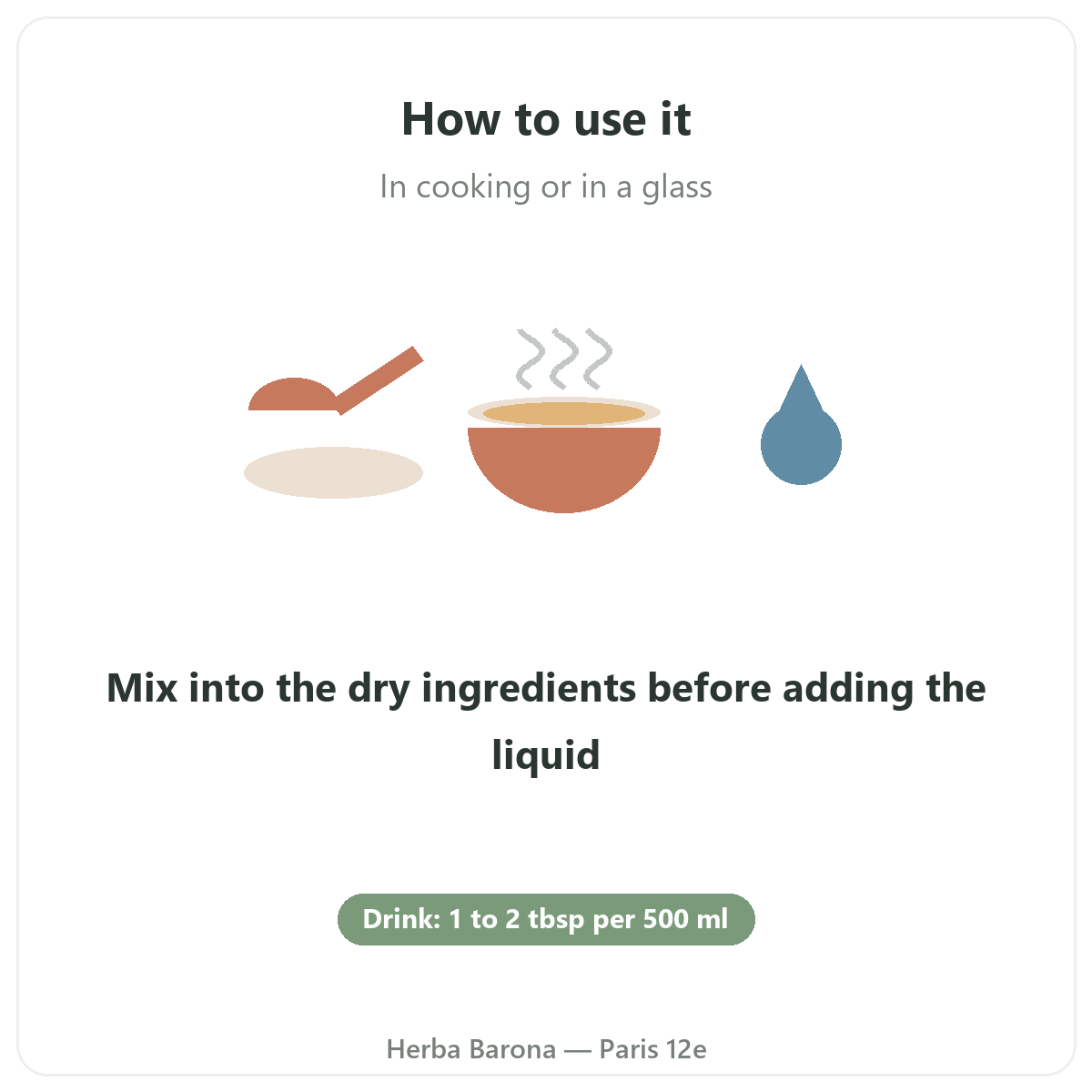
The brand insists on one point of method: mix the powder into your dry ingredients before adding the water or any other liquid. Poured alone into water, it sets at once and forms lumps. It pairs well with a gluten-free flour such as organic sweet potato flour.
The amounts depend on each recipe. To go further, Nature et Partage publishes a recipe book, Le psyllium en cuisine.
Thickening a sauce, a coulis or a soup
Mucilage has a thickening power that is also useful in everyday cooking. A little extra fine powder gives body to a fruit coulis, a sauce or a soup that is too thin, without starch.
Sprinkle it in little by little while whisking, then leave to stand for a minute or two: the mixture keeps thickening afterwards. It is better to add a little and top up than the other way round.
In a low-flour kitchen, ketogenic for example, it is often what holds breads and flatbreads together; our keto and ketogenic section brings together other products for this kind of cooking.
In a glass: 1 to 2 tablespoons per 500 ml
The extra fine powder can also be added to your drinks, soups and compotes to raise their fibre content. Nature et Partage recommends 1 to 2 tablespoons per 500 ml of liquid.
Mix vigorously, with a whisk or in a shaker, and drink without waiting: being so fine, the powder sets even faster than the flaked husk. A large glass of water alongside remains a good habit.
If you want a fibre that stays fluid in the glass, organic acacia fibre powder dissolves without thickening: it is another fibre powder that we offer in the shop.
Organic, grown in India, on the shelf in Paris
This psyllium is certified organic: the bag carries the AB logo and the Euro-leaf, with the code of the certification body FR-BIO-01. The “non-EU agriculture” mention is logical: the plant is grown in India, then packed in France by Nature et Partage, in Gornac in the Gironde.
The brand states that it complies with European legislation on ethylene oxide, as well as Community rules on aflatoxins and nicotine. The eco-responsible kraft bag closes with a zip, to keep the powder dry between uses.
In our shop in Paris 12th, it sits next to the blond psyllium husk in a 300 g bag from the same brand, for those who prefer flakes.
Precautions for use
The label reminds you: psyllium is not a food supplement and it does not replace a balanced diet. Take it at a distance from your medication. If you are on a course of medication, ask a health professional for advice, as the brand advises against use while taking medication.
It is not recommended for children under 6, for pregnant and breastfeeding women, nor in cases of swallowing difficulty, disease of the oesophagus or cardia, abnormal narrowing of the digestive tract, intestinal blockage or paralysis, megacolon, undiagnosed rectal bleeding or inability to pass stools linked to a laxative. Do not exceed the recommended amount and keep the bag out of the reach of children.
Frequently asked questions
What is the difference from blond psyllium husk?
It is the same part of the plant, the husk, but ground into an ultra fine flour and certified organic. The powder melts into a dough or a sauce; the flaked husk keeps a more marked texture.
How do I use it in gluten-free bread?
Mix the powder into the dry ingredients before adding the water. The dough kneads better, rises more and the bread stays soft.
Is this psyllium powder organic?
Yes. The bag carries the AB logo and the Euro-leaf, certification FR-BIO-01, for psyllium grown in India (non-EU agriculture) and packed in France.
Where can I find organic psyllium powder in Paris?
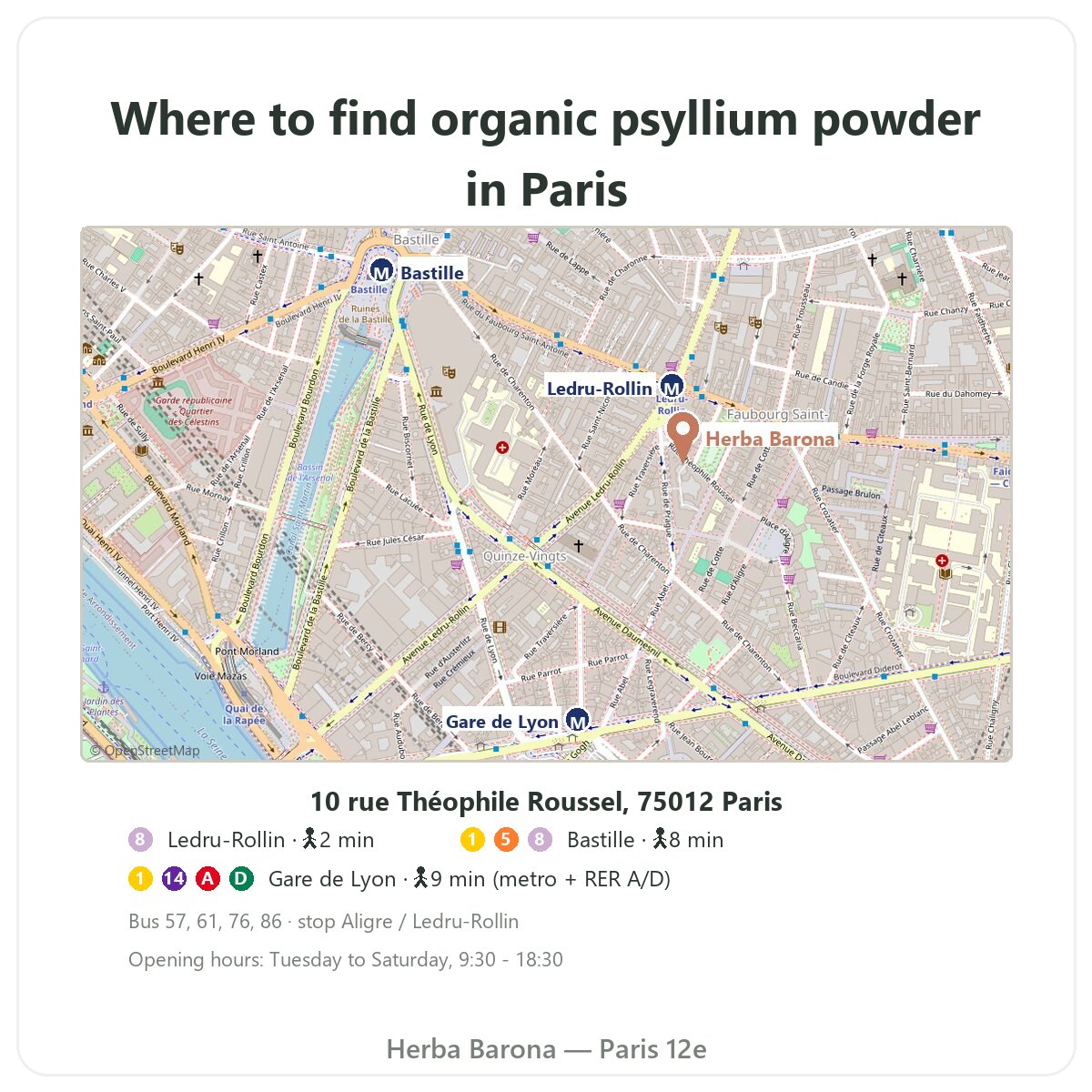
At Herba Barona, 10 rue Théophile Roussel, Paris 12th (Ledru-Rollin or Bastille metro), Tuesday to Saturday, 9:30 am to 6:30 pm. You can also order it online and collect it in the shop.