Peptan® Collagen Nutripure 1.2 kg in Paris: the large tub of unflavoured bovine collagen
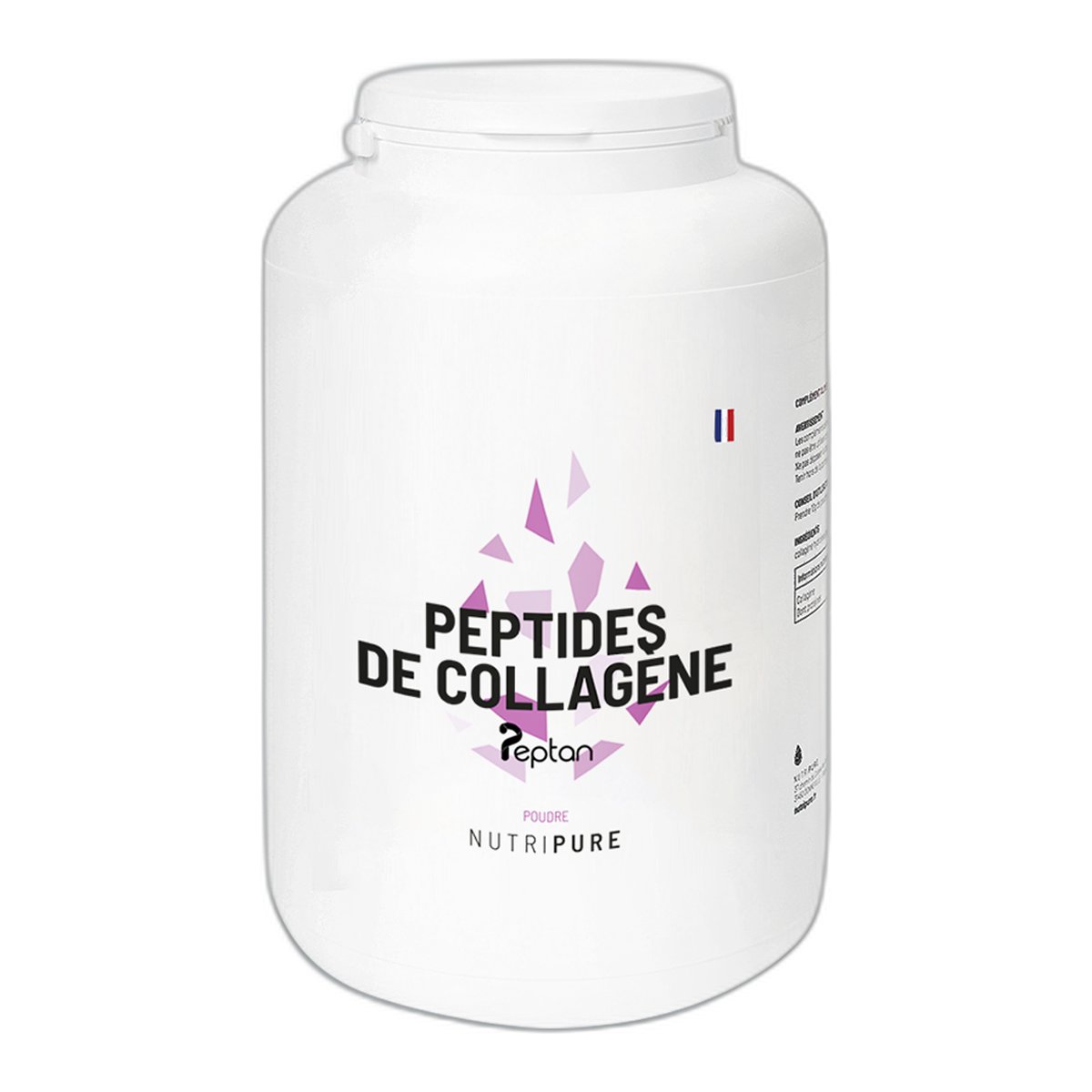
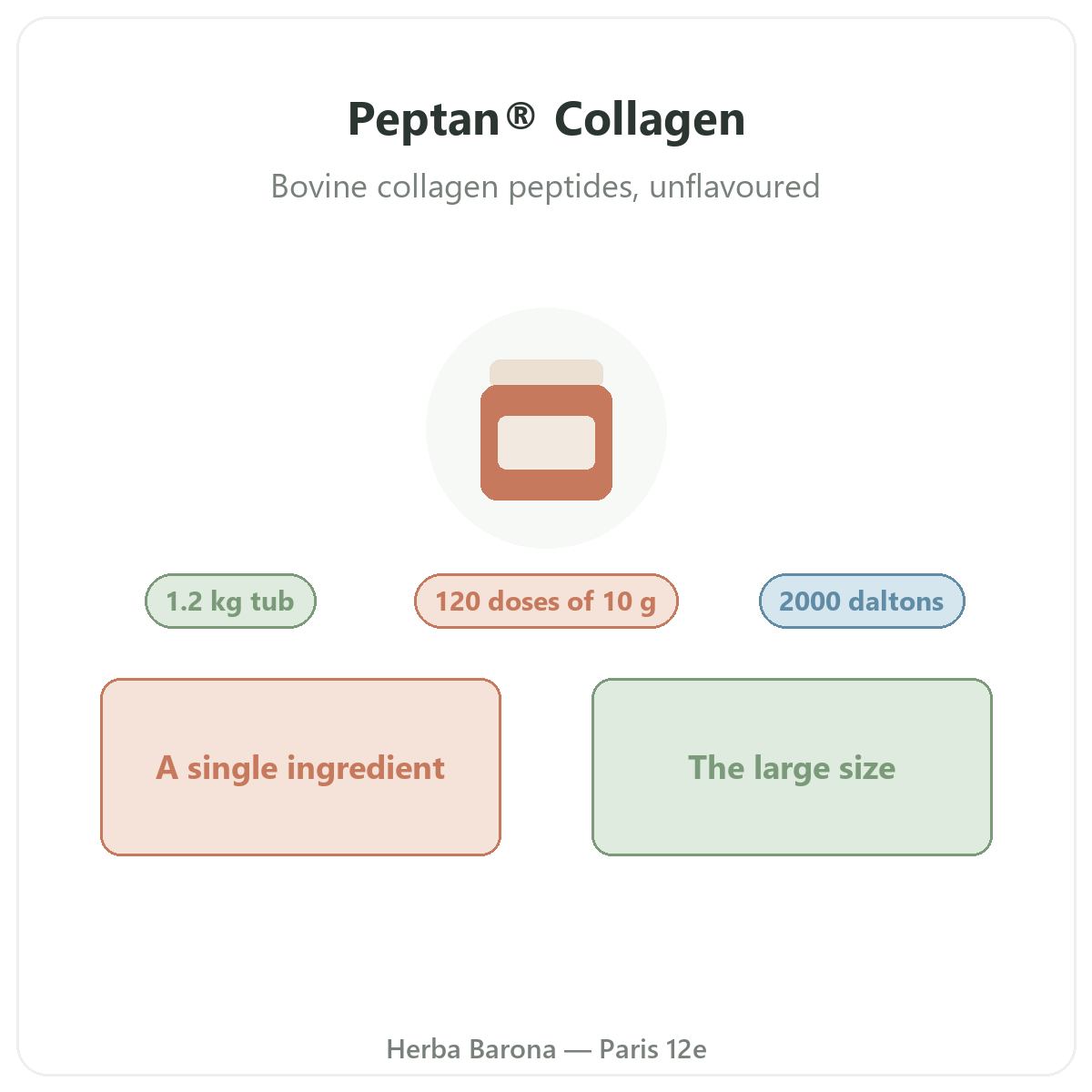
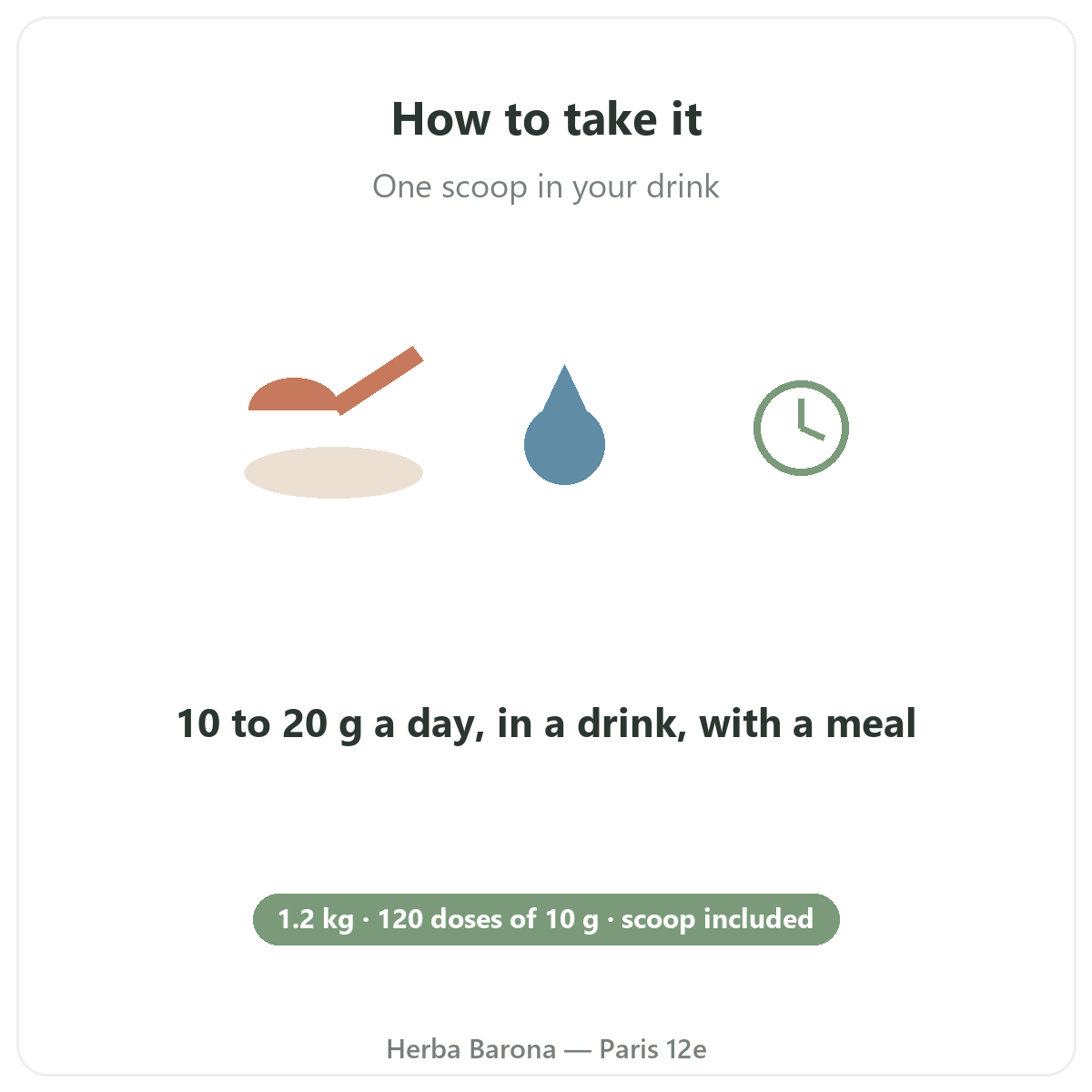
The 1.2 kg tub of Peptan® bovine collagen peptides, hydrolysed to 2000 daltons, with no flavouring or additive: 120 doses of 10 g.
For those who have made Peptan® part of their daily routine. Available in Paris at Herba Barona.
Sold in store only. No shipping.
The large tub: who is it for?
The 1.2 kg tub is aimed at people who already know Peptan® collagen and have made it part of their routine. It contains exactly the same product as the 310 g pouch: the same single ingredient, the same hydrolysis, the same neutral taste. Only the container changes, and with it the quantity.
In practical terms, one tub holds 120 doses of 10 g. At one dose a day, that is the equivalent of four months, hence the “4 months” label chosen by Nutripure. At 20 g a day, the upper amount suggested by the brand, it lasts about two months. A single purchase replaces almost four pouches.
The format also suits households where several people take collagen, or athletes who add it to their shaker after every session. For a first try, the pouch remains the better choice: it lets you check that the texture and the way you use it suit you before moving on to the large tub.
A single ingredient: Peptan® B
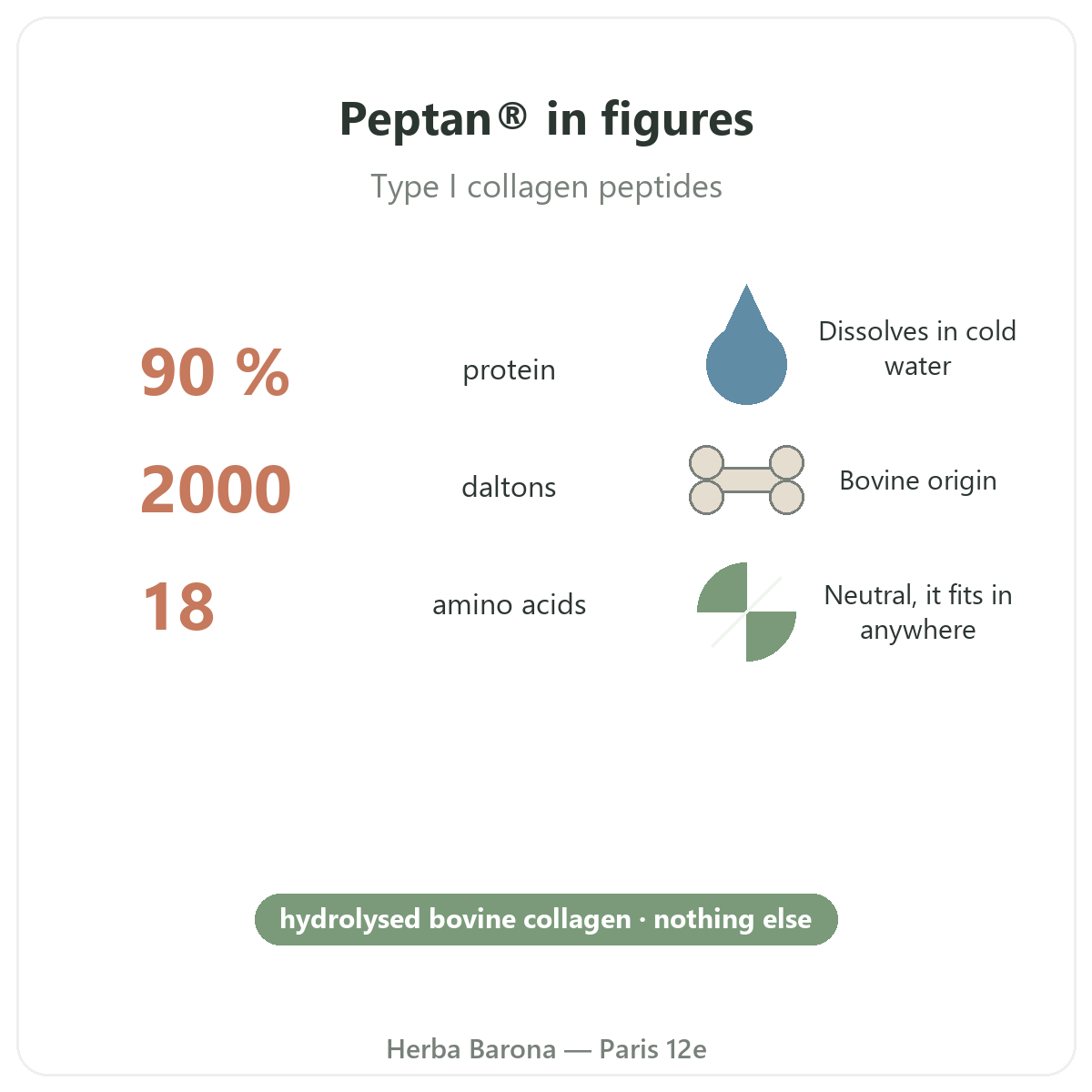
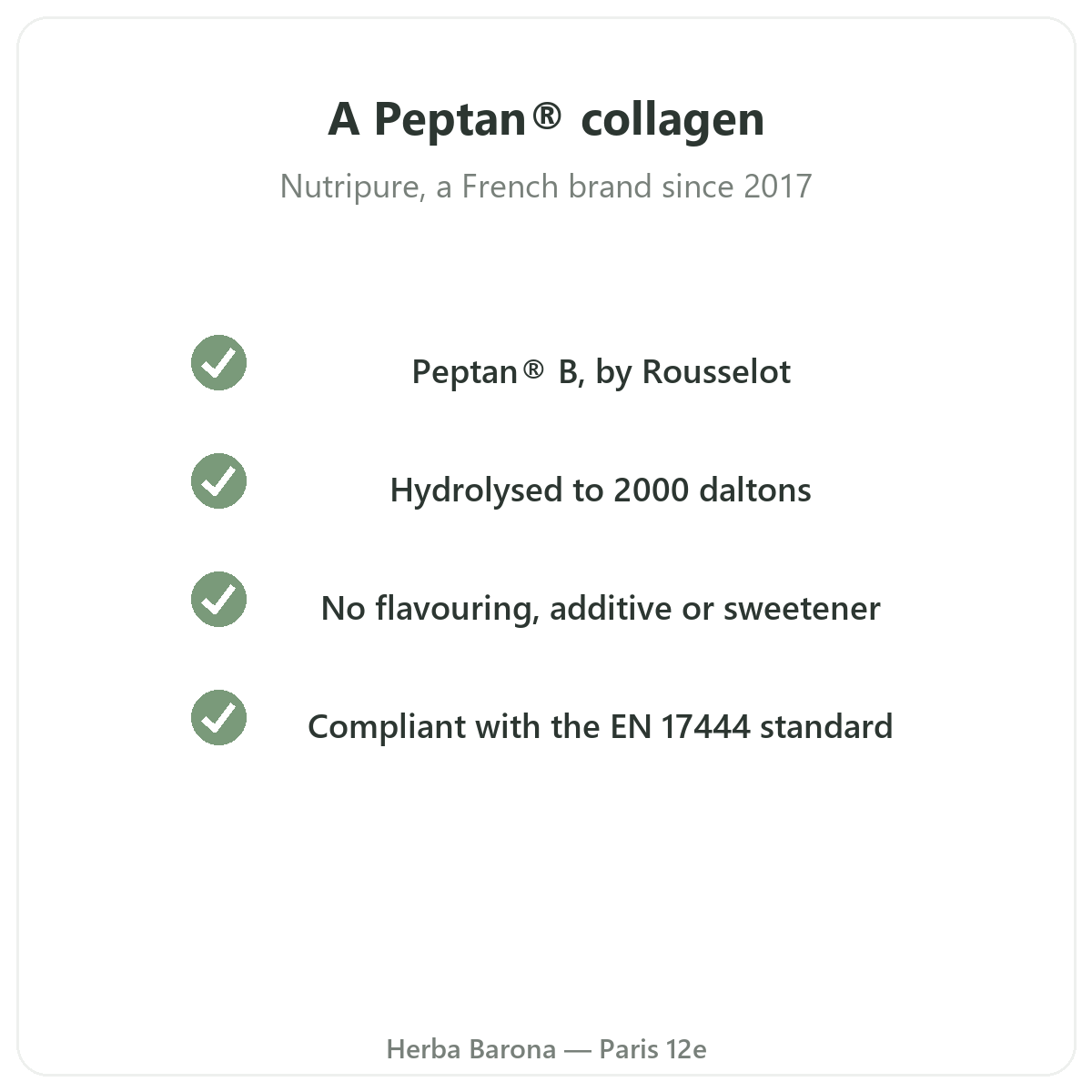
The ingredient list takes only a few words: hydrolysed collagen of bovine origin. Nutripure uses Peptan® B, a registered brand of collagen peptides produced by Rousselot, a world specialist in gelatine and collagen. The origin stated for the unflavoured version is European.
These peptides come mainly from type I collagen, with a share of type III. They are broken down to an average molecular weight of 2000 daltons, one of the lowest values among the collagen peptides on the market, which generally range from 2000 to 5000 daltons. This is what gives a fine powder that dissolves in cold water.
The tub contains no flavouring, sweetener, bulking agent or anti-caking agent. A 10 g dose provides 10 g of collagen, including 9 g of protein. The product is manufactured in line with the EN 17444 anti-doping standard, a useful reference for athletes subject to testing, and Nutripure provides halal and kosher certificates.
From hide to peptide: how hydrolysed collagen is made
Native collagen is a giant molecule made of three chains of amino acids wound into a triple helix. It weighs between 300,000 and 400,000 daltons and does not dissolve in water. It is what gives animal hides, tendons and bones their strength.
Manufacturing follows three main steps. First, the bovine hides are cleaned and prepared. Next, extraction with hot water separates the three chains: this gives gelatine, around 50,000 daltons, the kind used in desserts and sweets, which only dissolves when hot and sets as it cools. Finally, enzymes cut the gelatine into much shorter fragments, the peptides.
After filtration, the solution is spray-dried: it is sprayed into a stream of hot air, and the droplets instantly turn into powder. This light white powder is what you find in the tub. The difference with gelatine is obvious straight away: the peptides disperse in a glass of cold water without lumps and never turn into a gel.
Storing a 1.2 kg tub properly
A large tub is used over several weeks, sometimes several months, so storage matters more than with a pouch. Collagen peptides are a powder that draws moisture from the air. Left open in a kitchen where water is being boiled, it can clump into small lumps.
A few simple habits are enough. Close the lid as soon as you have taken your dose, keep the tub in a cupboard away from heat and light, far from the kettle and the hob. Always use a dry scoop: a single drop of water in the tub is enough to create a lump.
If a few clumps appear anyway, they dissolve normally in your drink: just stir a little longer. In our shop in Paris 12th, it is the question we are asked most often by people moving from the pouch to the tub, and the answer comes down to one simple reflex: a tightly closed lid.
Ideas for using it every day
The neutral taste is the great advantage of the large format: you cannot get tired of a flavour for four months when there is none. The powder blends into a coffee, a tea, a fruit juice or a smoothie, and is almost undetectable in a plain glass of water with a squeeze of lemon.
Nutripure also suggests a plant milk, a vegetable juice, a gazpacho or a whey shaker. For hot dishes, it slips into a porridge, a soup or a warm fruit compote without thickening it. For variety, the brand offers natural flavourings sold separately, such as the lime-mango flavouring: one or two spoonfuls are enough to flavour the drink of the day.
A tip for the texture: pour the powder onto the liquid rather than the other way round, then stir for a few seconds. In a shaker, add the water first and the powder second. Several of our customers in Paris prepare their morning glass this way, at the same time as their coffee, without changing anything in their habits.
Amino acid profile and pairing with vitamin C
Collagen has a very particular amino acid profile. Per 10 g, glycine comes first with 1,850 mg, followed by glutamic acid, proline and hydroxyproline, each at around 1 g. Hydroxyproline is almost unique to collagen: it is rarely found elsewhere in the diet.
On the other hand, collagen contains no tryptophan and is low in leucine. It therefore does not replace a complete protein source such as meat, eggs or whey; it complements a varied diet. Some people pair it with the brand’s crystallised glycine, the main amino acid in collagen, which mixes easily in the same glass.
The other common pairing is vitamin C, which contributes to normal collagen formation for the normal function of bones, cartilage, gums, teeth, skin and blood vessels. The unflavoured version contains none: an orange juice or a kiwi will do. This claim relates to vitamin C, not to collagen, which has no authorised health claim in Europe. If you are taking medication, are pregnant or breastfeeding, ask your doctor for advice.
310 g pouch or 1.2 kg tub, bovine or marine
Choosing a format is mostly a matter of use. The 310 g pouch, i.e. 31 doses, is suited to discovering the product or to occasional use; it is easy to store and travels well. The 1.2 kg tub is suited to regular use and saves buying every month. Nutripure also offers Peptan® in a 4 kg bucket for very heavy users.
Then there is the question of origin. Peptan® is a bovine collagen; Nutripure also offers a Naticol® marine collagen, made from fish skins. The two look alike in the glass. People who do not eat fish turn to the bovine one, those who avoid beef to the marine one. No collagen is suitable for vegetarians, however: it is always an animal protein.
Our collagen section in Paris brings together both families, as powders and capsules. If you are unsure which format to choose, the team at our shop in Paris 12th will help you decide according to how much you use.
Frequently asked questions
Does the tub contain the same product as the pouch?
Yes. The 1.2 kg tub and the 310 g pouch contain the same unflavoured Peptan® B bovine collagen, hydrolysed to 2000 daltons. Only the quantity changes: 120 doses of 10 g in the tub, 31 in the pouch.
How long does a 1.2 kg tub last?
About four months at 10 g a day, or two months at 20 g a day, the upper amount suggested by Nutripure.
Is a scoop included?
Yes, a 30 ml scoop is included in the tub. A 10 g dose corresponds to about 80% of the scoop.
Where can I find it in Paris?
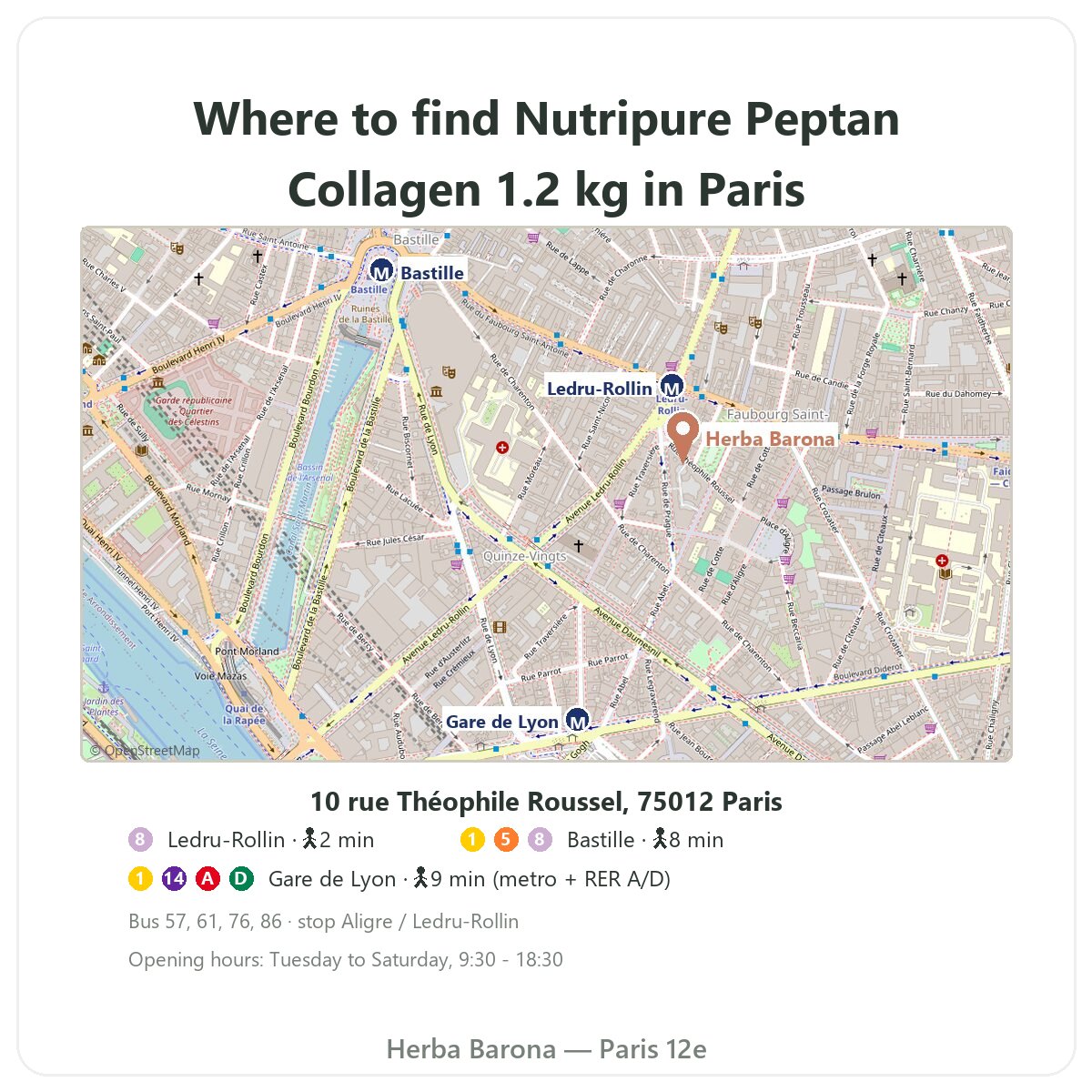
Nutripure Peptan® is listed at our shop in Paris 12th, 10 rue Théophile Roussel, between Ledru-Rollin (line 8) and Bastille (lines 1, 5, 8) metro stations. Its current availability is shown on this page.
Herba Barona’s tip — with a large tub, always keep the scoop dry and put it back in the tub after use. A damp scoop is enough to form small lumps in the powder; a powder that stays dry keeps flowing freely down to the very last dose.