Nutripure Marine Collagen 310 g in Paris: the long course, the economical size
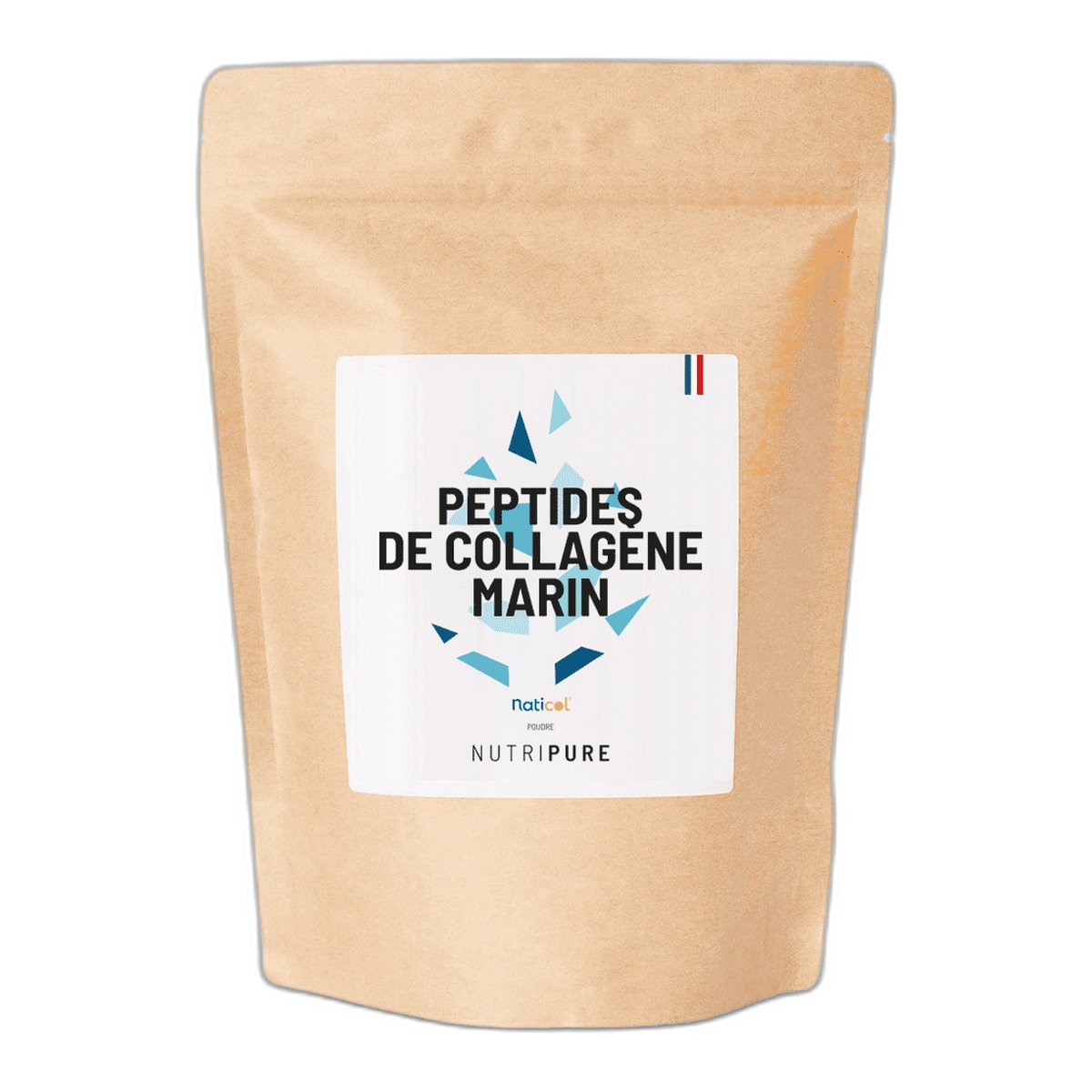
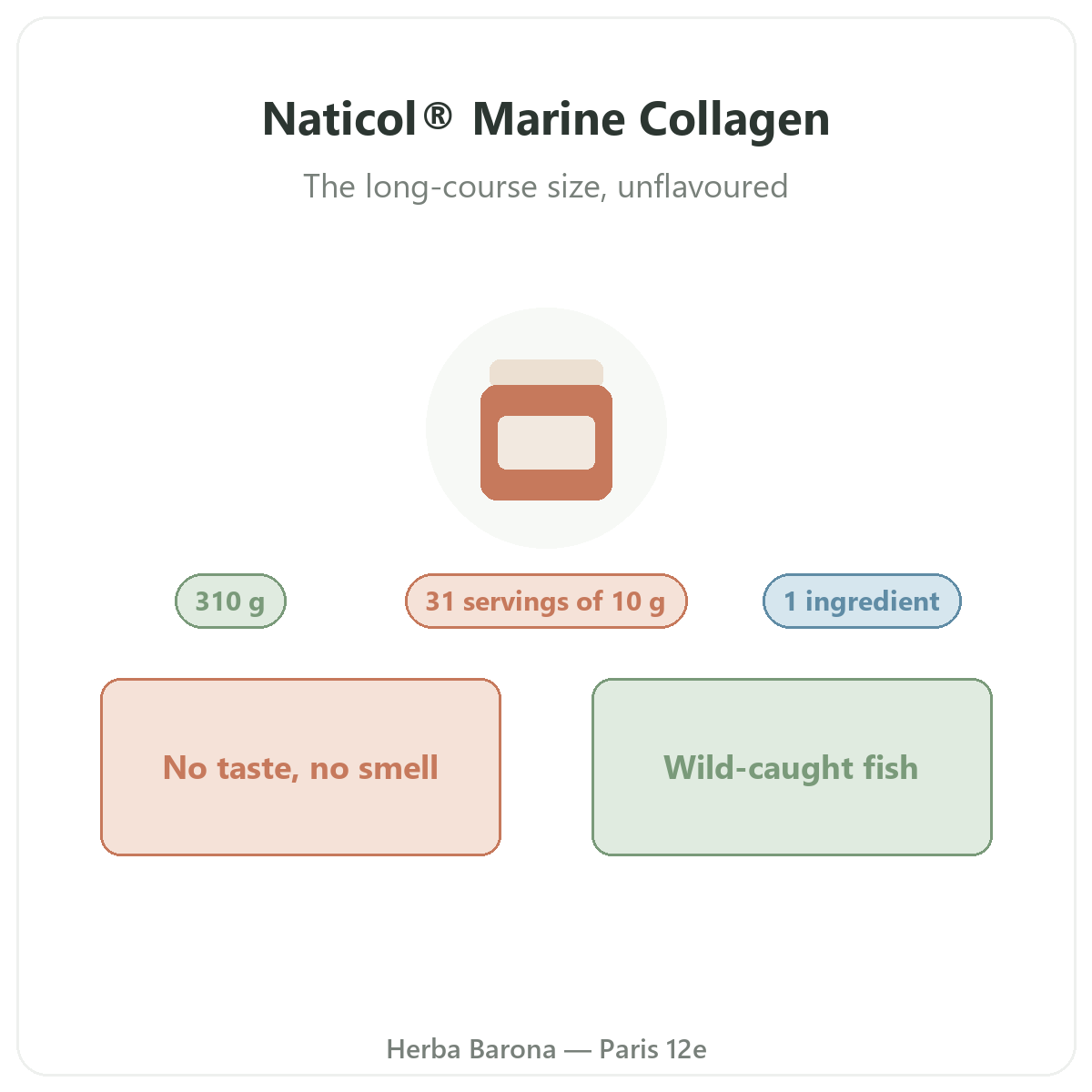
The large pouch of unflavoured Naticol® marine collagen: 31 servings of 10 g of wild fish peptides, for a full month without a break.
30 ml scoop included. Available in Paris at Herba Barona.
A size designed for consistency
Collagen powder is taken every day, over several weeks. It is more of a habit than an occasional serving, and the size of the pouch matters as much as the powder inside it. Nutripure’s 310 g pouch holds 31 servings of 10 g, a full month at the brand’s basic serving.
It is also more economical than the small pouch: per gram of collagen, the 310 g works out cheaper than the 150 g pouch, which remains ideal for trying the product. For someone who already knows it, or who has finished a first pouch, it is the most logical choice.
In Paris, it is mainly athletes and regular collagen users who choose this size: they already know they will take it every day and would rather not buy a new pouch every two weeks.
What a 10 g serving contains
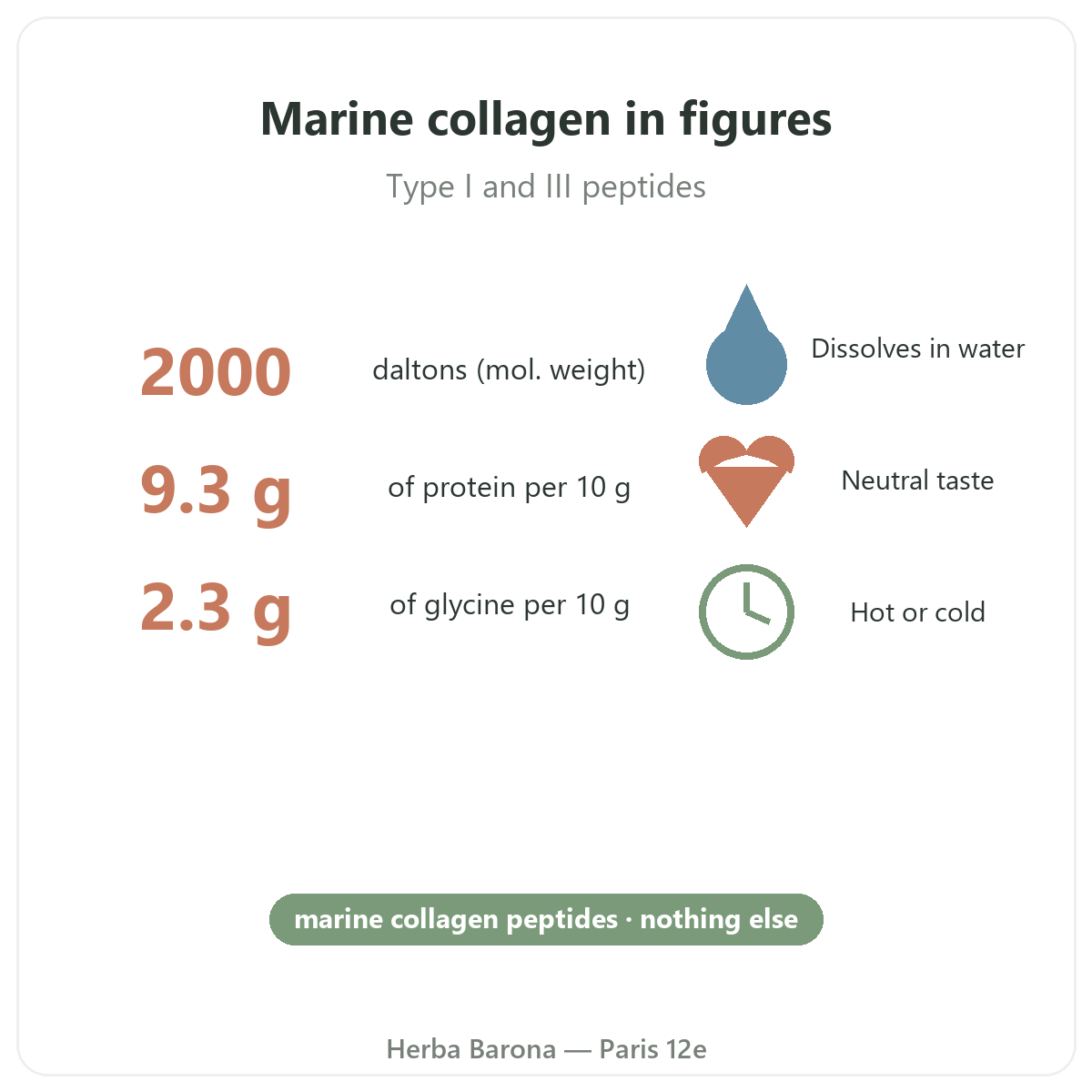
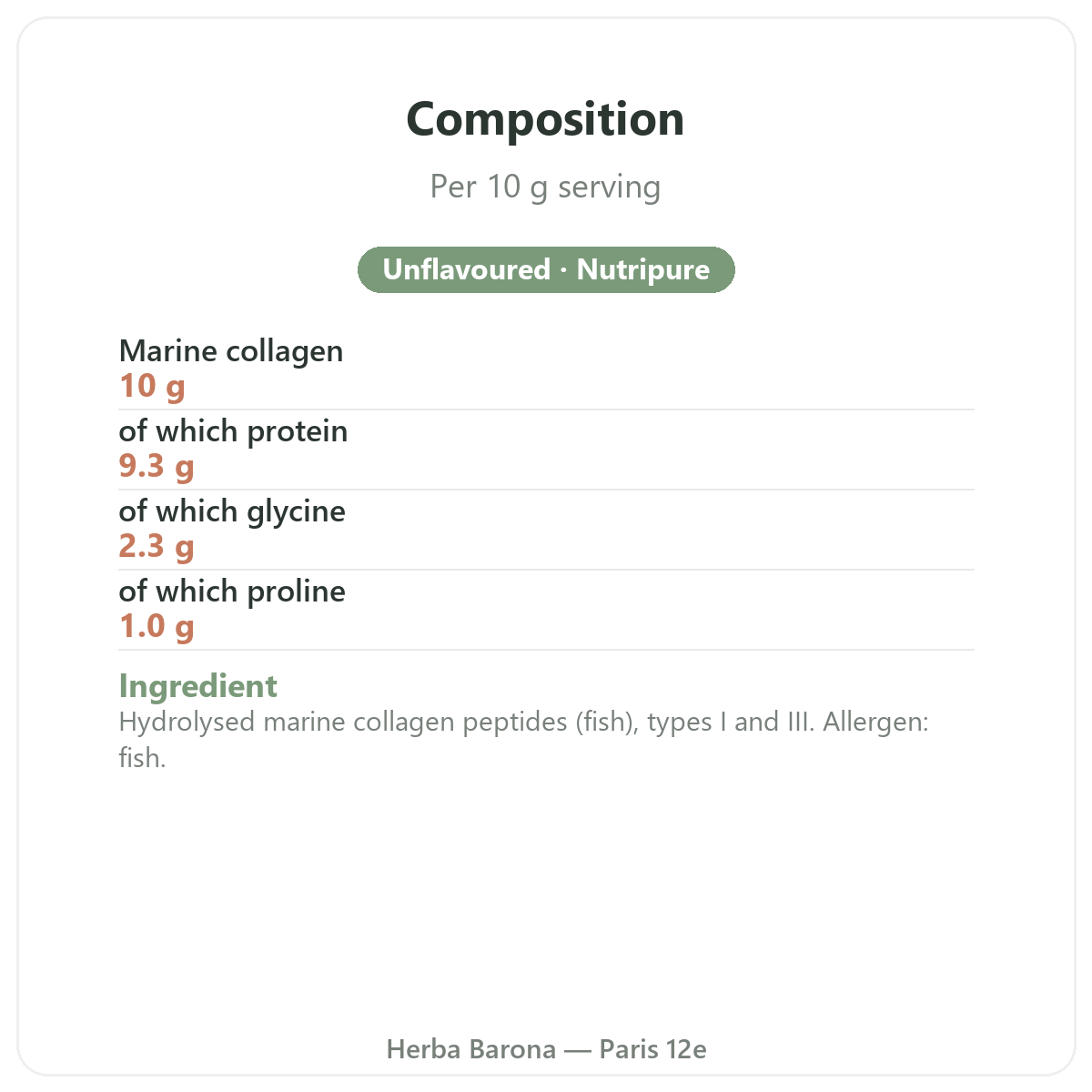
The composition fits on one line: hydrolysed marine collagen peptides, types I and III, from fish. There is no flavouring, no sweetener and no anti-caking agent. For a 10 g serving, the label states 10 g of collagen, including 9.3 g of protein.
Collagen differs from other proteins in its amino acid signature. A 10 g serving provides 2.3 g of glycine, 1 g of proline, 0.6 g of hydroxyproline and 0.1 g of hydroxylysine. Glycine appears at roughly every third position in the collagen chain, and hydroxyproline is an amino acid found almost exclusively in this protein.
This profile, which we are often asked to explain in Paris, is very different from that of whey or plant protein, which are rich in leucine and essential amino acids. Collagen therefore does not replace them: it is used in addition, and many athletes mix the two in the same shaker.
Naticol®: origin, hydrolysis and traceability
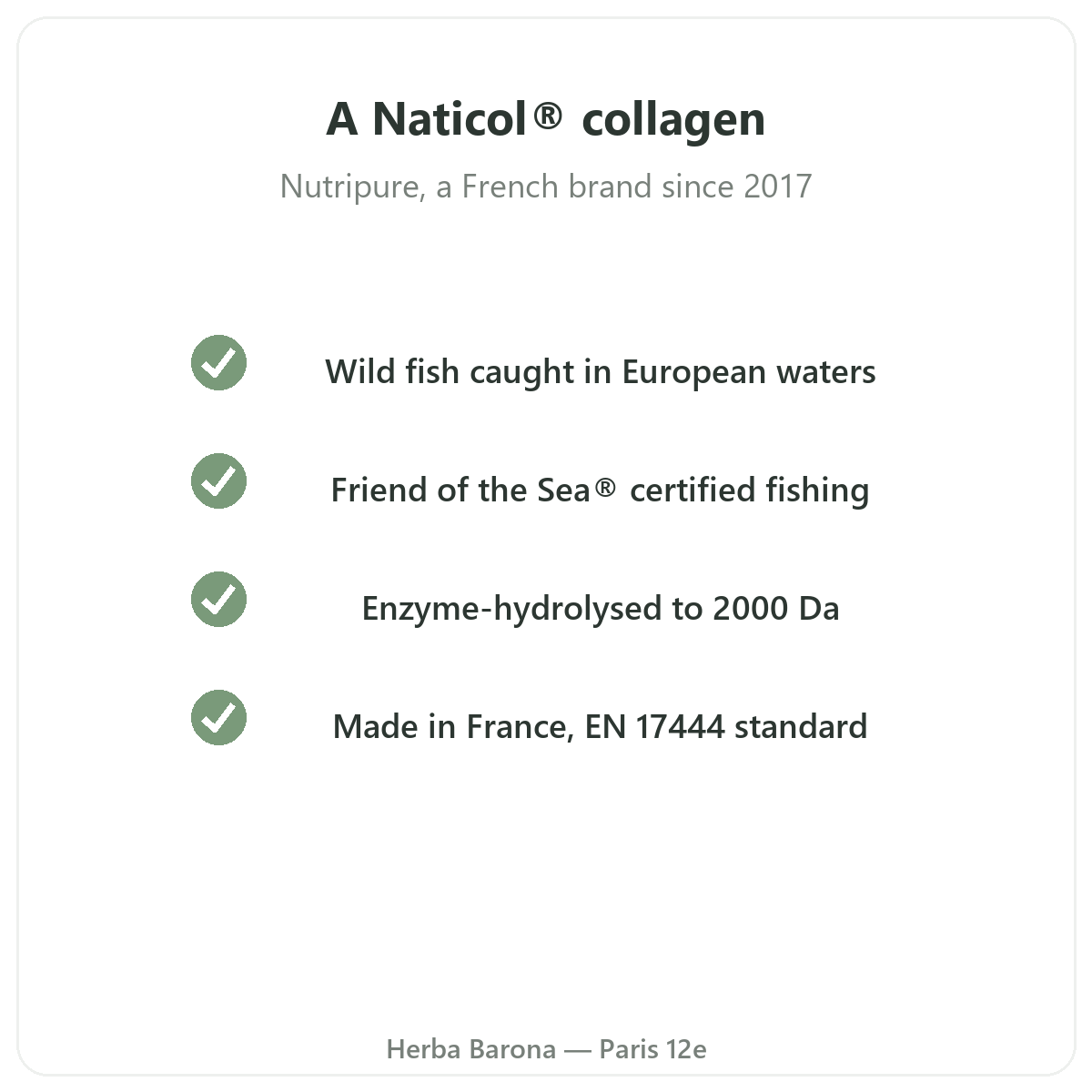
The raw material is Naticol® collagen, a French benchmark for fish collagen peptides. It is extracted solely from the skin of wild fish caught in European waters: cod, haddock and redfish. The fishing is Friend of the Sea® certified, a label that sets standards for species and catch methods.
Native collagen is a molecule of nearly 300,000 daltons that does not dissolve in cold water. Gentle enzymatic hydrolysis breaks it down into peptides of about 2000 daltons. This low molecular weight is what gives a fine powder that disperses quickly in a glass and remains stable in heat and acidity.
The product is made in France in accordance with the EN 17444 anti-doping standard. Nutripure publishes a Naticol® traceability sheet, and every batch is tested before it is packed.
Day to day: drinks, shakers and recipes
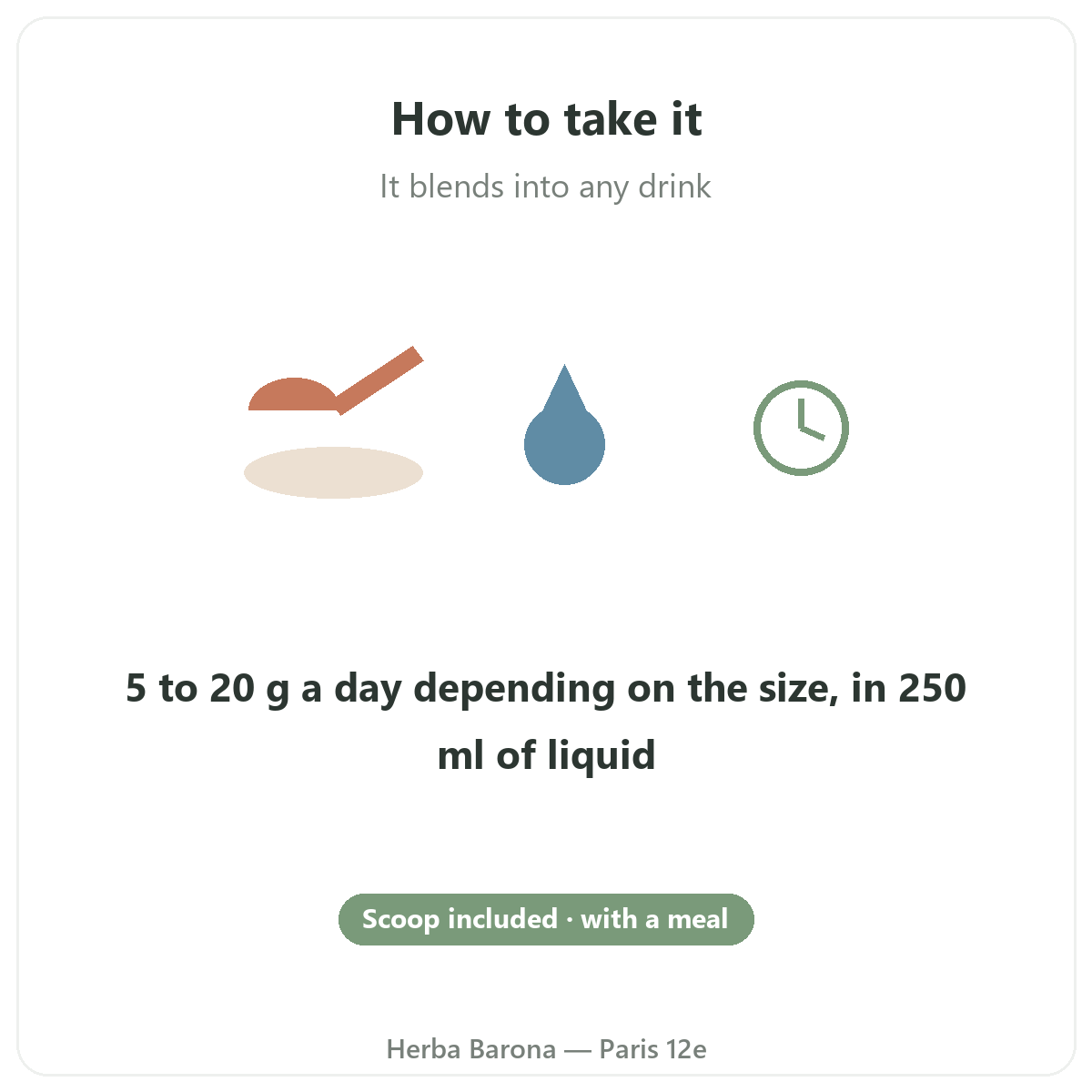
Nutripure recommends 10 to 20 g a day. With the 30 ml scoop provided, 10 g corresponds to about 80% of the scoop. Dissolve the serving in about 250 ml of liquid, preferably with a meal or after training. At 20 g a day, the pouch lasts around a fortnight.
As the taste is neutral, collagen fits in anywhere: water, lemon water, plant milk, fruit or vegetable juice, smoothie, gazpacho or a protein shake. It handles hot drinks, coffee, tea or hot chocolate, without changing their taste. It can also go into porridge, yoghurt or pancake batter.
Over a long course, the simplest approach is to link the serving to a daily habit: the morning coffee, the post-workout shaker or the evening bowl of soup. At our shop in Paris 12th, this is the advice we give most often so that no days are skipped.
150 g or 310 g: which pouch to choose?
Both pouches contain exactly the same powder: unflavoured Naticol® marine collagen. Only the quantity, the scoop and the length of the course differ. The 150 g comes with a 5 g scoop and suits a daily intake of 5 to 10 g. The 310 g comes with a 30 ml scoop, better suited to servings of 10 g and more.
If you have never taken marine collagen, the small pouch lets you check how neutral the taste is. If you already know it, take 10 g a day or more, or train regularly, the 310 g avoids running out and costs less per gram.
To complete the shelf, we also offer other marine and bovine collagens in Paris, as well as our joints section, which you can compare in the shop.
Why Nutripure
Nutripure is a French brand created in 2017 by Christophe Carrio, five-time world champion in artistic karate and a qualified dietitian, and his brother Florent, an engineer. Based in Haute-Garonne, near Toulouse, it has its products made in France.
Its range relies on ingredients identified by name, such as Naticol® for this collagen, and on clear product sheets. This clarity is what convinced us to stock it in our shop in Paris 12th, alongside Nutripure Crystallised Glycine and the rest of the Nutripure range.
Allergen, precautions and storage
This product contains fish and is therefore not suitable for people with a fish allergy. It may contain traces of gluten, egg, soy, milk and celery. It is for adults only: do not exceed the recommended daily intake and keep it out of reach of children.
If you are pregnant, breastfeeding or undergoing medical treatment, ask your doctor for advice before starting a course. A food supplement is part of a healthy lifestyle and does not replace a varied and balanced diet.
With a large pouch, storage matters: close the zip every time, keep the scoop dry inside and store the pouch in a cupboard, away from the kettle and the sink. Moisture is the only real enemy of the powder.
Frequently asked questions
How many servings are in the 310 g pouch?
31 servings of 10 g, i.e. one month at the basic serving, or around a fortnight at 20 g a day.
Can it be mixed with whey or creatine?
Yes, in the same shaker. Simply add a little more water to keep a smooth texture.
Is it the same product as the 150 g pouch?
Yes, the powder is identical. Only the quantity, the scoop and the cost per gram differ.
Where can I find it in Paris?
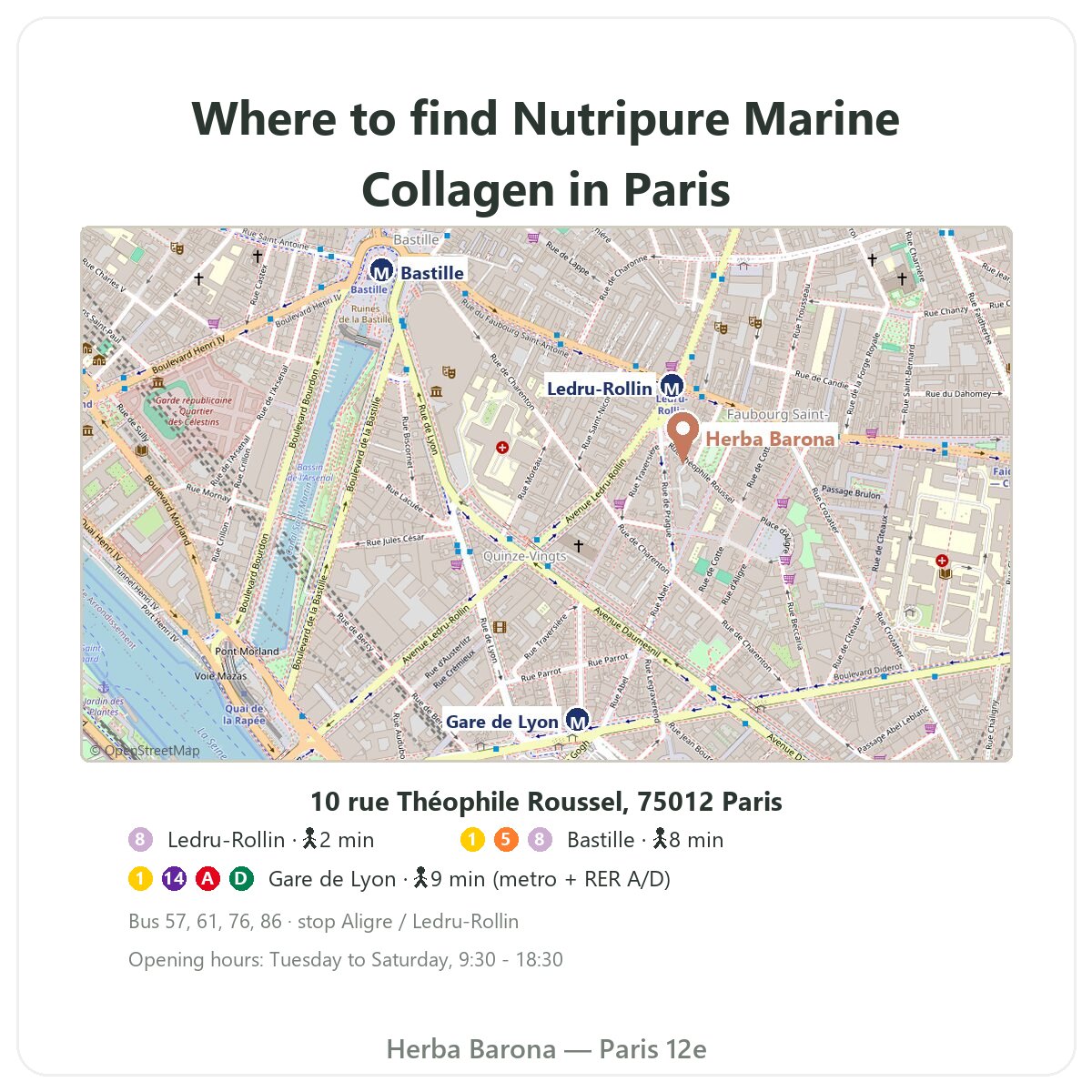
At Herba Barona, 10 rue Théophile Roussel, Paris 12th, from Tuesday to Saturday, 9:30 am to 6:30 pm, between Ledru-Rollin (line 8) and Bastille (lines 1, 5 and 8) metro stations.
Herba Barona’s tip — fill the scoop four-fifths full the first time and weigh it on a kitchen scale: you will know exactly what your 10 g look like, and you can then measure by eye for the rest of the course.