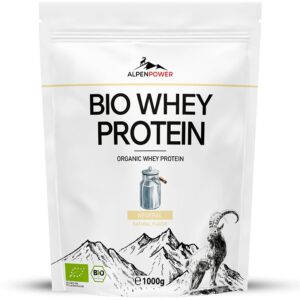
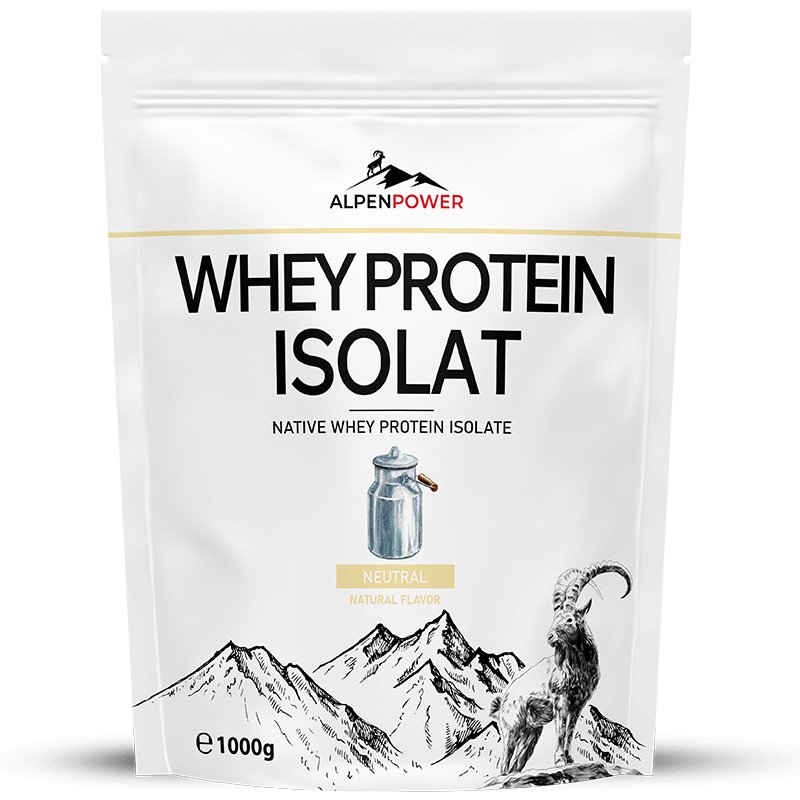
Whey Protein Isolate Plain AlpenPower in Paris: 90% protein, almost lactose-free
Native whey isolate from Alpine milk, cold-filtered, with no synthetic sweetener. Available in Paris at Herba Barona.
What’s in this tub
One kilo of native whey protein isolate, about thirty-three servings of thirty grams. The powder contains 90 g of protein per 100 g — one of the highest concentrations achievable in a dairy protein.
The profile is lean: 1.4 g of fat and 0.7 g of carbohydrates per hundred grams, of which 0.7 g sugars. A thirty-gram serving provides about 27 g of protein for 112 kcal.
The composition fits in three lines: native whey protein isolate, sunflower lecithin, residual lactose. No flavouring, no sweetener. The taste is very neutral, even more so than the plain concentrate.
What “native isolate” means
Two words, two distinct pieces of information.
Isolate refers to the degree of purification. The whey undergoes intensive filtration that removes most of the fat and lactose. This is how protein content rises from 79% in a concentrate to around 90% in an isolate.
Native refers to the origin. Most whey on the market comes from cheesemaking whey, a by-product. A native whey is extracted directly from milk, without going through the cheesemaking step. The milk therefore undergoes neither rennet-setting nor acidification, which better preserves the fragile protein fractions.
This double characteristic explains the price: the process is longer and the yield lower.
Milk from the Austrian alpine pastures
AlpenPower is an Austrian brand based in Schärding, Upper Austria, just a few kilometres from the Bavarian border. Indiko GmbH has spent years developing a protein range built around a simple principle: the fewest possible steps between the milk and the tub.
The milk comes from cows raised on pasture in the Alps, between Austria, Bavaria and South Tyrol. This origin shapes the whey’s profile, which is richer when the animals graze fresh alpine grass for much of the year.
The brand does without synthetic sweeteners and artificial flavourings entirely — a rarity in the sports nutrition world.
Who this isolate makes sense for
Three situations really justify it.
Digestion. The most common reason. If dairy causes bloating, the isolate’s residual lactose content — on the order of a few tenths of a gram per serving — is generally well tolerated.
Protein-to-calorie ratio. For the same protein intake, the isolate provides less fat and carbohydrate. This matters during periods of monitoring total energy intake.
Density. A more concentrated serving means less powder for the same amount of protein, hence a lighter drink that’s easier to digest.
Outside these cases, the organic concentrate from the same brand serves the same purpose at a lower price.
How to use it
One serving is prepared with 250 to 300 ml of water or plant-based drink. The isolate dissolves very well: its low fat content gives it a more fluid texture than a concentrate, almost like a drink.
Timing matters less than often claimed. What counts is the total intake over the day, spread across several servings. After training, as an afternoon snack or at breakfast — all three work.
As a general guideline, active people typically aim for around 1.2 to 1.6 g of protein per kilo of body weight per day, counting the whole diet. The powder complements, it doesn’t replace.
Certifications and controls
Two certifications appear on the tubs: the European organic logo and the Austrian organic seal. The first imposes specifications common across the whole Union: no synthetic pesticides, no GMOs, no preventive antibiotics.
The term Weidekühe — pasture-grazed cows — refers to a farming method where the animals spend the warm season outdoors, on alpine pastures.
Each batch has a laboratory analysis certificate, available on request. We’re happy to send it to you if you’d like to check a specific point — protein content, absence of contaminants, amino acid profile.
Frequently asked questions
Isolate or concentrate: is the difference really noticeable?
Digestively, yes, for people sensitive to lactose. In terms of training results, the difference is marginal if total protein intake is the same. The isolate isn’t “better” in absolute terms, it’s purer.
Why does it cost more?
The filtration process is longer and the yield lower: more milk is needed to produce a kilo of powder. On top of that is the native aspect, which means extracting the protein directly from milk rather than a cheesemaking by-product.
How long does an opened tub keep?
About three months under good conditions: tub well sealed, away from moisture and light, at room temperature. Avoid storing it above a stove or near a sink.
Do you need a special shaker?
A standard shaker is enough. Always pour the liquid before the powder. Twenty seconds of shaking is enough.
Can it be used other than as a drink?
Yes, and it’s actually a good use for the plain version. It can be mixed into yoghurt, porridge, pancake batter or a smoothie. Just be careful with cooking: above seventy degrees, the proteins coagulate.
Not sure whether to choose concentrate or isolate? Come and see us at the shop, 10 rue Théophile Roussel in the 12th arrondissement: we’re happy to take the time to discuss it with you.