

Organic Triphala powder in Paris: the three fruits of Ayurveda, Ayur-vana 150 g
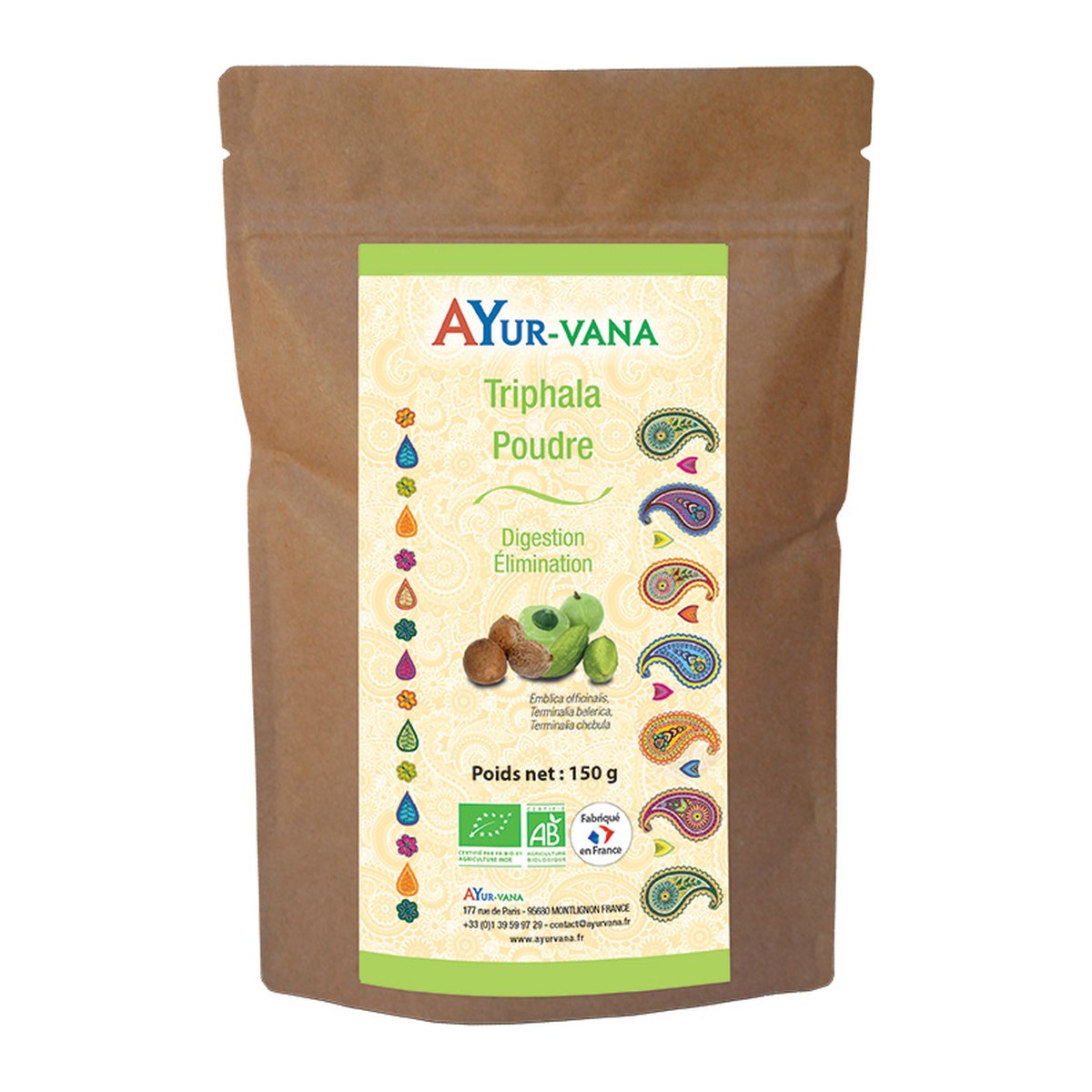
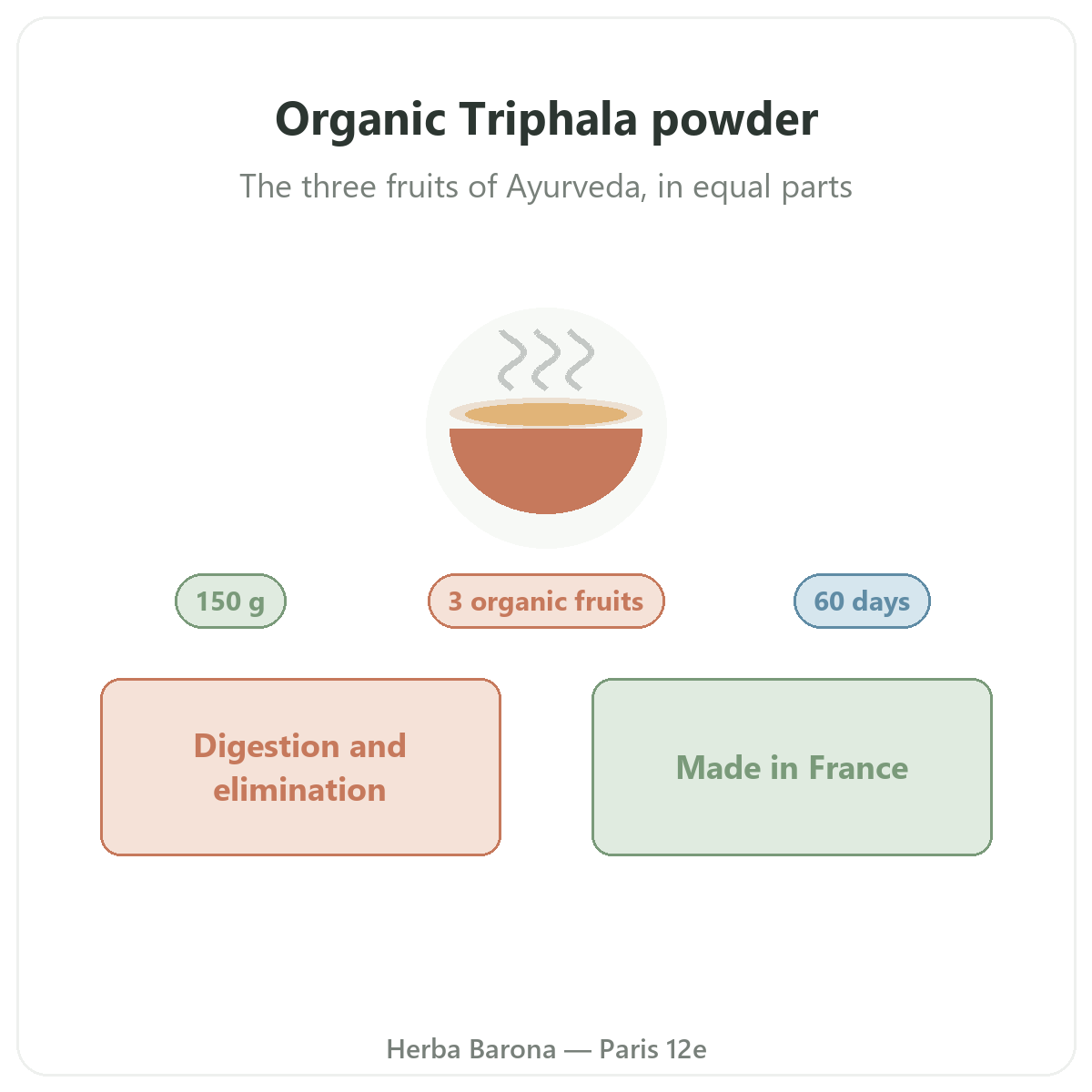
Ayur-vana’s organic Triphala powder brings together Amalaki, Haritaki and Bibhitaki in equal parts, the three fruits of the best-known formula in Ayurveda. One 150 g sachet, which is 60 days of use, to be mixed into a little water, tea or fruit juice. Available in Paris at Herba Barona.
Three fruits, three doshas: what Triphala is
Triphala means “three fruits” in Sanskrit. The name says almost everything: no rare plant, no complicated recipe, just three dried berries, ground into powder and combined in equal proportions. This blend has been appreciated in India for centuries.
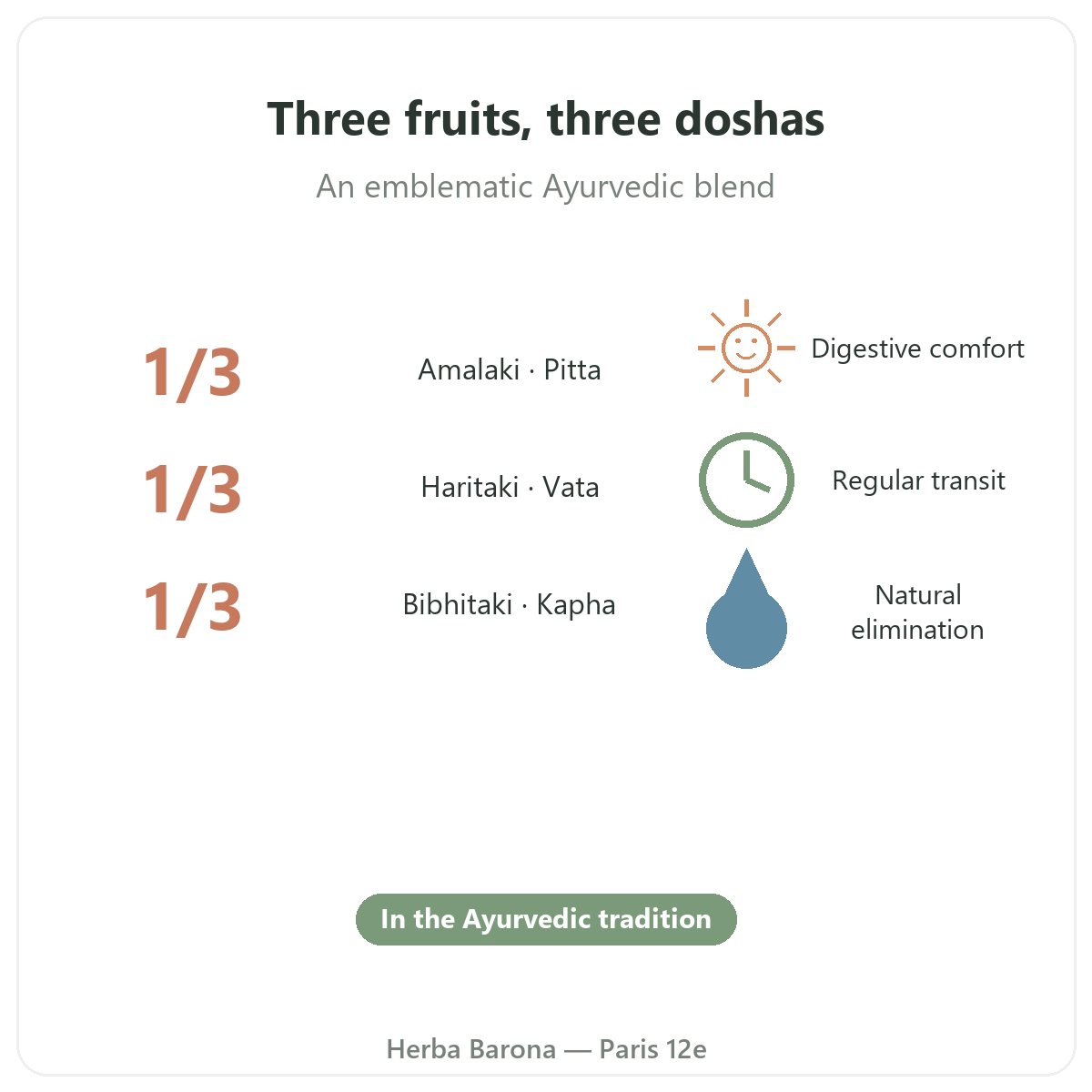
Each fruit is linked to a dosha, one of the three major constitutions described by Ayurveda:
- Amalaki (Emblica officinalis), also called Indian gooseberry: tart in flavour, it is associated with Pitta.
- Haritaki (Terminalia chebula), nicknamed the “king of remedies” in some traditions: it is associated with Vata.
- Bibhitaki (Terminalia belerica), a round fruit with an astringent flavour: it is associated with Kapha.
It is this trio that earns Triphala the description “tridoshic”: rather than relying on a single plant, the formula rests on the complementarity of the three. If you prefer to make your own blend, we also have Haritaki and Bibhitaki on their own, in the same 150 g sachet.
Digestion and elimination in the Ayurvedic tradition
On the sachet, Ayur-vana sums the product up in two words: digestion, elimination. In Ayurvedic practice, Triphala is traditionally used to support digestive comfort, accompany regular transit and support the body’s natural elimination functions, without looking for a harsh effect.
To understand this place, we need to go back to two notions of Ayurveda. Agni means the digestive fire, the one that transforms food. Ama means what this tradition describes as the residues of incomplete digestion. Triphala fits into this logic: looking after digestion, regularly, to preserve overall balance.
It comes in addition to a diet suited to each person, and does not replace it. To see what else exists on this theme, browse our digestion and transit section.
The churna: why choose the powder form
In Ayurveda, a powder of dried plants is called a churna. It is the traditional way of taking Triphala, long before capsules came along.
Let’s be frank: the taste is not to everyone’s liking. It is tart, bitter and astringent all at once, and it makes no attempt to hide. The flavour is part of the ritual for those used to Ayurveda; for others, a fruit juice or a tea helps soften it.
The powder has another, very practical advantage: you set the routine yourself, in the drink of your choice, without swallowing a capsule. Handy if you find capsules hard to take.
Powder or capsules: which format to choose?
Ayur-vana offers Triphala in both forms, and the brand itself gives a useful pointer: for a first use, it rather recommends the capsules. The taste of the powder takes a little getting used to, whereas the capsule makes you forget it.
If you are new to Triphala, start with the Triphala in 60 capsules. If you already know it and the flavour does not bother you, the 150 g sachet lasts 60 days and keeps the traditional routine.
In both cases, you get the same three organic fruits. The whole range can be seen in our Ayurvedic plants section, in our shop in Paris.
Directions for use and precautions
Brand recommendation: 1/2 teaspoon in a little water in the morning, in a tea or in a fruit juice. At this rate, a 150 g sachet covers 60 days of use.
Indian tradition readily mixes it with warm water.
Precautions: not recommended for pregnant or breastfeeding women. If you are under medical care, ask a healthcare professional for advice before use.
What is in this Ayur-vana sachet
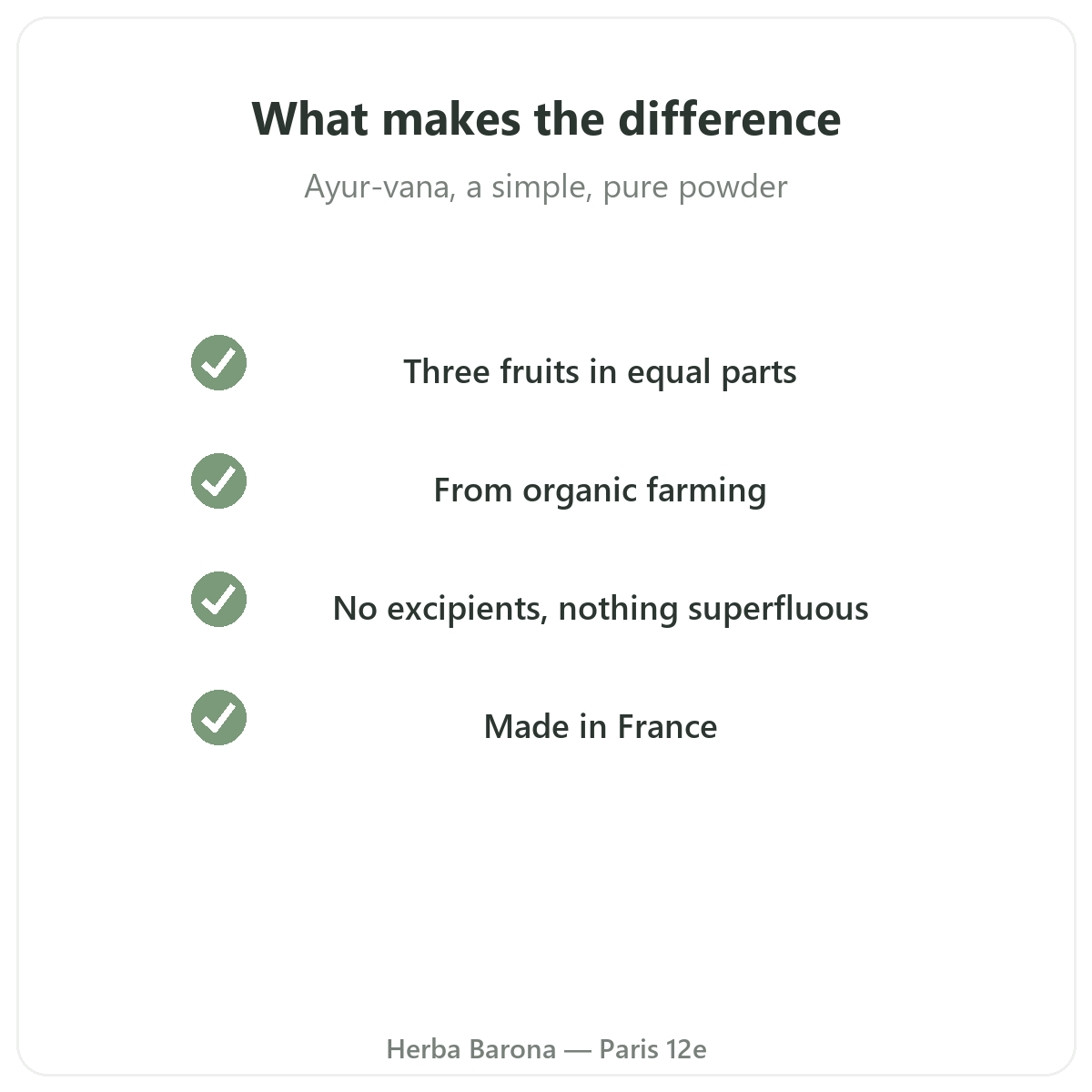
The ingredient list fits on one line, and that is the whole point: the three berries at 33.33% each, with no excipients or unnecessary ingredients. All three fruits come from organic farming, certified by FR-BIO-01, and the sachet carries the AB logo.
The product is made in France by Ayur-vana, a brand based in Montlignon, in the Val-d’Oise, and specialised in Ayurvedic plants. Once empty, the sachet goes in the yellow recycling bin, subject to your local council’s rules.
The detail of the composition is in the Composition tab of this page.
Where to buy Triphala powder in Paris
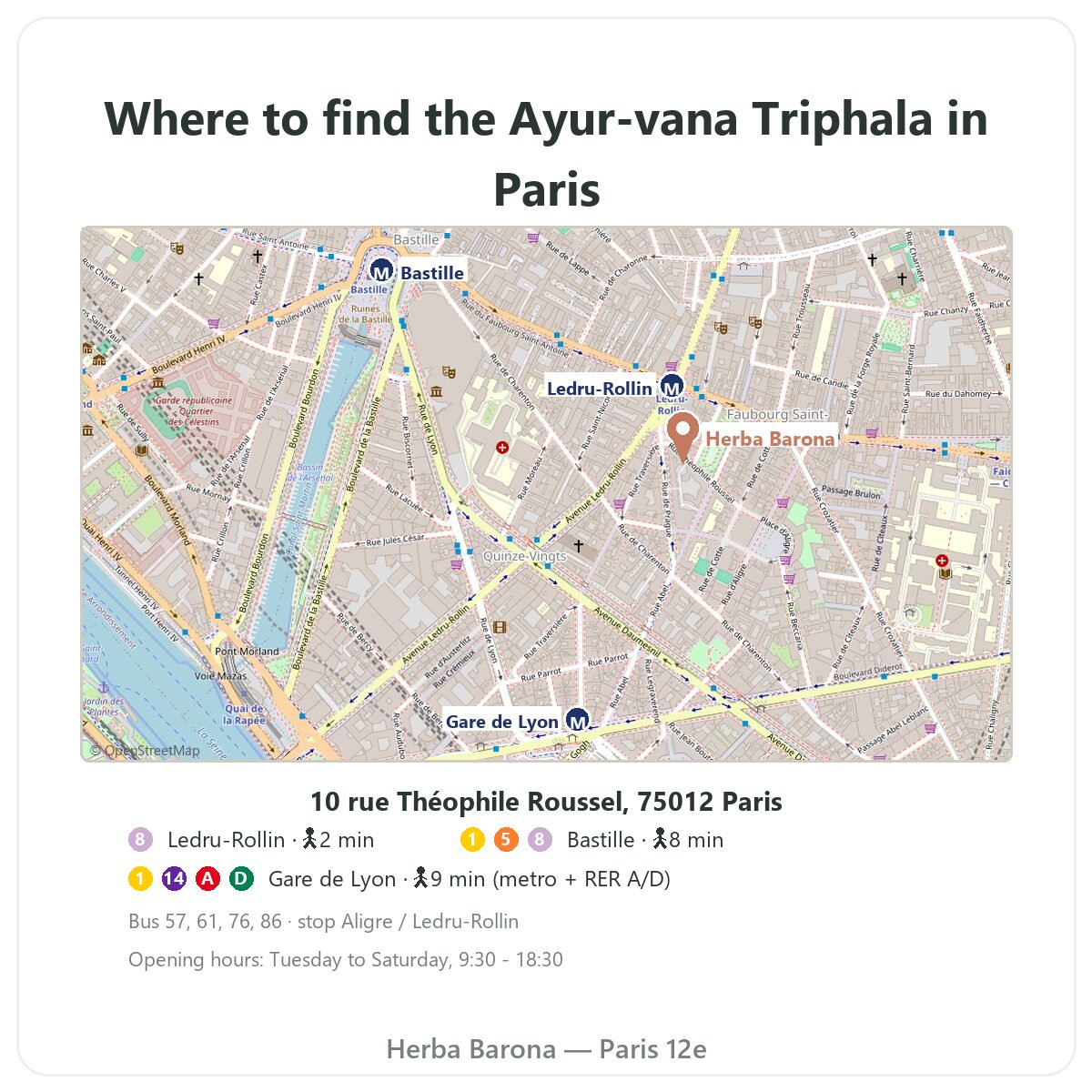
You will find Ayur-vana organic Triphala powder at Herba Barona, a food supplement shop in Paris 12e, at 10 rue Théophile Roussel. We are open Tuesday to Saturday, from 9:30 to 18:30.
The Ledru-Rollin metro station (line 8) is a two-minute walk away, Bastille (lines 1, 5 and 8) eight minutes. If you are unsure between the powder and the capsules, come and see us: we look at it together, sachet in hand.
You can pick it up straight from the shop.
Frequently asked questions
What is the difference between Triphala and Haritaki on its own?
Haritaki is one of the three fruits of Triphala. Triphala combines it in equal parts with Amalaki and Bibhitaki, to cover the three doshas of the Ayurvedic tradition.
What does Triphala powder taste like?
A strong taste: tart, bitter and astringent. Mixing it into a fruit juice or a tea makes it easier to take. If the taste puts you off, the capsules are the right solution.
How long does a 150 g sachet last?
60 days of use, at half a teaspoon a day, according to Ayur-vana’s recommendation.
Where can I find Triphala powder in Paris?
At Herba Barona, 10 rue Théophile Roussel, in Paris 12e, Tuesday to Saturday. Metro Ledru-Rollin or Bastille.
Guide: Food supplement shop in Paris
Food supplement. Not a substitute for a varied and balanced diet or a healthy lifestyle. Do not exceed the recommended daily dose. Keep out of the reach of children.