
Le blog Herba Barona › Sem categoria
NAC (N-acetylcysteine): what to know before taking it
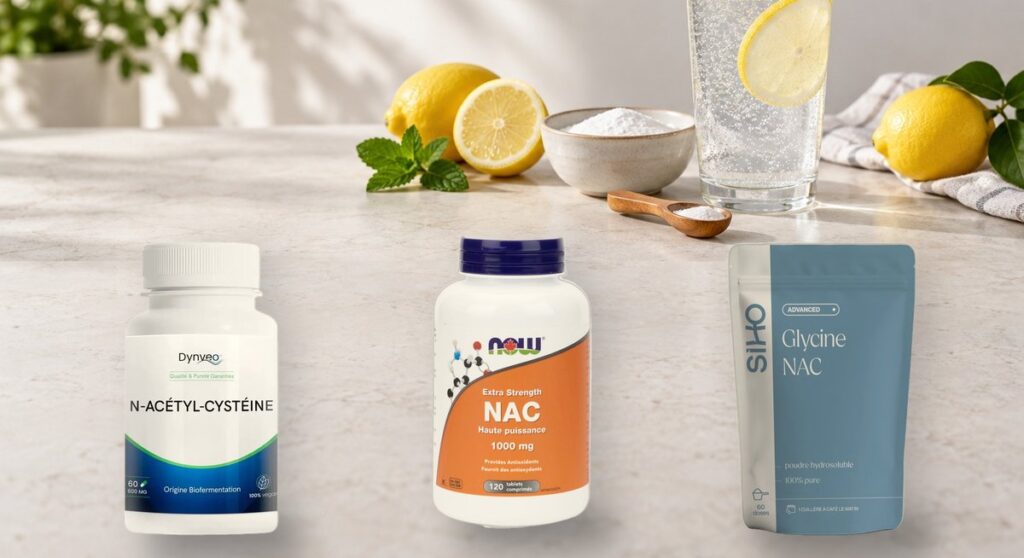
“What exactly is NAC?” This question comes up more and more often at the counter, usually after a podcast or an article read online. Before buying a bottle, it’s worth knowing what you’re taking: a single molecule, but three formats, dosages that range from one level to double, and a few precautions worth reading before starting. Here’s what we explain in our Paris shop, with the products in our NAC (N-acetylcysteine) range.
NAC: what are we talking about?
NAC stands for N-acetylcysteine. It’s the acetylated form of cysteine, a sulphur-containing amino acid. This small change makes the molecule more stable than free cysteine, which oxidises easily. It’s neither a plant nor an extract: it’s a white powder, which Dynveo, for example, obtains through biofermentation.
It’s talked about so much because of glutathione. This small molecule is made up of three amino acids: glutamic acid, glycine and cysteine. This is why manufacturers present NAC as a “glutathione precursor”: cysteine is one of the three building blocks of this molecule.
Capsules, tablets or powder: the range’s three formats
The same molecule comes in very different presentations. The choice mainly depends on the dose you’re aiming for and what you’re happy to swallow.
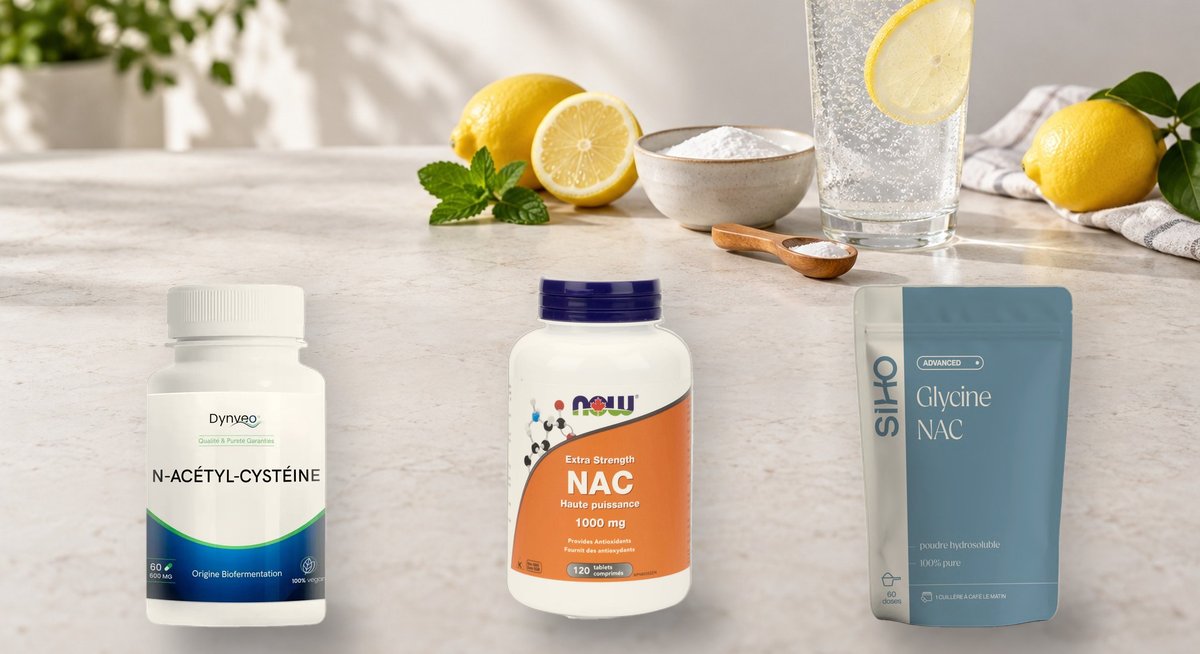
Capsules with no excipient. Dynveo’s NAC 600 mg contains only N-acetyl-L-cysteine obtained through biofermentation, in a plant-based pullulan capsule. Nothing else on the label. The brand states 1 to 2 capsules a day, with 60 in the bottle.
1,000 mg tablets. Now Foods’ NAC 1000 mg provides the highest dose in a single dose: one tablet a day, 120 tablets in the bottle, i.e. four months. To hold together as a tablet, the formula contains forming agents (cellulose, vegetable stearic acid, vegetarian coating), listed on the label.
Powder combined with glycine. SIHO’s Glycine NAC combines 2 g of glycine and 600 mg of NAC per 2.6 g dose, with no flavouring or sweetener. The 156 g pouch covers two months. The combination is inspired by research from Baylor College of Medicine, in Houston, which studied it in older adults under the name “GlyNAC”.
Which dosage to choose?
There’s no universal ideal dose, but three simple pointers:
- 600 mg a day: one Dynveo capsule, or one dose of SIHO powder.
- 1,000 to 1,200 mg a day: one Now Foods tablet, or two Dynveo capsules, the maximum stated by the brand.
- Never exceed the dose on the label, and never take two NAC-based products at the same time without thinking it through.
This last point is more common than you’d think: someone already taking Glycine NAC in the morning doesn’t need to add NAC capsules in the evening. When in doubt, start at the lower end of the range.
On an empty stomach or with a meal?
Not all manufacturers say the same thing, and that’s normal. Dynveo recommends taking its capsules away from meals, in the morning on an empty stomach or between meals. Now Foods, on the other hand, suggests taking its tablet with a meal, with a large glass of water, for stomach comfort. SIHO recommends its powder in the morning on an empty stomach with a large glass of water, while noting that the evening also works if that’s easier for you.
Our advice at the counter: follow the instructions for the product you’ve chosen, and always keep the same time of day. Consistency matters more than the exact hour.
A word on taste: NAC is a sulphur-containing amino acid, and as a powder, you can tell. SIHO describes a slightly sweet taste, from the glycine, with a hint of sulphur. In lemon juice or sparkling water, the dose goes down much more easily.
Precautions to read before taking it
NAC is sold as a food supplement, but it calls for a minimum of care. Our suppliers’ product pages stress a few points:
- For adults only, and not recommended during pregnancy or breastfeeding without your doctor’s advice.
- If you’re undergoing treatment, particularly anticoagulant or blood pressure medication, ask your doctor or pharmacist for advice first: NAC can interact with certain medications.
- Space it at least two hours apart from activated charcoal, which can reduce its absorption.
- Store the bottle dry, away from heat, and close it properly after each use.
NAC, glycine and related amino acids
NAC is often bought alongside other amino acids. Glycine on its own has its own following: it’s often taken in the evening, for its slightly sweet taste. You’ll find it in our glycine range. To explore further, our amino acids range gathers other powders and capsules of the same type, from glutamine to tyrosine.
Frequently asked questions
Does NAC suit vegans?
Dynveo’s NAC is certified vegan: a molecule from plant biofermentation, in a pullulan capsule. Now Foods’ tablets have a vegetarian coating. In every case, the label is the final word.
How long does a bottle last?
Dynveo’s bottle of 60 capsules lasts two months at one capsule a day, one month at two. Now Foods’ bottle of 120 tablets lasts four months. SIHO’s pouch contains 60 doses, or two months.
Should breaks be taken?
Now Foods mentions courses of one to three months, renewable after a break of a few weeks. SIHO recommends a 60-day course, renewable. For long-term use, speak to a doctor.
How should an opened powder pouch be stored?
Zipped tightly closed, in a dry cupboard, away from the kettle or hob. Like all powders, NAC doesn’t like moisture: use a dry spoon each time.
The simplest way is to look at the three labels together: come to 10 rue Théophile Roussel, in Paris 12th, Tuesday to Saturday, and we’ll help you sort it out in five minutes.