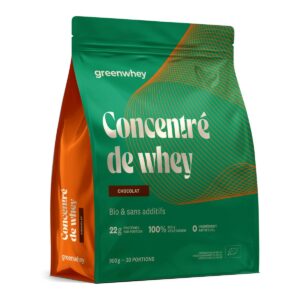
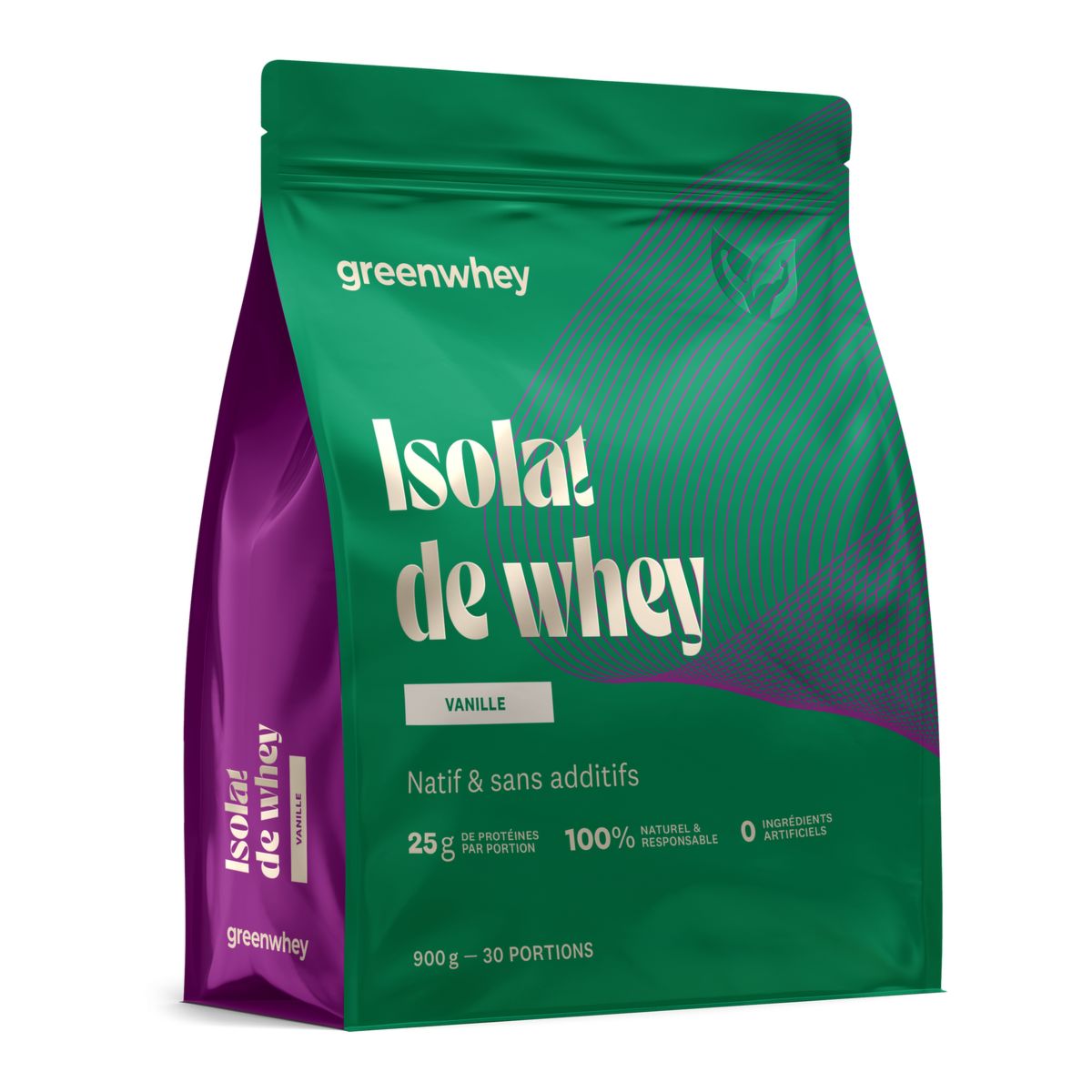
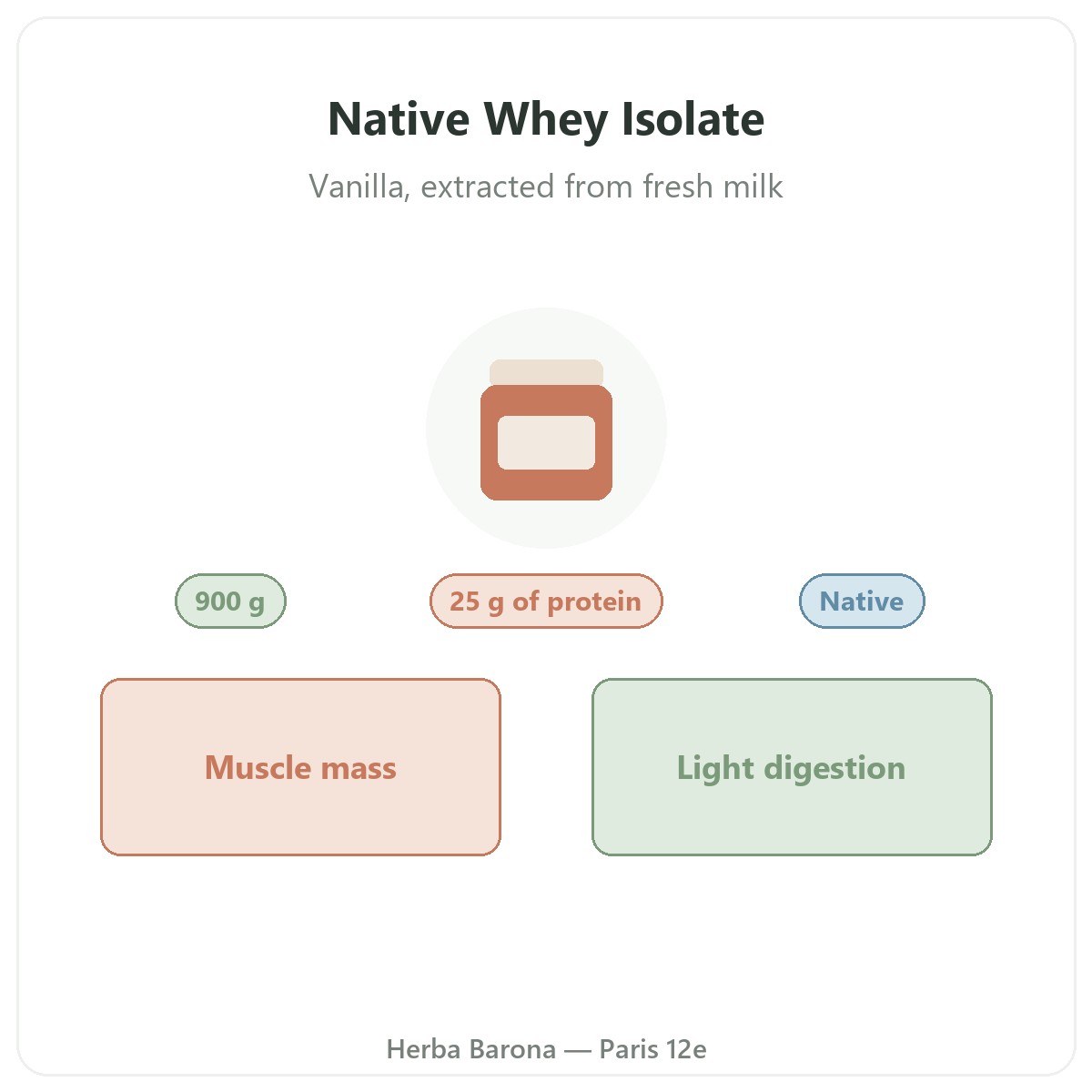
Greenwhey Native Whey Isolate Vanilla in Paris: 25 g of protein, cold microfiltered
An isolate made directly from fresh milk rather than from cheese-making by-products, cold microfiltered, with more than 85% protein.
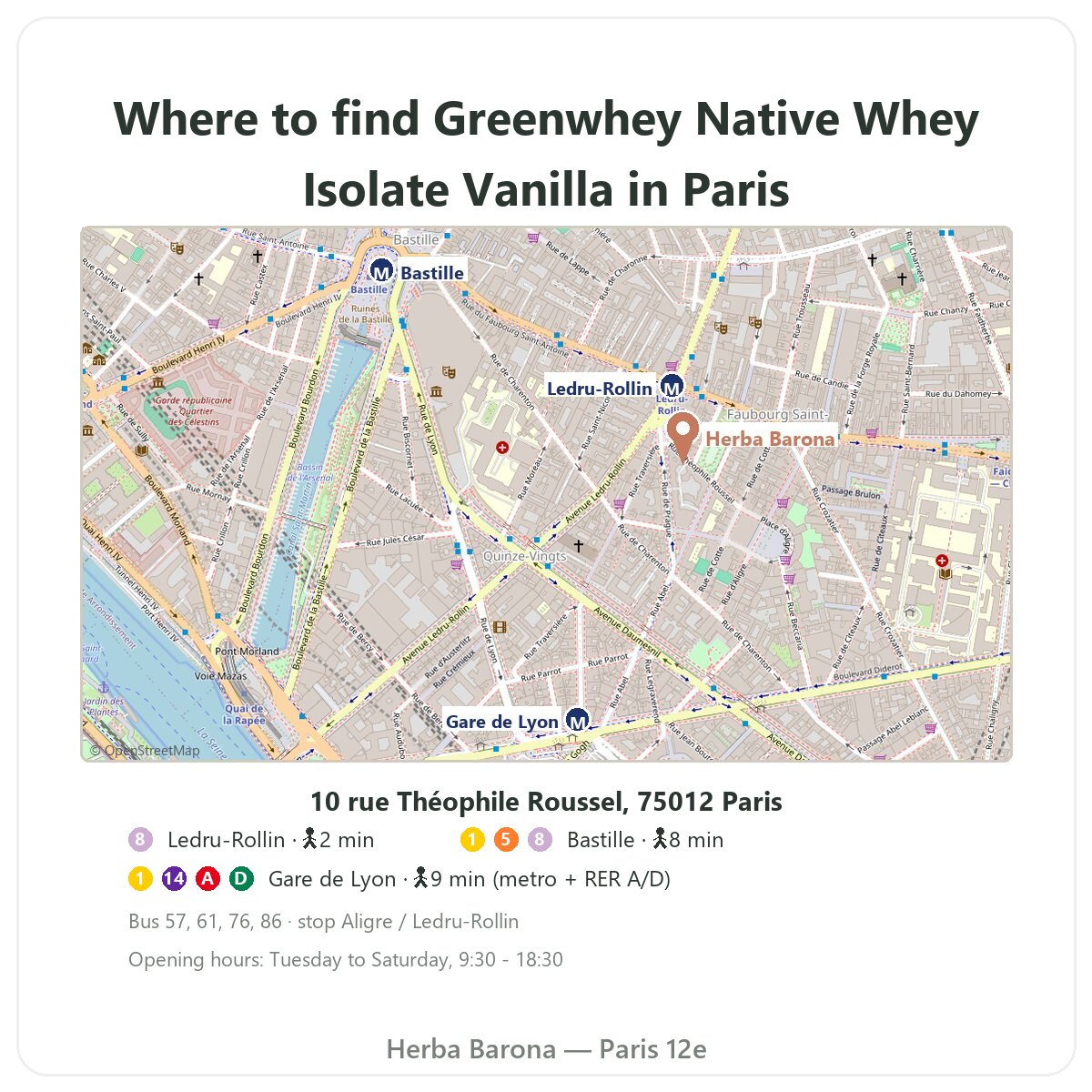
Available in Paris at Herba Barona, in a 900 g pouch.
▶ Isolat de Whey Native Vanille Greenwhey 900 g : la vidéo en 2 min 53
“Native”: the word that makes all the difference
The vast majority of wheys on the market, including premium ones, come from the cheese industry. There, whey is a co-product: cheese is made, and the remaining liquid is turned into protein powder. This process means the milk has already been acidified, often with rennet added and sometimes ferments too.
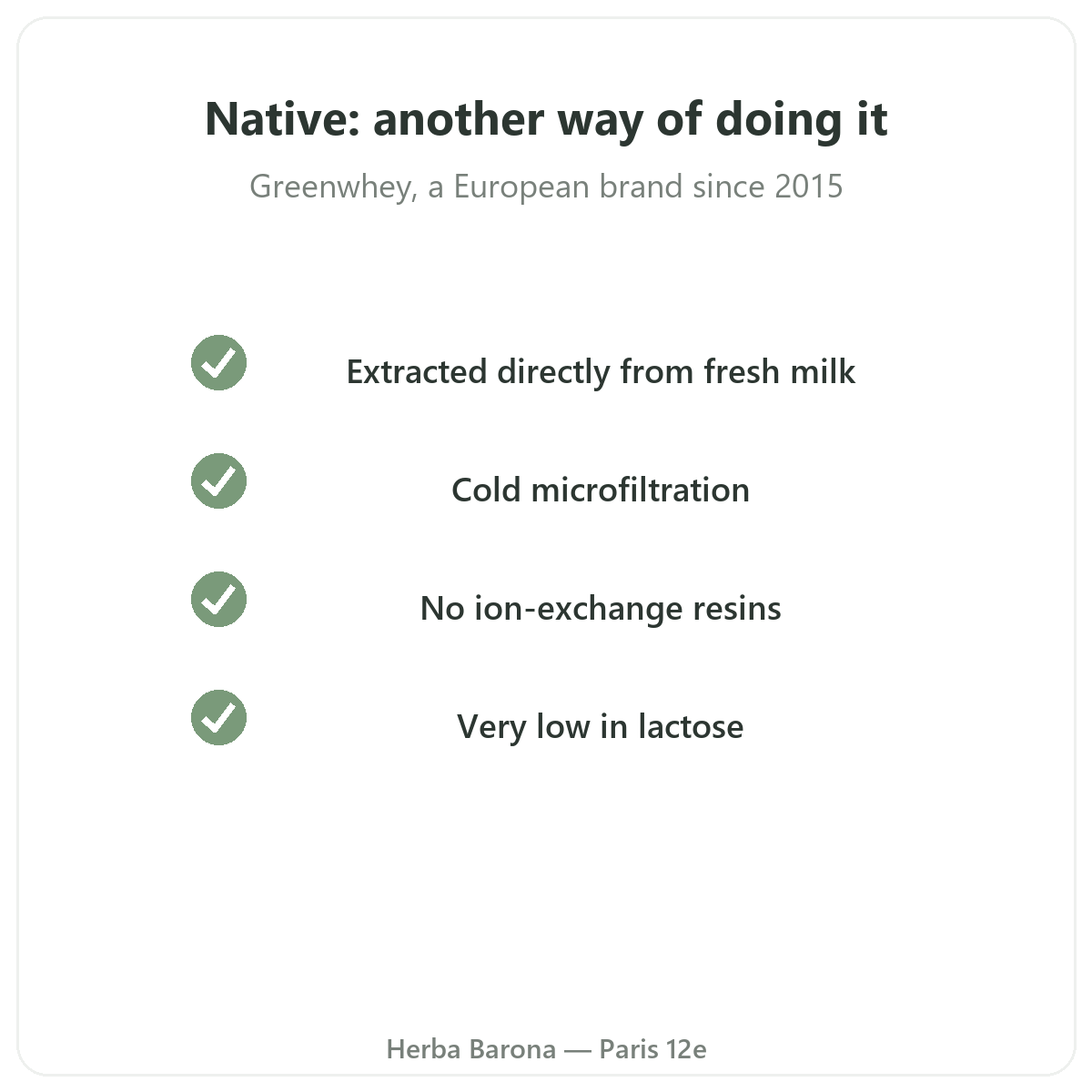
A so-called “native” whey follows a different path. It is extracted directly from fresh milk, without going through the cheese-making stage. The milk comes in, it is filtered, and the whey proteins are separated as they are. The result is a protein that has never been acidified or strongly heated.
In practice, this means a more neutral taste, better solubility and a better-preserved profile of protein fractions. It is also, inevitably, a more expensive product to make: whole milk has to be used to extract the whey fraction alone. That explains the price gap with a standard concentrate.
Cold microfiltration
Two main families of processes are used to purify whey. Ion exchange uses resins and changes in pH: very efficient in terms of yield, but it degrades some fragile fractions such as immunoglobulins and lactoferrin. Microfiltration, on the other hand, is purely mechanical: the liquid passes through ceramic membranes whose pores hold back the proteins and let lactose and minerals through.
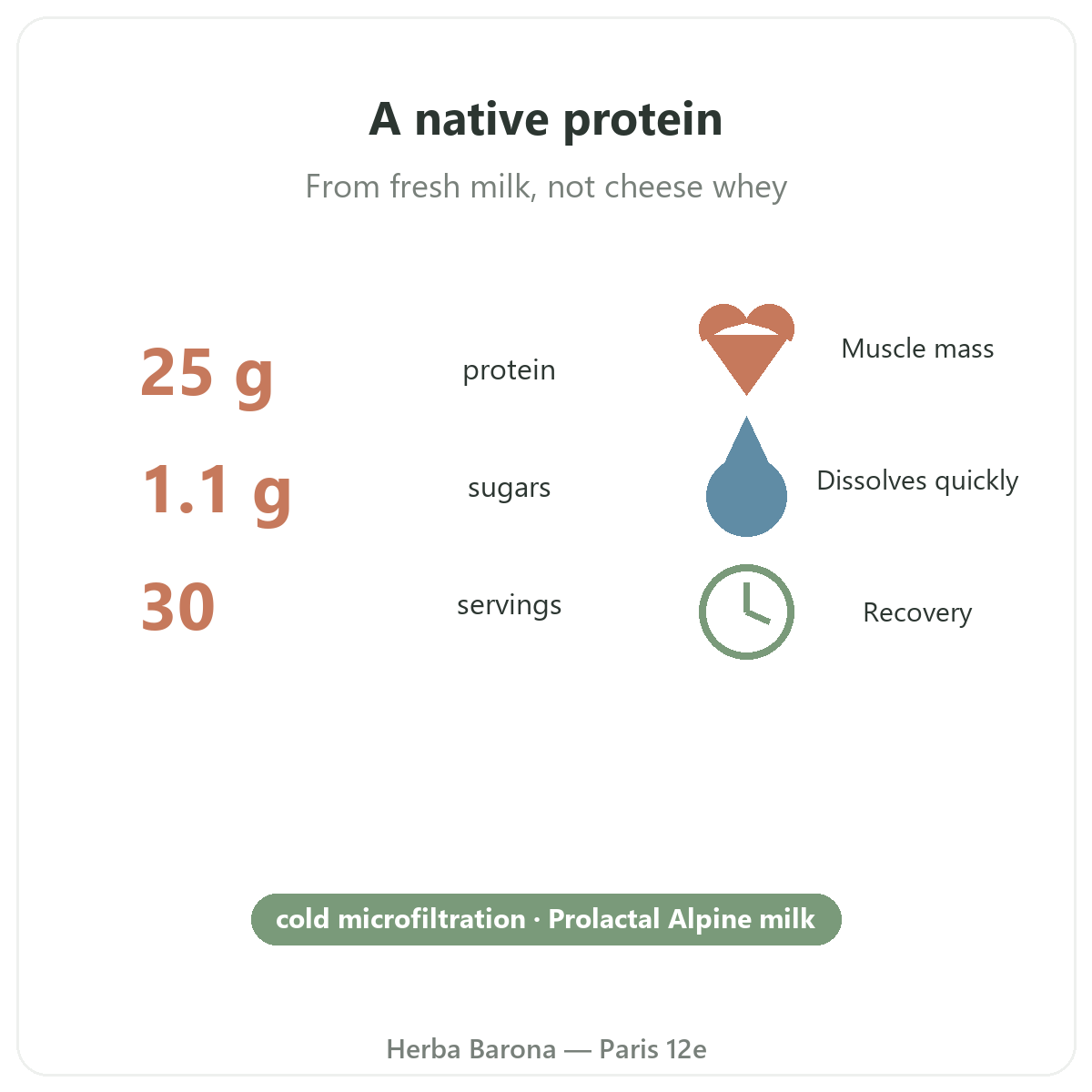
Greenwhey uses cold microfiltration, on Alpine milk selected by Prolactal®. No excessive heat, no solvents, no ion-exchange resins. It is the process that best respects the raw material, and it is the one used for the most serious isolates on the market.
This same microfiltration explains the very low lactose content of the finished product: lactose molecules, much smaller than proteins, pass through the membrane and are removed with the permeate.
Who this isolate makes sense for
Three profiles get real benefit from it.
First, people who are sensitive to lactose. With 1.1 g of sugars per 30 g serving, the residual amount is very low. Many of our customers in Paris who had given up on protein powders after repeated bloating get on very well with this isolate.
Next, people in a cutting phase, where the aim is to maximise protein intake while limiting carbohydrates and fats. With 25 g of protein for just 1.5 g of carbohydrates and 0.2 g of fat per serving, its density is hard to beat.
Finally, those who simply want the cleanest possible product and are willing to pay for it. That is a legitimate choice, and we would rather say it plainly: for most uses, the organic whey concentrate already does the job very well.
Detailed nutritional values
Per 30 g serving: 111 kcal, 25 g of protein, 1.5 g of carbohydrates of which 1.1 g sugars, 0.2 g of fat of which 0.2 g saturates, and 0.03 g of salt.
On a dry-matter basis, the protein content exceeds 85 g per 100 g, with an energy value of 372 kcal. The 900 g pouch covers 30 servings.
The amino acid profile is complete: all nine essential amino acids are present, with a large share of BCAAs. Compared with the concentrate, the difference lies mainly in concentration: for the same amount of powder, you get 3 g more protein and 2 g fewer carbohydrates per serving.
The vanilla taste and how to prepare it
The natural vanilla flavouring gives a subtle taste, without the artificial intensity of some vanilla wheys. As across the whole range, sweetness is low: there is no added sugar and no artificial sweetener.
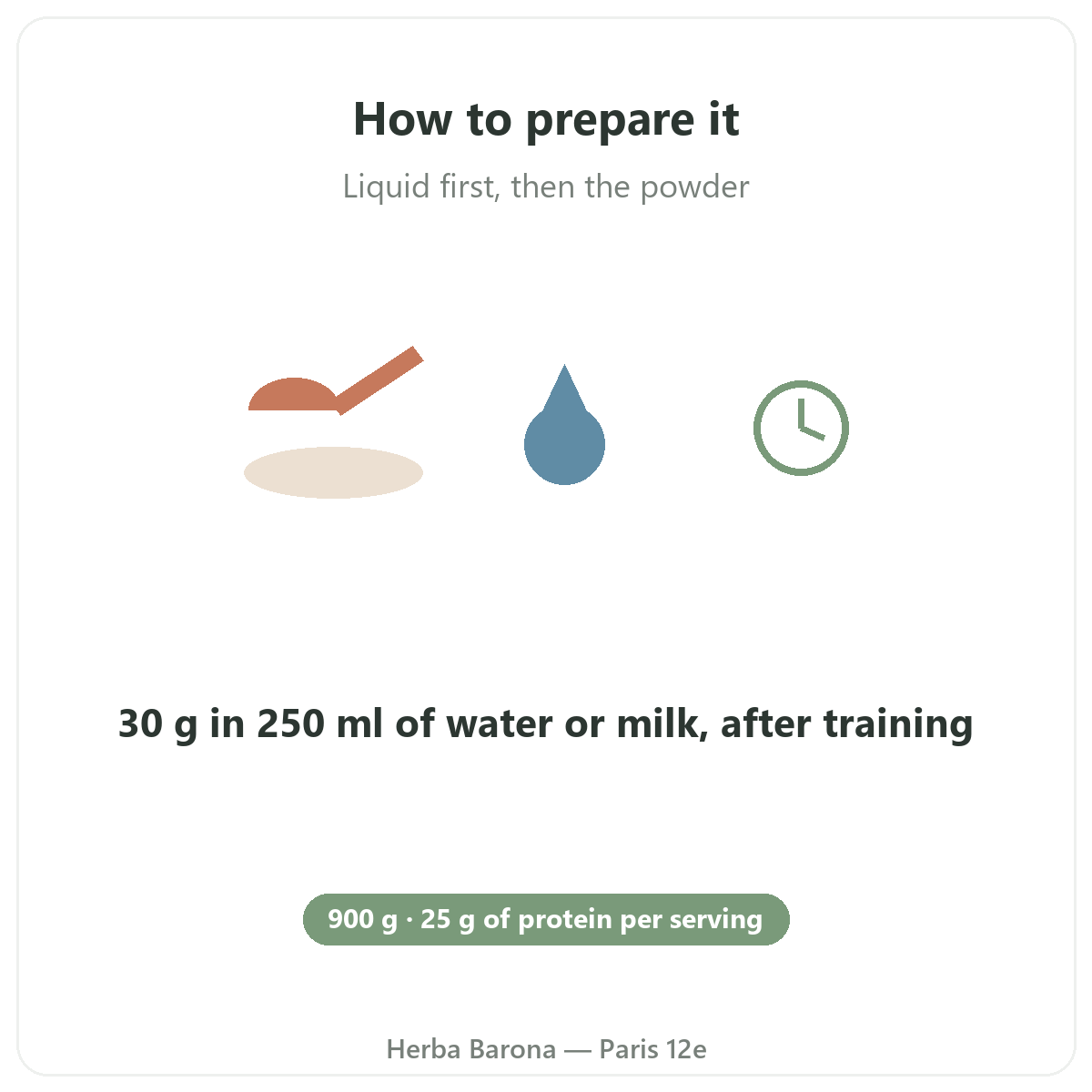
Mix 30 g into 250 ml of water or milk, liquid first. The solubility of a native isolate is excellent: the mixture is smooth after a few seconds in the shaker, with no lingering froth.
Vanilla is the most versatile flavour in the kitchen. It blends in without dominating in porridge, a red berry smoothie, fromage frais or a pancake-style recipe. That is why, year after year, it remains the best-selling flavour in the shop.
Certifications and precautions
The product is V-Label certified vegetarian, gluten-free, kosher and halal. The chocolate and coffee versions use Fairtrade® raw materials.
It contains milk. An isolate that is very low in lactose is still unsuitable for people allergic to cow’s milk protein: microfiltration removes the milk sugar, not its proteins, which are precisely what we want to keep.
Food supplement, not to be used as a substitute for a varied and balanced diet. Keep out of reach of children. Do not exceed the recommended daily dose.
Frequently asked questions
What is the real difference from a standard isolate?
The origin. A standard isolate starts from cheese whey; this one starts from fresh milk. The taste is more neutral and the protein fractions are better preserved.
Is it suitable if I am lactose intolerant?
In the vast majority of cases, yes, with 1.1 g of sugars per serving. If your intolerance is severe, start with half a serving to test your tolerance.
Is it really worth the price difference compared with the concentrate?
It depends on your situation. If you digest lactose well and are not cutting, the concentrate is more than enough. The isolate is justified by digestive sensitivity or by aiming for maximum protein density.
Can I mix it with the concentrate?
Nothing stops you, but there is little point. It is better to choose the one that suits your main use and stick with it.
Herba Barona’s tip — if lactose bothers you with a standard whey, this isolate is the one to go for: cold microfiltration removes most of it.