
Home › Podcast › The English pilots' carrot
The English pilots' carrot
Episode in French. The full text can be read below in English.
The text of the episode
Autumn 1940. London lives under the Blitz. Every night, German bombers cross the Channel, protected by darkness. For a fighter pilot, finding them in the dark is looking for a needle in a haystack. No moon. And yet a young Royal Air Force pilot starts shooting them down, one after another, in the dead of night.
The newspapers seize on his story. His name is John Cunningham, and he is given a nickname: “Cat's Eyes”. His secret, the public is told? He eats enormous quantities of carrots. His eyes are said to have become capable of piercing the night.
The radar in the nose of the aircraft
The truth lies elsewhere. It is bolted into the nose of his aircraft. Recently, some British fighters have been carrying an ultra-secret device: an airborne interception radar. On the night of 19 to 20 November 1940, guided by this radar and by their operator, Cunningham and his crew shoot down a Junkers 88 bomber. It is one of the very first victories won thanks to an airborne radar.

This radar has to be hidden at all costs. So another story is told. Cat's eyes. Carrots. Cunningham himself would say later that the nickname came from the Air Ministry, precisely to cover up the radar. And he would add, with very British humour, that everything would have been simpler if the carrots had really worked.
Did the Germans believe it? This is the most fragile part of the legend. The historians who have studied the subject have found no evidence that they fell into the trap. They knew how to build radars too. But the story had another audience, far more receptive.
Doctor Carrot
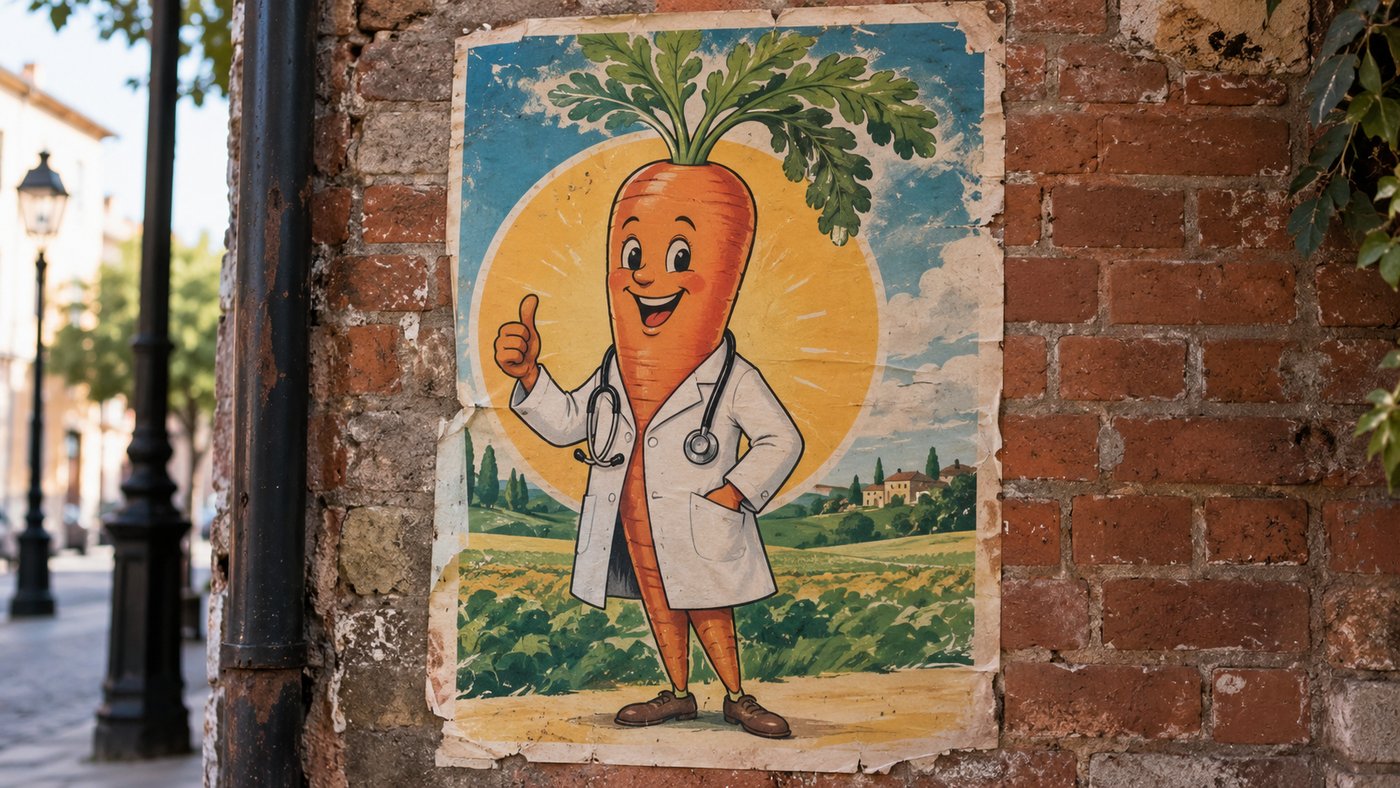
Because in 1940, Great Britain is living under rationing. Sugar, butter, meat are growing scarce. Carrots, on the other hand, are plentiful. The Ministry of Food, led by Lord Woolton, wants people to eat more of them. Posters, recipes, and even a smiling character, “Doctor Carrot”. And an unbeatable argument for a population plunged every evening into the blackout: carrots help you see in the dark.
So the myth is double. A military cover story, on one side. A food campaign, on the other. And the whole thing worked so well that it survived the war, the lifting of the secrecy around radar, and more than eighty years of denials.
What is true
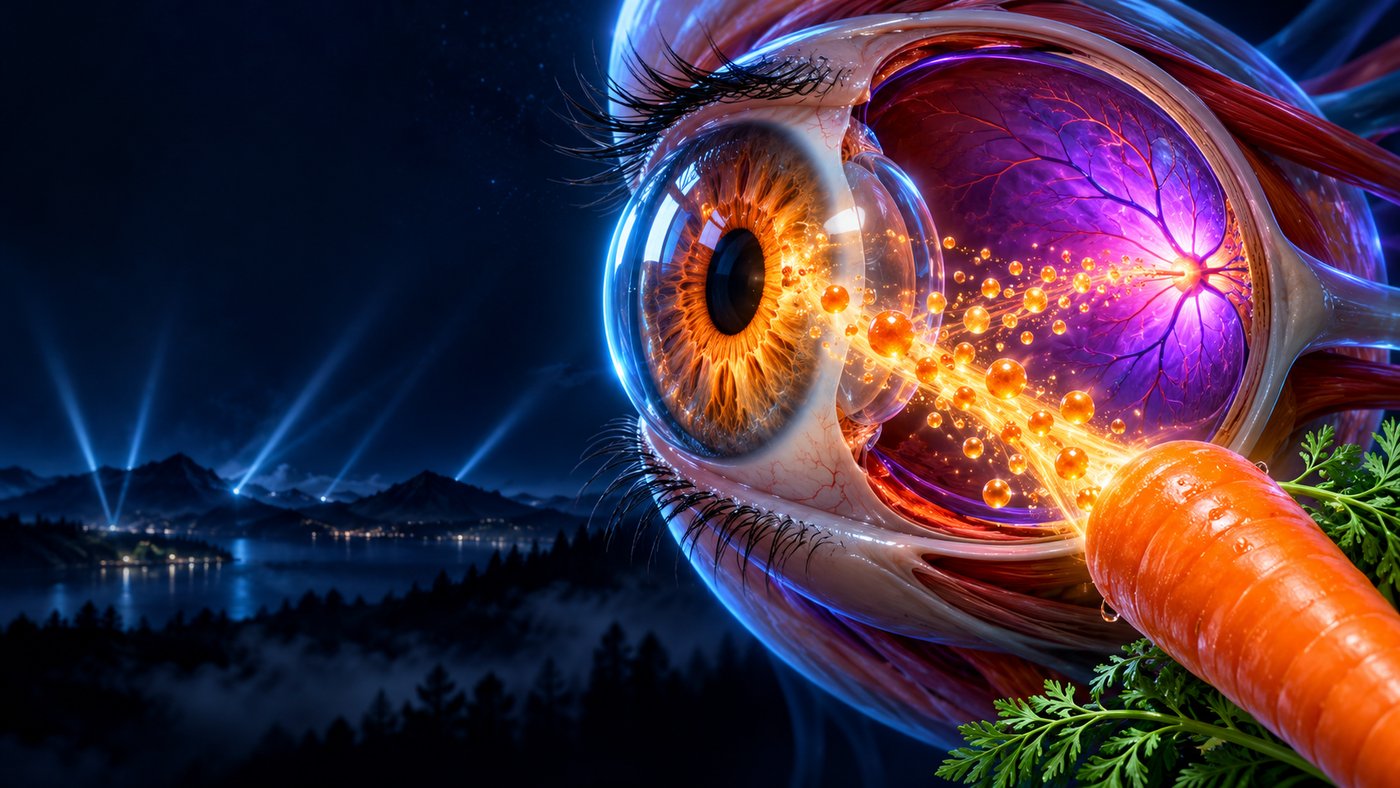
So what is true? The carrot owes its colour to beta-carotene, an orange pigment that the body converts into vitamin A according to its needs. And vitamin A contributes to the maintenance of normal vision. At the back of the eye, the retina uses a pigment that depends on it, the one that lets us see when the light drops. It has long been known, in fact, that a deficiency in vitamin A can cause poor night vision.
But here is the nuance that the propaganda carefully forgot. If your intakes are already sufficient, eating more carrots will not give you cat's eyes. The body converts what it needs, no more. Nobody ever became a night pilot thanks to a grated carrot salad.
At Herba Barona, in Paris, you will find beta-carotene on many labels. We like to remind people of its real role: a reserve of vitamin A, not a pair of night-vision binoculars.
Radar came out of secrecy long ago. It has its museums, its books, its anniversaries. The carrot, for its part, still keeps its reputation as night glasses. Proof that a good lie often survives much better than the truth it was meant to hide.