
Home › Podcast › Sunshine in a bottle
Sunshine in a bottle
Episode in French. The full text can be read below in English.
The text of the episode
London, at the start of the 20th century. Coal smoke blackens the façades, the sky stays grey for weeks on end, and in the narrow alleys of the working-class districts, the sun barely touches the paving. Look at the children playing there. Many have bowed legs. Rounded backs. Thick wrists. All over Europe, there is a name for it: the English disease.
Three centuries of mystery
Its scientific name is rickets. The child's bones stay soft, and bend under the child's own weight. The disease is nothing new: in 1645, an English medical student, Daniel Whistler, already devoted his thesis to it, on “a disease of English children which the people call rickets”. For nearly three centuries, nobody understands where it comes from.
A first clue comes in 1890. A British missionary doctor, Theobald Palm, makes a disturbing observation. In poor but sunny countries, rickets is rare. In Britain's smoky industrial cities, it is everywhere. His conclusion comes down to one word: the sun. Almost nobody listens.
The sun against the plate
It takes until the end of the First World War. In 1919, in Berlin, a paediatrician, Kurt Huldschinsky, sets rachitic children under a mercury vapour lamp, which emits ultraviolet light. On the X-rays, week after week, the bones recalcify. Light alone does what nothing else had done.
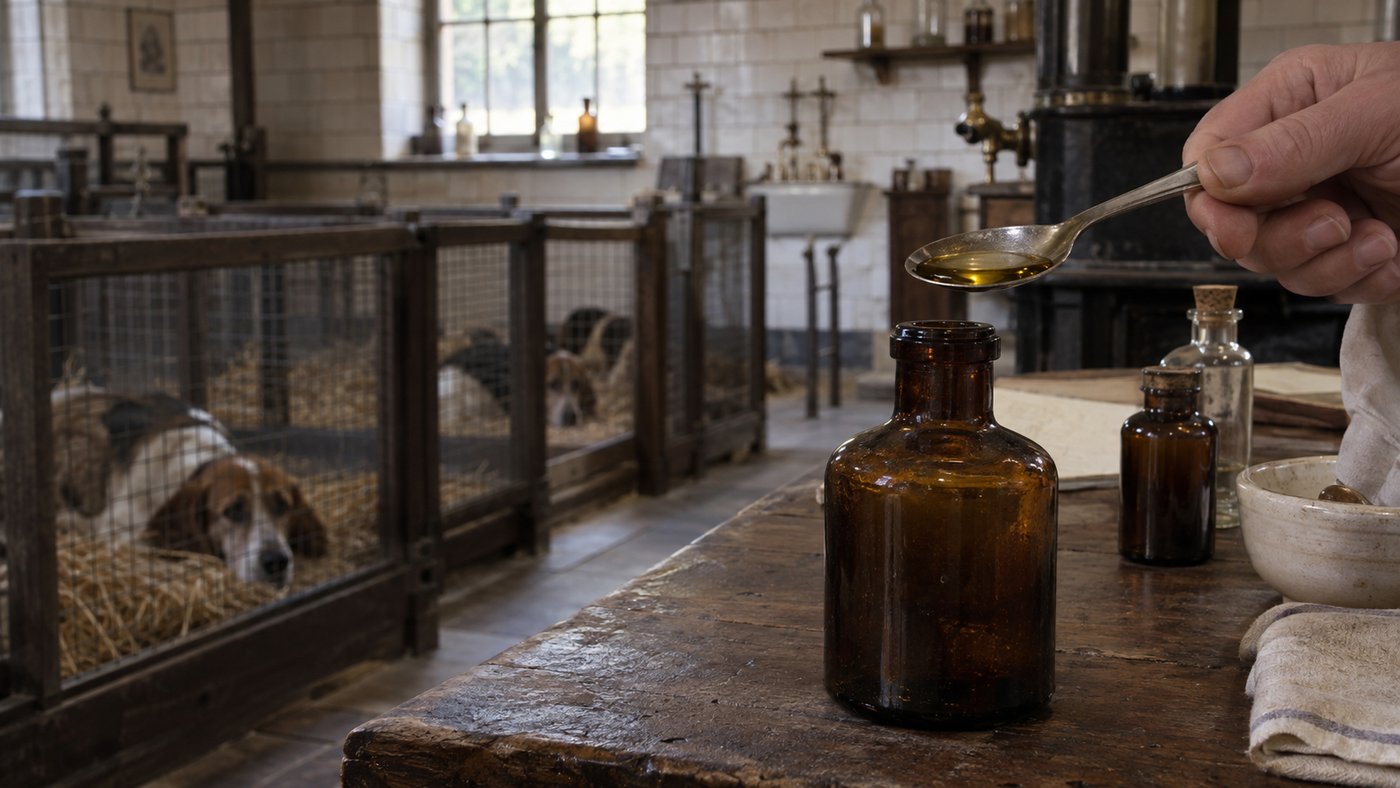
The same year, in Great Britain, Edward Mellanby carries out a quite different experiment. He keeps dogs indoors, fed mainly on oats. They become rachitic. He gives them cod liver oil, that old remedy with the terrible smell: rickets does not set in. For him, it is clear, the key is on the plate. And he thinks of vitamin A, already known.
So here are two camps facing each other. On one side, the sun people. On the other, the diet people. Both have proof. And neither understands the other's proof.
In 1922, in the United States, Elmer McCollum settles part of the debate. He destroys the vitamin A contained in cod liver oil. The oil still keeps its full effect against rickets. So there is something else in it. A fourth vitamin. It is called, quite simply, vitamin D.
Both camps were right
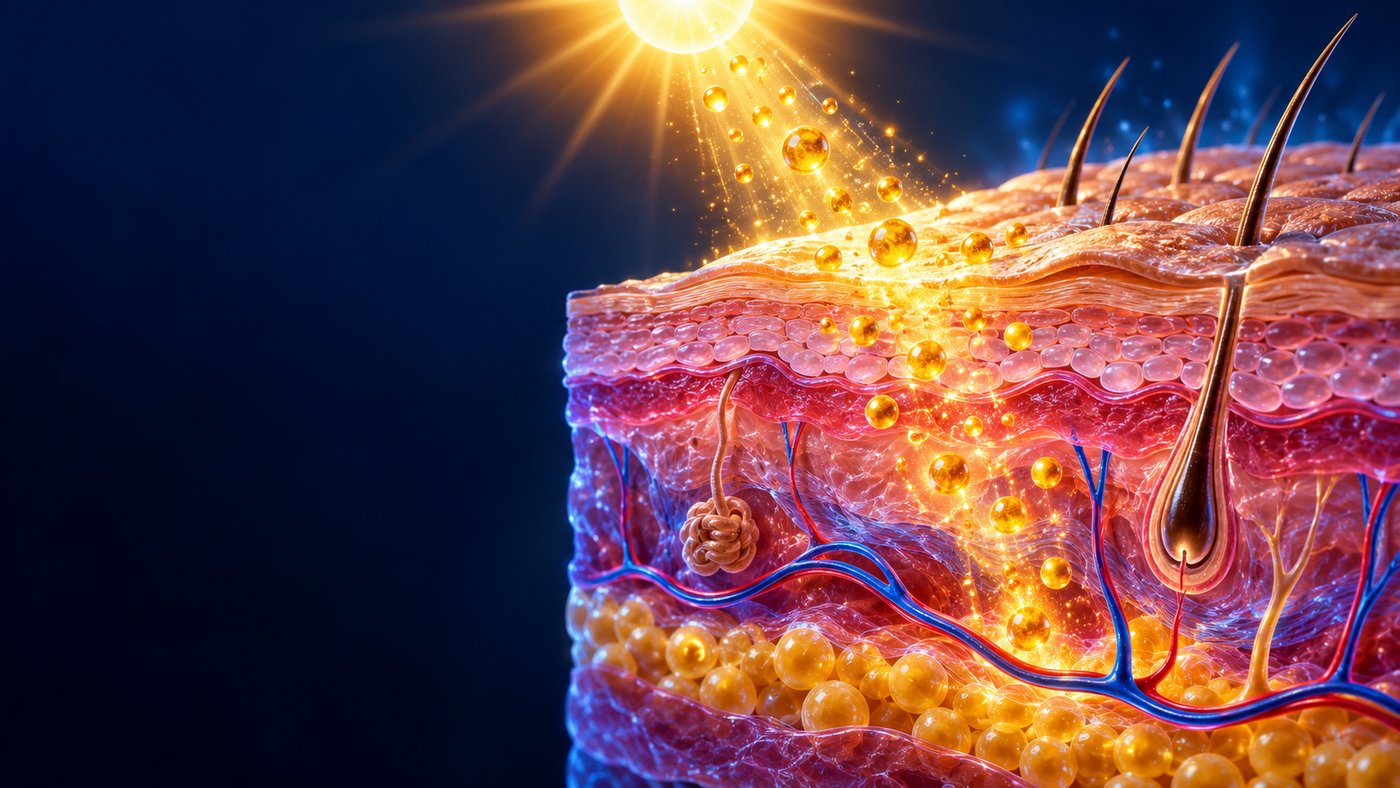
Then, in 1924, two American laboratories, Harry Steenbock's and Alfred Hess's, show that by exposing foods to ultraviolet light, you give them this same power. The puzzle finally comes together. Both camps were right. Under the sun, the skin makes vitamin D. And cod liver, for its part, stores it. The oil was literally sunshine in a bottle.
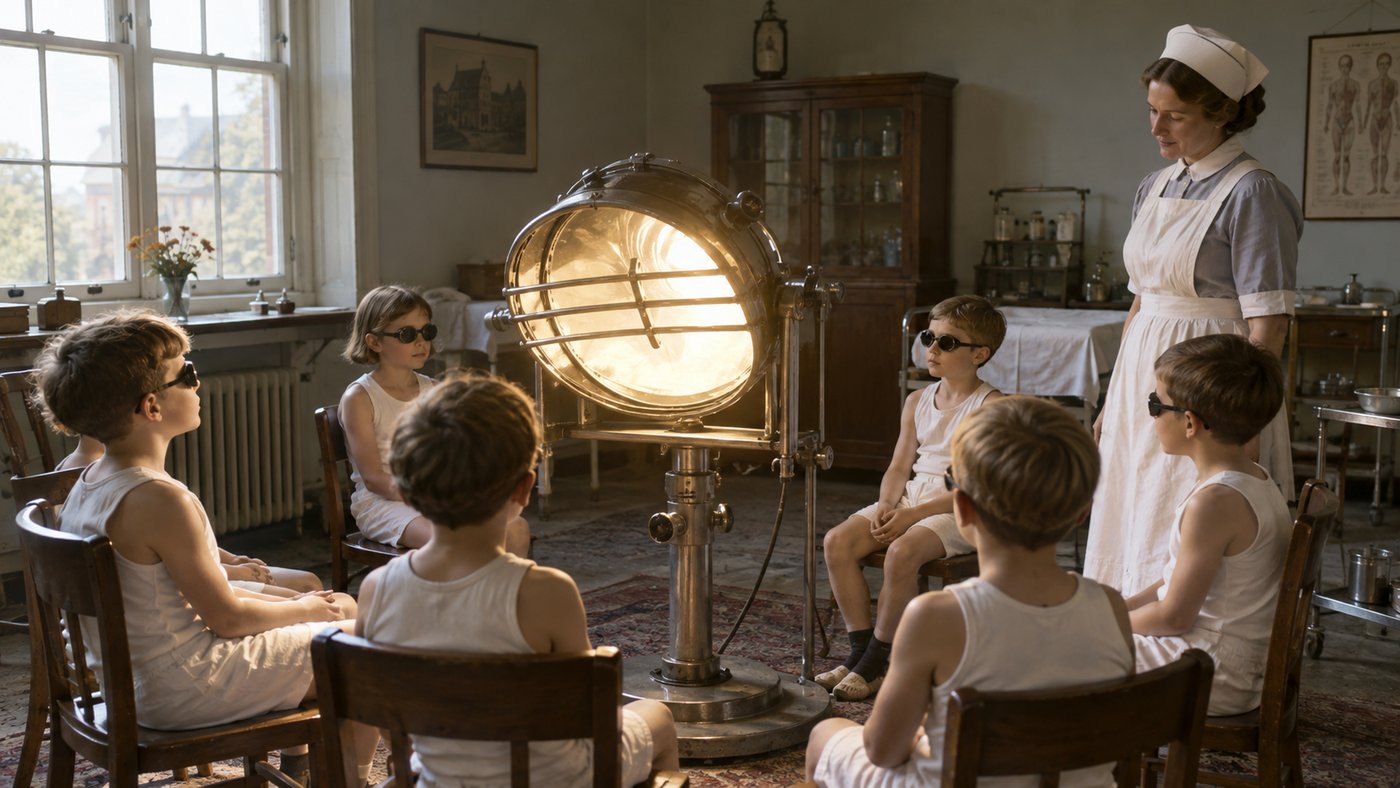
In London, they move on to practical work. In the mid-1920s, “artificial light” clinics open. Children in shorts, small dark glasses on their noses, sit in a circle around big carbon arc lamps, three sessions a week. Sunshine on prescription, handed out by nurses.
Today, vitamin D keeps the same double origin: the skin under the sun, and a few foods, such as oily fish. It contributes to the maintenance of normal bones and to the normal absorption of calcium. And under a Parisian sky, for a good part of the year, the sun is too low for the skin to make much of it. In our shop in Paris, when we present it, we like to tell where it comes from: from a grey London sky and an arc lamp.
Sunshine in a bottle is not an advertiser's slogan. It is what doctors searched for over nearly three centuries: to shut a ray of light inside a spoon.