
The Herba Barona blog › Sem categoria
Glutathione: liposomal, reduced or precursors, how to choose
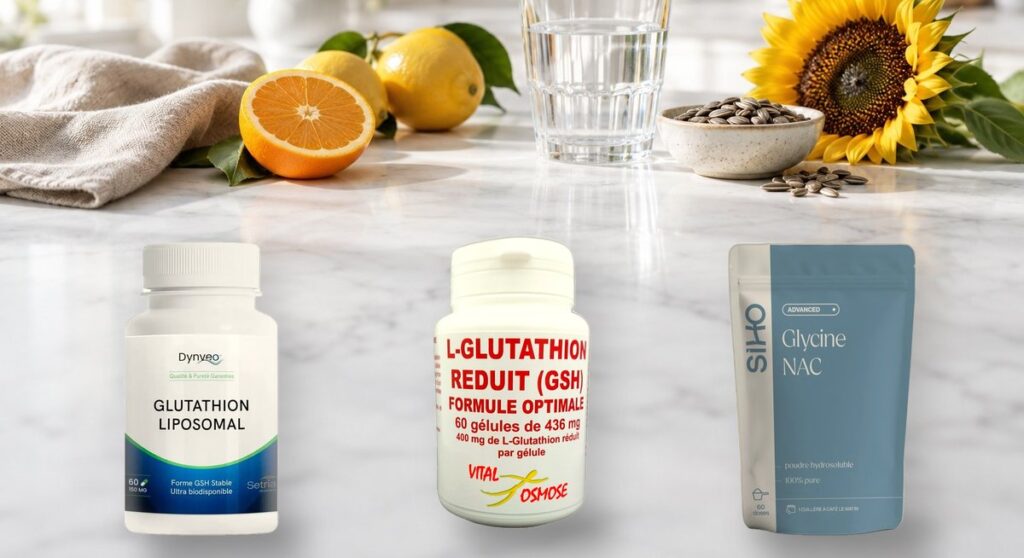
Liposomal, reduced, GSH, precursors: glutathione labels speak a language of their own, and it’s no surprise customers hesitate. Should you take glutathione itself, coated or not, or rather the amino acids used to make it? There’s no single right answer, but there is a simple way to compare. It’s the one we use in our Paris shop, with the products in our glutathione capsules range and their neighbours.
Glutathione in a nutshell
Glutathione is a small molecule made up of three amino acids: glutamic acid, cysteine and glycine. It’s called a tripeptide. It’s present in almost every cell, with a particularly high concentration in the liver, and the body produces it itself. Manufacturers’ product pages also note that its level falls with age.
It exists in two forms: the reduced form, noted GSH, and the oxidised form, noted GSSG. The supplements in our range all provide the reduced form, and that’s the first thing to look for on a label.
Why so many different forms?
It all comes down to digestion. Manufacturers explain this on their product pages: swallowed as is, glutathione is largely broken down by digestion, like any small peptide. Three answers exist on the market:
- Liposomal glutathione: the molecule is coated in phospholipids, a coating designed by the manufacturer to help it pass through the digestive tract.
- Classic reduced glutathione: a higher dose in a simple capsule, often with other nutrients.
- Precursors: rather than providing glutathione itself, you provide the amino acids the body needs to make it.
Liposomal glutathione
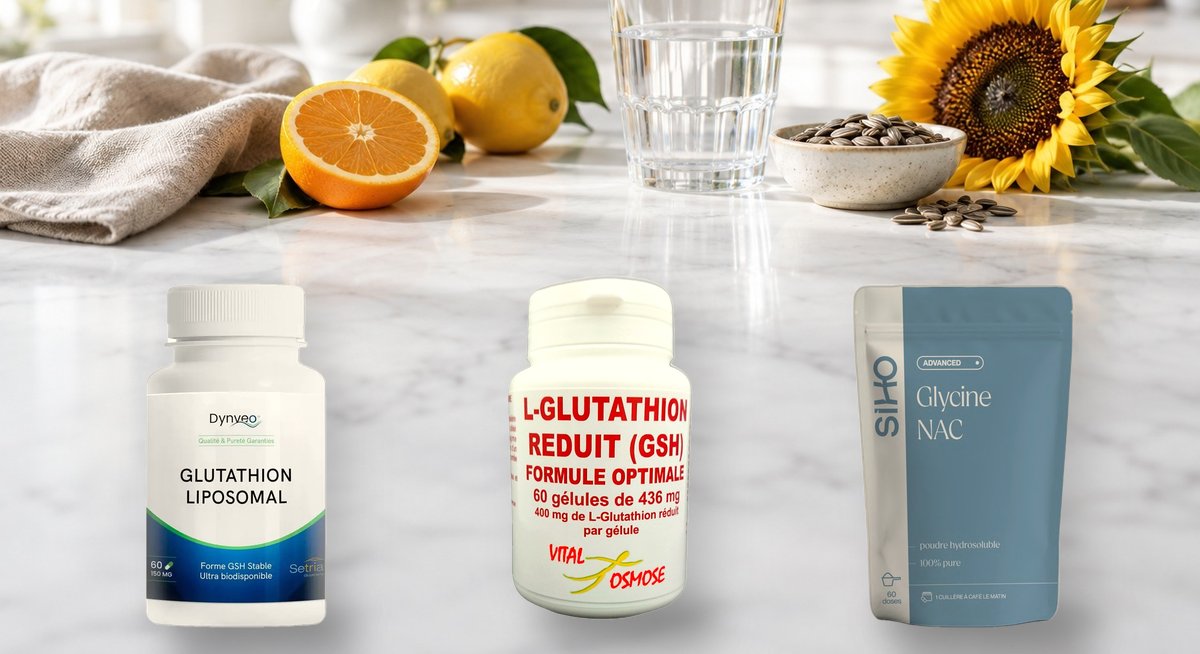
Dynveo’s liposomal glutathione provides 150 mg of reduced glutathione per capsule, held in a phosphatidylcholine complex derived from non-GMO sunflower lecithin. Liposomes are tiny phospholipid vesicles, similar to our cell membranes: according to Dynveo, this coating protects the glutathione during digestion.
The stated dose is 1 to 2 capsules a day, with a large glass of water, preferably away from meals: in the morning on an empty stomach or between meals. The capsule is made of pullulan, a plant-based material. The bottle of 60 capsules lasts two months at one capsule a day.
Reduced glutathione at 400 mg
Vital Osmose’s reduced glutathione focuses on dose: 400 mg of GSH per capsule, with no liposomal coating, plus a small addition of vitamins and selenium. The label states 26.5 mg of vitamin C, 4 mg of natural vitamin E, 250 µg of vitamin A and 18 µg of selenium, around a third of the reference value for each. Vitamin C, vitamin E and selenium contribute to the protection of cells from oxidative stress.
One capsule is taken a day, on an empty stomach or away from meals, with a glass of water. The bottle of 60 capsules makes a two-month course.
Precursors: NAC and glycine
A third route: providing the building blocks rather than the finished wall. Product pages present cysteine as the element most often missing to make glutathione, and Dynveo’s NAC is its stable form, at 600 mg per capsule. SIHO’s Glycine NAC goes further, combining 2 g of glycine and 600 mg of NAC per powder dose, based on the “GlyNAC” combination studied at Baylor College of Medicine. Our NAC range gathers our products.
SIHO’s powder contains nothing but these two amino acids: no flavouring, no sweetener. Its taste is slightly sweet, with a hint of sulphur; in lemon juice or sparkling water, it goes down very well. The 156 g pouch covers two months, at one dose a day, in the morning on an empty stomach.
So, how to choose?
At the counter, we ask three questions. Would you rather swallow a small capsule or drink a powder? Do you want a high dose of glutathione or a coated formula? Are you already taking vitamin C or selenium elsewhere? Liposomal suits those who favour protecting the molecule, the 400 mg option suits those who want the dose plus a few extra nutrients, precursors suit those who’d rather let the body do the work. To explore further, our antioxidants range gathers the other families.
These products are intended for adults. During pregnancy, breastfeeding or if undergoing treatment, ask your doctor or pharmacist for advice: NAC, in particular, can interact with certain medications.
Frequently asked questions
Is liposomal stronger than reduced?
It’s not the same logic. Dynveo’s liposomal provides 150 mg coated, Vital Osmose’s 400 mg with no coating. Compare the amount of GSH and the form, not just the word on the label.
Can glutathione and NAC be taken together?
Dynveo’s product pages mention this combination. Follow the dose for each product, and ask for advice if you already take other supplements.
Do these capsules suit vegetarians?
Yes: a pullulan and sunflower lecithin capsule for Dynveo, a plant-based HPMC capsule with no animal ingredient for Vital Osmose.
What time should they be taken?
Both glutathione products are best taken on an empty stomach or between meals, with a glass of water.
The best way to decide is to put the bottles side by side: we’re happy to do that with you in Paris 12th, Tuesday to Saturday, 9:30am to 6:30pm.