
Le blog Herba Barona › Sem categoria
Iodine: kelp or drops, how to choose
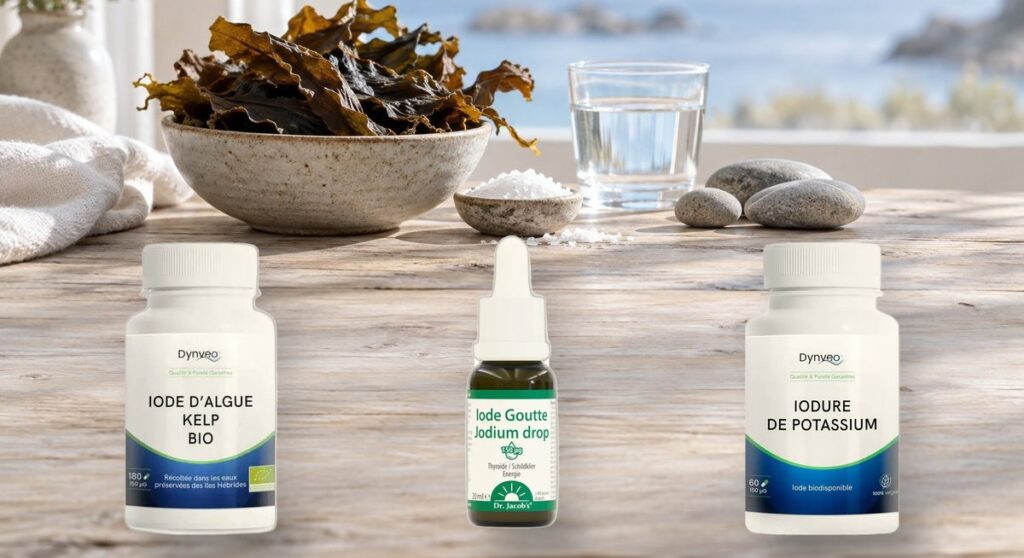
With iodine, the question we’re asked is almost never “should I take it?”, but “in which form?”. Algae in capsules, drops to dilute or potassium iodide: all three exist, and all three provide the same amount per dose. What sets them apart is the origin of the iodine, how you swallow it and what you prefer to read on the label. Here’s how we help decide, in Paris, with the products in our iodine range.
Iodine, a trace element the body can’t make
Iodine is one of the trace elements the body cannot produce: it comes from food. On the regulatory side, three official statements sum up its role: “Iodine contributes to normal production of thyroid hormones”, “Iodine contributes to normal function of the thyroid” and “Iodine contributes to normal function of the nervous system”.
The reference nutritional value is 150 µg per day for an adult. On the plate, it’s mainly found in sea fish, seafood, eggs, dairy products and iodised salt. Non-iodised sea salt and pink salt, on the other hand, contain none added: worth bearing in mind if you’ve given up table salt. The same goes for those who eat little seafood, eggs or dairy, for example on a plant-based diet: these are often the people who look more closely at their iodine intake.
Kelp: iodine from an algae
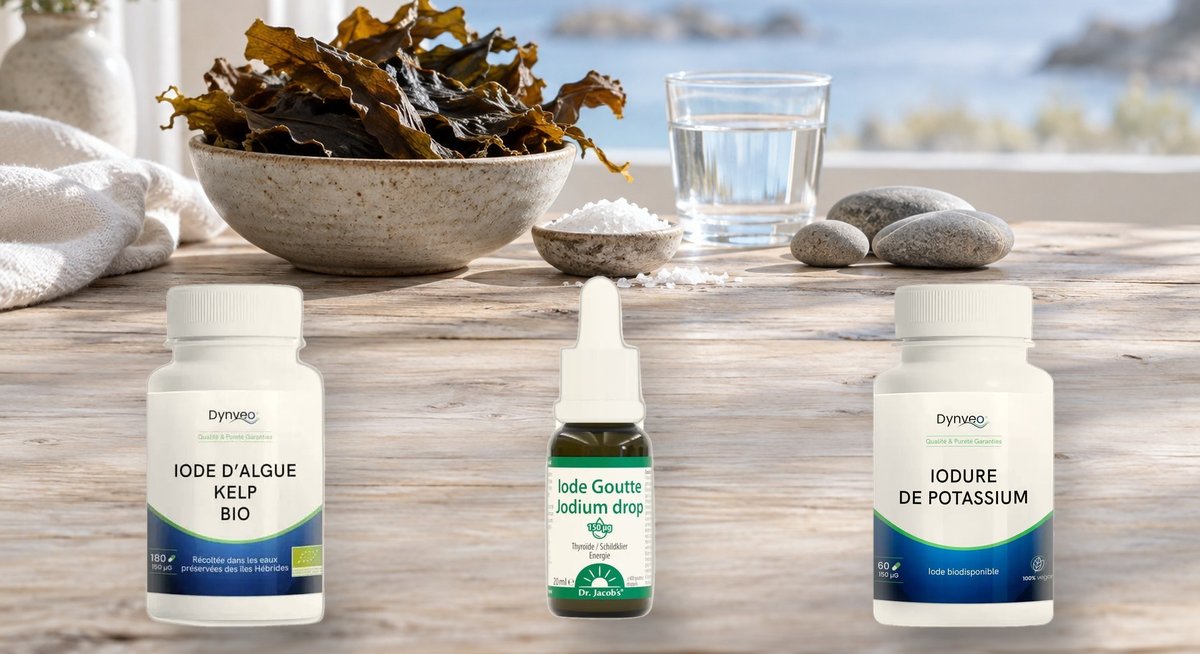
Kelp refers to large brown algae from cold seas. Dynveo’s organic Kelp algae iodine uses the species Ascophyllum nodosum, from organic farming: 200 mg of kelp per capsule provides 150 µg of iodine, or 100% of the reference value. The capsule is made of plant cellulose, and there’s nothing else in the formula.
This is the form chosen by those who prefer iodine drawn from a whole natural source. Dynveo states that each batch is tested for iodine content, heavy metals and marine allergens. The same product also comes in a bottle of 180 capsules, lasting six months at one capsule a day, compared with two months for the 60-capsule bottle.
Drops: iodine to dilute
Dr Jacob’s iodine drops contain potassium iodide in water, with a little citric acid and potassium sorbate as preservatives. One drop provides 150 µg of iodine, or 100% of the reference value. The product is vegan.
Drops suit those who don’t like swallowing capsules: dilute your drop in a glass of water, and that’s it. Just be sure to count carefully: one drop is already the full daily dose.
Potassium iodide capsules
As a third option, Dynveo’s potassium iodide also provides 150 µg of iodine per capsule, with organic acacia fibre and a pullulan capsule. Its selling point: an identical dose from one capsule to the next, since it starts from an isolated mineral form rather than an algae. It’s taken with a meal, with a large glass of water. The bottle of 60 capsules lasts two months. It’s also the most neutral option for those not keen on the idea of swallowing an algae.
How to choose between the three?
Since all three provide 150 µg per dose, the choice comes down to practical criteria:
- You prefer a whole natural source: kelp capsules.
- You struggle to swallow capsules: drops, diluted in a glass of water.
- You want a simple, consistent mineral form: potassium iodide capsules.
- You’re away for a long time or want to buy less often: the large 180-capsule kelp bottle.
One single rule applies to all: only one iodine product at a time. Dynveo states this on its product page: don’t combine an iodine supplement with another supplement that already contains it without medical advice, and algae such as kelp or bladderwrack fall into this category. Also think about multivitamins, many of which already contain iodine: our vitamins and minerals range lets you check the labels.
Precautions to know
With iodine, more isn’t better. Follow the dose on the label and be wary of very iodine-rich algae such as kombu, which Dr Jacob’s product page flags for the risk of overdose. If your thyroid is monitored by a doctor or you’re undergoing treatment, speak to them before taking any. During pregnancy or breastfeeding, needs change: a doctor’s advice is essential. Both Dynveo products are intended for adults.
Frequently asked questions
Can kelp and drops be taken together?
No. Each already provides 150 µg per dose: choose just one.
What time should iodine be taken?
Dynveo’s kelp and potassium iodide are taken with a meal, with a glass of water. For the drops, follow the instructions on the bottle.
Isn’t iodised salt enough?
It may be, depending on your diet. If you eat little fish, eggs and dairy, or use non-iodised salt, review it with your doctor.
Does algae-based iodine suit people allergic to seafood?
Dynveo tests each batch to confirm the absence of marine allergens. In case of a known severe allergy, ask your doctor’s advice before starting.
Still torn between algae and drops? Come and talk to us at 10 rue Théophile Roussel, in Paris 12th: a quick look at what you already take is often enough to decide.