
Home › Podcast › Spinach and the decimal point
Spinach and the decimal point
Episode in French. The full text can be read below in English.
The text of the episode
A tin can is opened with one punch. A one-eyed sailor swallows the contents in one gulp. His biceps swell like balloons. You know Popeye. And you surely know the sentence that goes with him, repeated to generations of children: “Eat your spinach, it is full of iron.”
The legend of the decimal point
There is even a learned explanation, which you may have been told. In the 19th century, a German chemist, Emil von Wolff, is said to have measured the iron in spinach. And while copying out his result, a decimal point supposedly slipped. Three point five milligrams became thirty-five. Ten times too much. Spinach becomes a champion, Popeye seizes on it, and the whole world believes it.
It is a perfect story. It has everything: a scientist, a tiny error, gigantic consequences. It was published in 1981 in a major British medical journal, then picked up in textbooks, lectures, quizzes. It even serves, in methodology courses, as an example of why it is important to check your sources.
The 2010 investigation
And that is precisely what a British criminologist, Mike Sutton, did in 2010. He followed the trail, document by document. And he found no decimal point. No trace of this copying error. Even the famous check from the 1930s, supposed to have exposed the mistake, he never managed to lay his hands on.
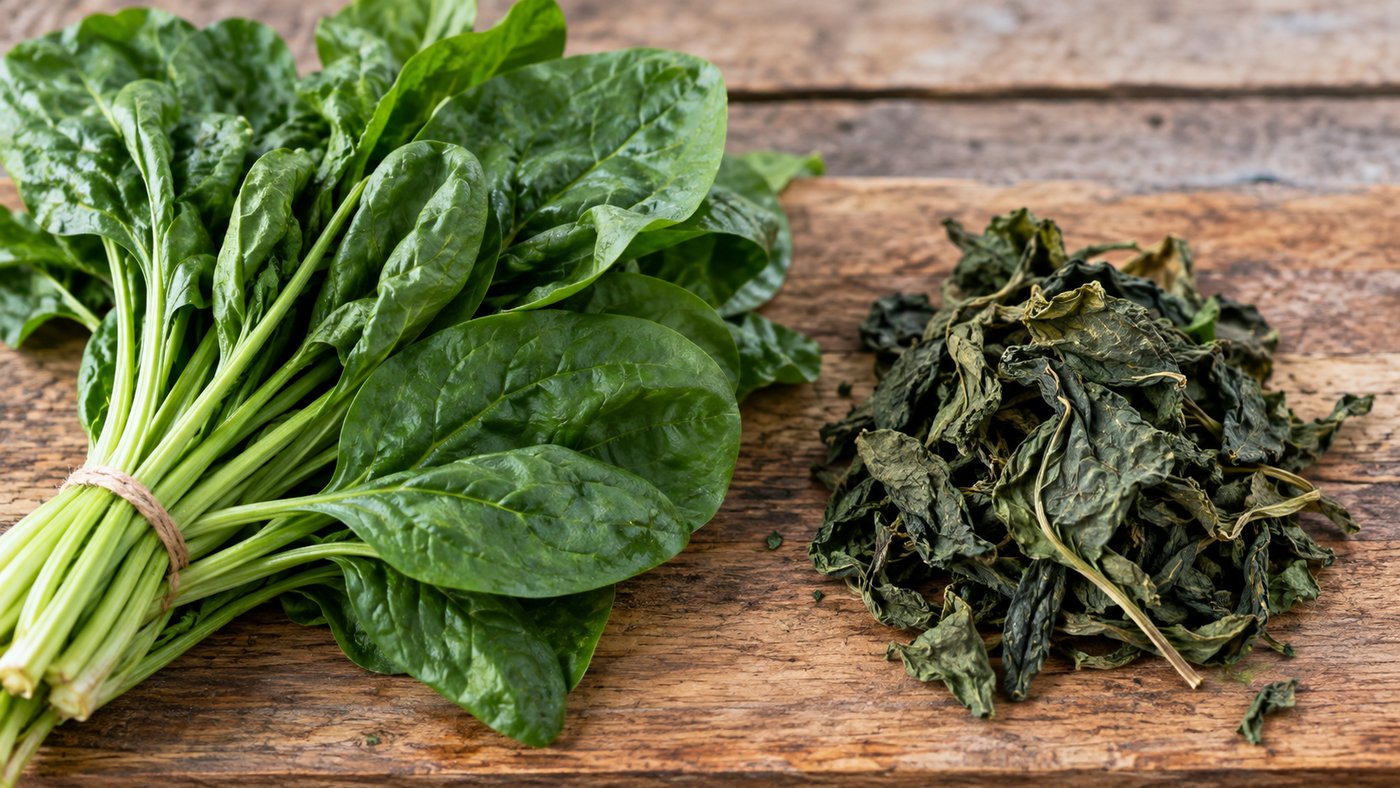
The first measurements were indeed wrong. But for other, more ordinary reasons. Samples probably contaminated by iron from the laboratory equipment. And above all, a mix-up between fresh and dried spinach. Take the water out of a leaf, and the iron that remains inevitably looks much more concentrated. These errors had in fact been corrected by the end of the 19th century, long before Popeye was born.
And Popeye himself? In a strip from 1932, his creator, Elzie Segar, has him say why he eats spinach. Not for the iron. For vitamin A. One more irony: spinach does not contain vitamin A as such, but beta-carotene, which the body converts into vitamin A.
The result: the decimal point story is a legend about a legend. A myth meant to debunk a myth, which had never itself been checked. You could not dream of a finer label mistake.
What we really know
So what do we really know? Spinach contains iron, a few milligrams per hundred grams according to the tables. That is respectable for a vegetable. It is not exceptional. And above all, not all iron is equal. The iron in meat and fish, so-called haem iron, is fairly well absorbed. The iron in plants, non-haem iron, much less so. Spinach adds an obstacle: oxalic acid, which slows the passage of iron even further.
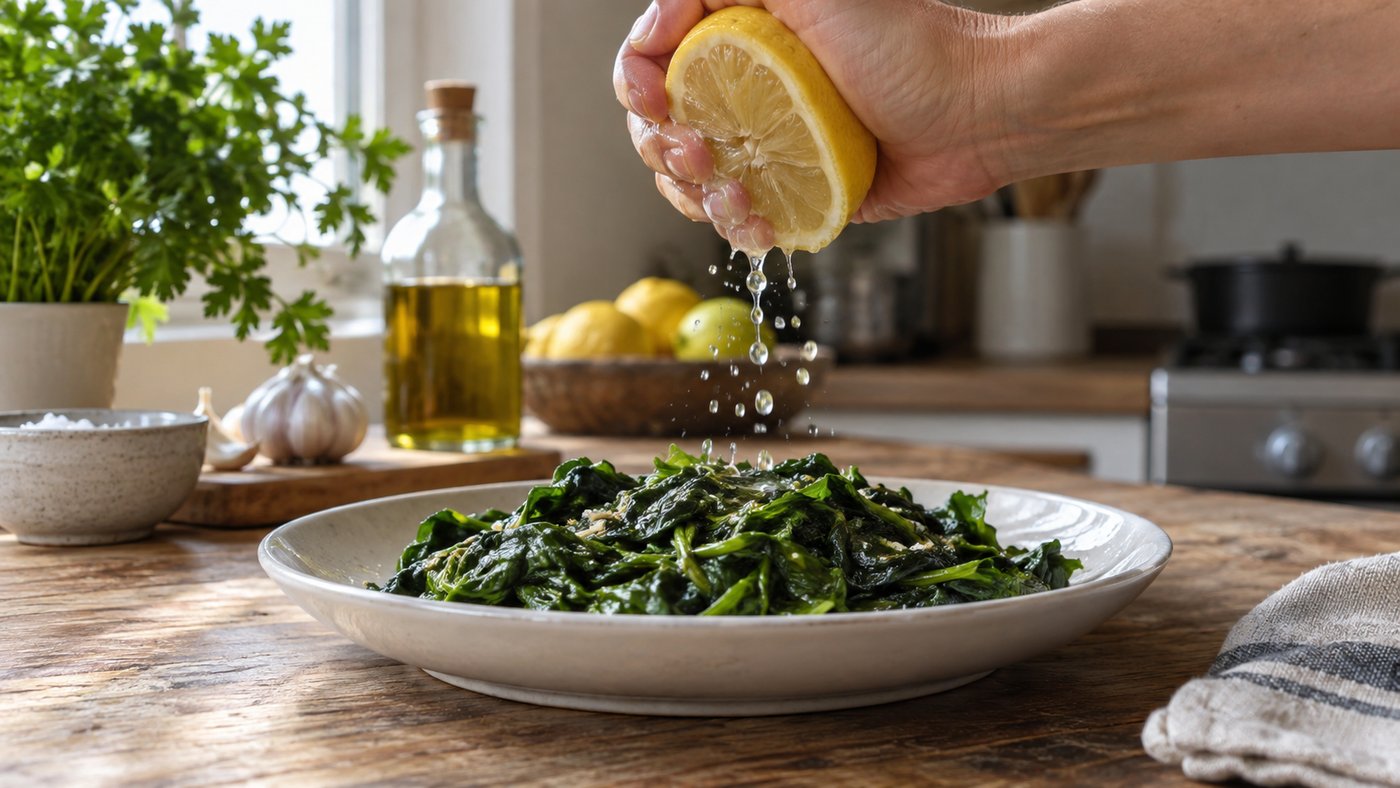
There is a very simple answer. Vitamin C increases iron absorption. A squeeze of lemon over your spinach, a piece of fruit for dessert: plant iron benefits. And iron matters: it contributes to the normal formation of red blood cells and haemoglobin, and to the normal transport of oxygen in the body.
At Herba Barona, this is the nuance we like to remind people of when reading a label with you: the amount of iron matters, but its form and what goes with it matter just as much.
Spinach was never the iron champion. And the decimal point probably never moved. But this double error leaves us a precious lesson: even a famous story deserves to have its sources checked. Especially when it is famous.