Greenwhey Native Whey Isolate Chocolate in Paris: the cocoa without the additives
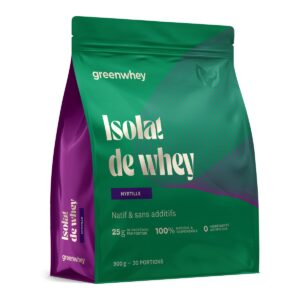
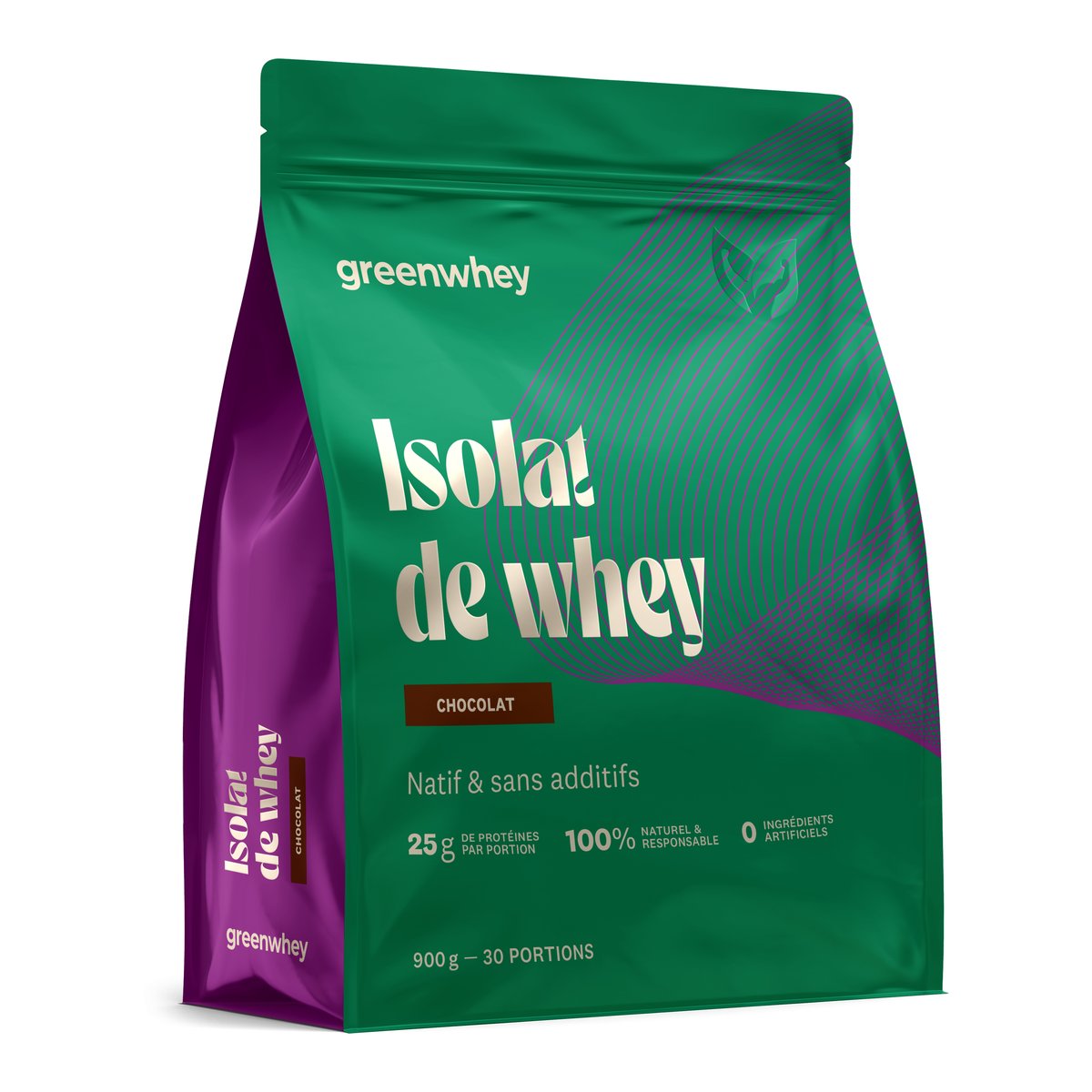
Just three ingredients: a native isolate from fresh Alpine milk, Fairtrade cocoa and a touch of monk fruit, for 25 g of protein per serving.
Available in Paris at Herba Barona, in a 900 g pouch.
▶ Isolat de Whey Chocolat Greenwhey : la vidéo en 2 min 59
A chocolate whey that fits on three lines
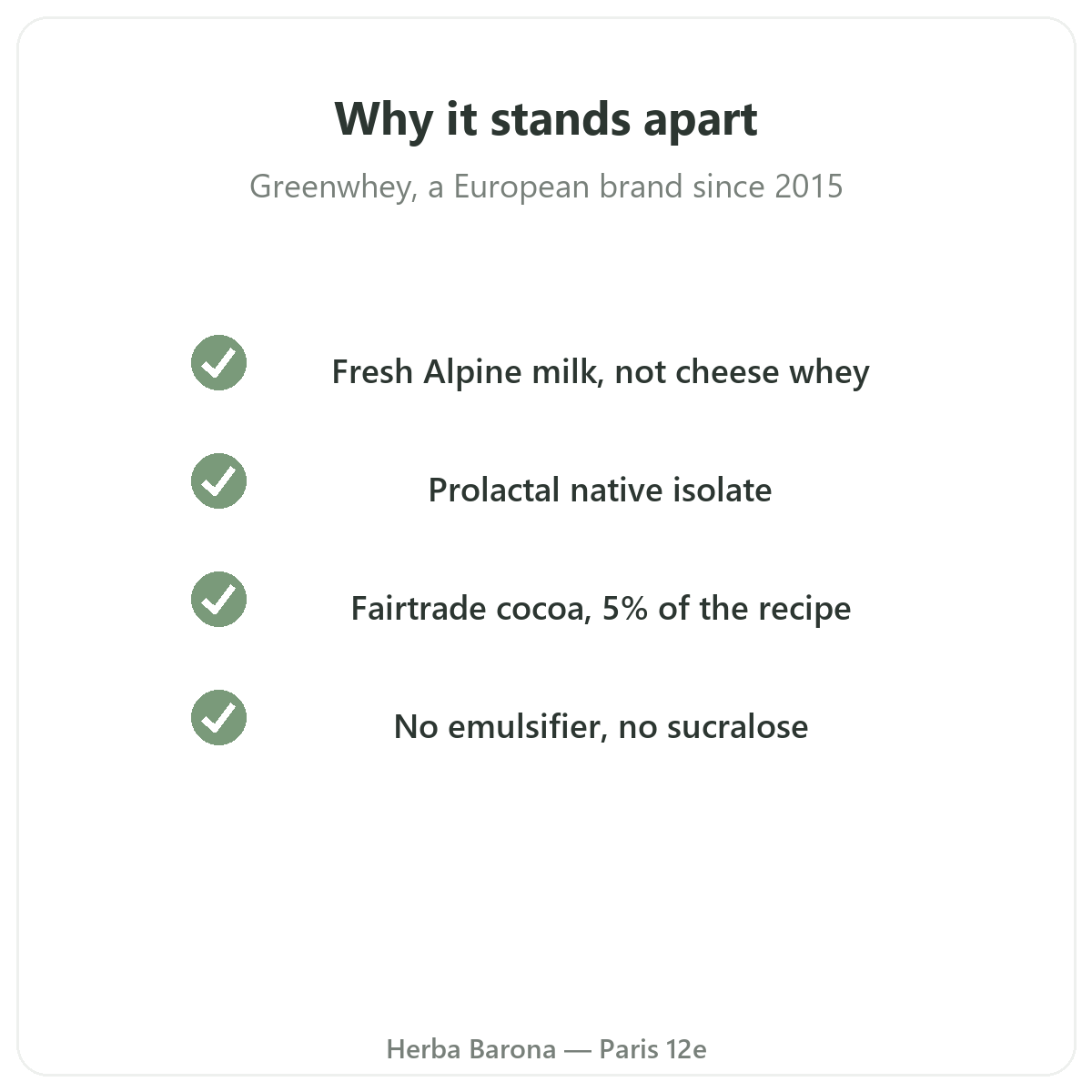
Turn the pouch over: 93% native whey protein isolate, 5% fat-reduced cocoa and 2% monk fruit decoction. That is the whole recipe. No emulsifier to make mixing easier, no synthetic “chocolate” flavouring to boost the taste, no intense sweetener such as sucralose.
This choice has a direct effect in the glass: the taste is that of cocoa, not of an industrial dessert. It is drier, closer to dark chocolate than to a very sweet chocolate milk. People who like pure cocoa usually take to it from the very first serving. Those coming from very sweet products sometimes need a few days to get used to it.
The cocoa used is Fairtrade® certified and comes from organic farming. Together with the flavouring, it is the only organic ingredient in the recipe: the isolate itself is not certified organic, and we would rather say so clearly than leave any doubt.
Native: starting from milk, not from cheese
The most common way to obtain whey is through cheese-making: the liquid that drains from the curd is then filtered and dried. Greenwhey has taken a different route with this isolate. The protein is extracted directly from fresh milk, before any cheese-making, by the Austrian dairy Prolactal®.
The milk is collected from family farms in the Alps, with access to pasture and low stocking density. It then passes over microfiltration membranes, cold. These membranes hold back the whey proteins and let most of the lactose, fat and minerals through.
With no acidification, no rennet and no significant rise in temperature, the protein keeps a structure close to the one it had in the milk. This is what is called a “native” protein. It is also what gives a very fine powder that mixes easily and leaves a neutral taste on which the cocoa comes through well.
What a 30 g serving contains
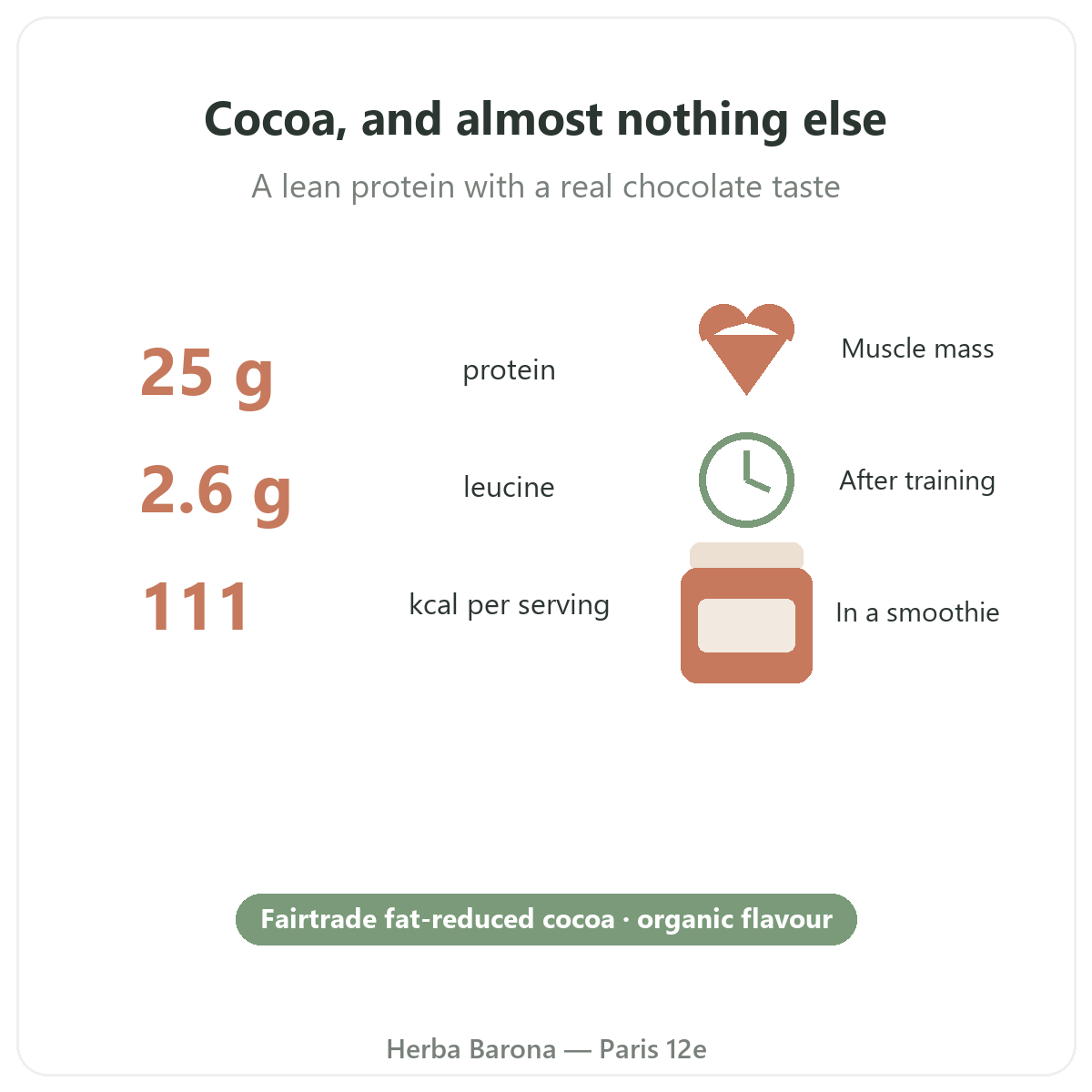
One serving provides 111 kcal, 25 g of protein, 1.5 g of carbohydrates of which 1.1 g sugars, 0.2 g of fat and 0.03 g of salt. On a dry-matter basis, the powder exceeds 85% protein. The 900 g pouch contains 30 servings.
The amino acid profile is complete, with all nine essential amino acids. One serving notably provides 2.6 g of leucine, 2.7 g of lysine, 1.3 g of isoleucine and 1.3 g of valine. Leucine is the amino acid athletes watch most closely, because it acts as a signal in the building of muscle protein.
As a reminder, protein contributes to a growth in muscle mass and to the maintenance of muscle mass, as well as to the maintenance of normal bones. An isolate remains a supplement: it fills a gap between your needs and what you eat, it does not replace meals.
Preparing the chocolate version
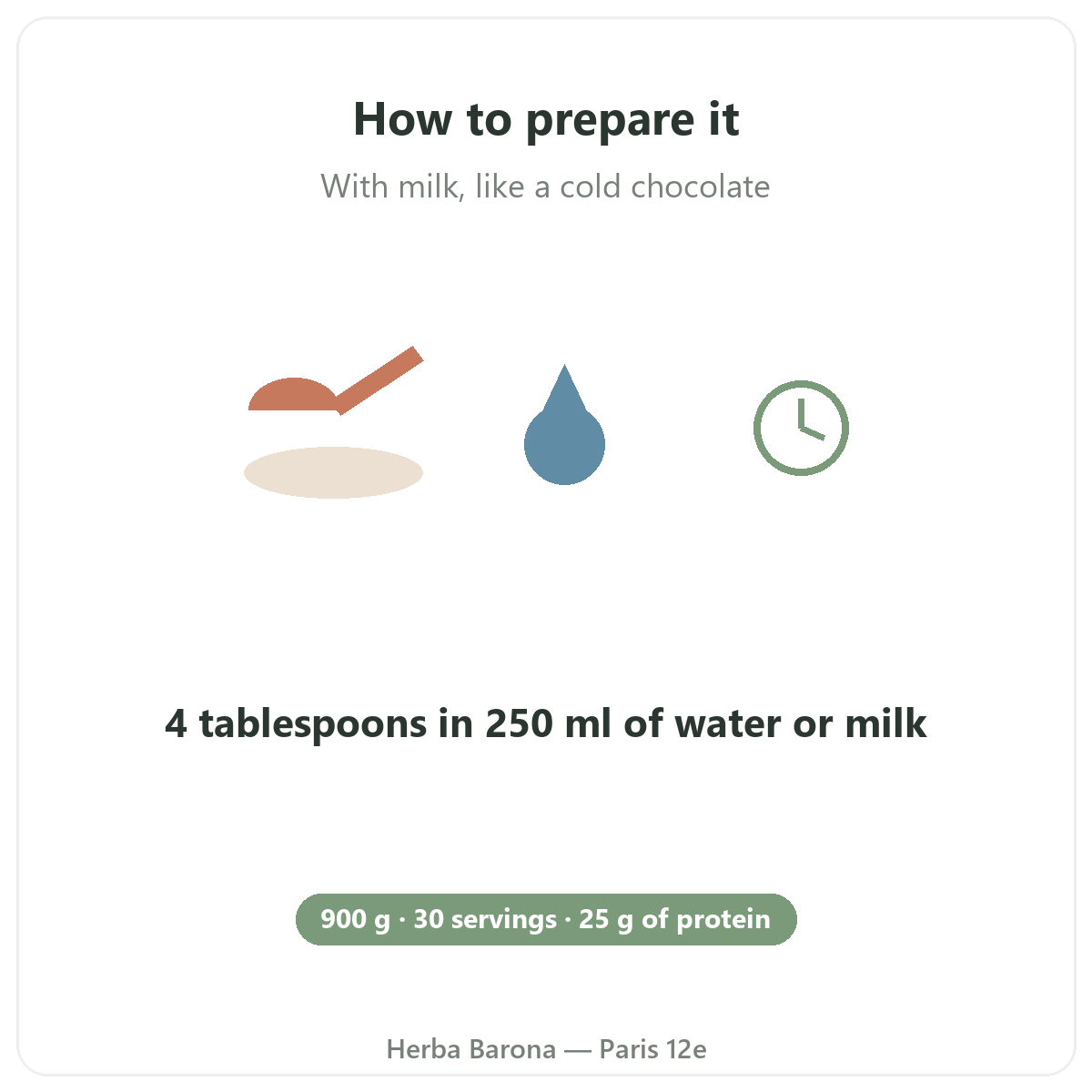
Allow 4 tablespoons, i.e. 30 g, for 250 ml of liquid. Pour the liquid into the shaker first, add the powder, close it and shake for about ten seconds. Without an emulsifier, a light froth may form: leave it for a minute and it settles.
With water, the drink is fresh and light, ideal straight after training. With milk, whether dairy or plant-based, it becomes creamy and takes on the feel of a cold chocolate drink. Oat milk and almond milk work particularly well with cocoa.
The chocolate powder is also the easiest to cook with. It slips into morning porridge, pancake batter or fromage frais. Just avoid bringing it to the boil: stir it in off the heat to keep a smooth texture.
When to take it during the day
The most classic time remains the end of a session. A serving within the hour after training quickly provides amino acids, at the moment when the muscles can put them to use.
It also has its place as a snack, around 4 pm, to last until dinner without nibbling, or at breakfast when the morning meal is short on protein. At 111 kcal per serving, it fits easily into a cutting phase.
For an active person, the usual guidelines are around 1.6 to 2 g of protein per kilo of body weight per day, from all sources combined. One to two servings a day are enough in the vast majority of cases. At our shop in Paris 12th, we take the time to look at your diet before talking about quantities.
Chocolate, vanilla or blueberry: choosing your flavour
All three flavours share exactly the same base: the same native isolate, the same 25 g of protein, the same absence of additives. Only the flavouring changes, and therefore how you use it.
Chocolate is the most indulgent flavour and the easiest to cook with. Vanilla remains the most subtle, the one that goes with everything. Blueberry surprises with its fruity taste, very different from the wheys people know, and it is often the one customers come back for after a first pouch.
If you are torn between isolate and concentrate, the organic chocolate whey concentrate keeps a little more lactose and has a rounder texture. The isolate is better suited if you are sensitive to lactose or want the maximum protein per serving. The whole selection is gathered in our whey isolate section.
Labels, allergens and storage
The isolate is V-Label certified vegetarian, gluten-free, kosher and halal. The cocoa carries the Fairtrade® label and comes from organic farming.
It contains milk. Microfiltration removes almost all the lactose, which means it is generally well tolerated by people sensitive to this sugar. However, it is not suitable for those with an allergy to cow’s milk protein, since it is precisely these proteins that are kept.
Keep the pouch closed, in a cool, dry place, away from light. The pouch is made from recycled material and is recyclable, with no plastic scoop. Food supplement to be used as part of a varied and balanced diet and a healthy lifestyle. Keep out of reach of children.
Frequently asked questions
Is this an organic whey?
No. The cocoa is organic and Fairtrade, but the protein isolate is not certified organic. If the organic label is a priority for you, the Greenwhey organic chocolate whey concentrate is certified across the whole recipe.
Is the chocolate taste sweet?
Only slightly. Monk fruit adds a light sweetness, and the cocoa keeps its natural bitterness. With milk, the result tastes sweeter than with water.
Why does the powder froth a little?
Because it contains no emulsifier. This is normal and harmless: a minute’s rest is enough for the froth to settle.
Can I collect it in the shop?
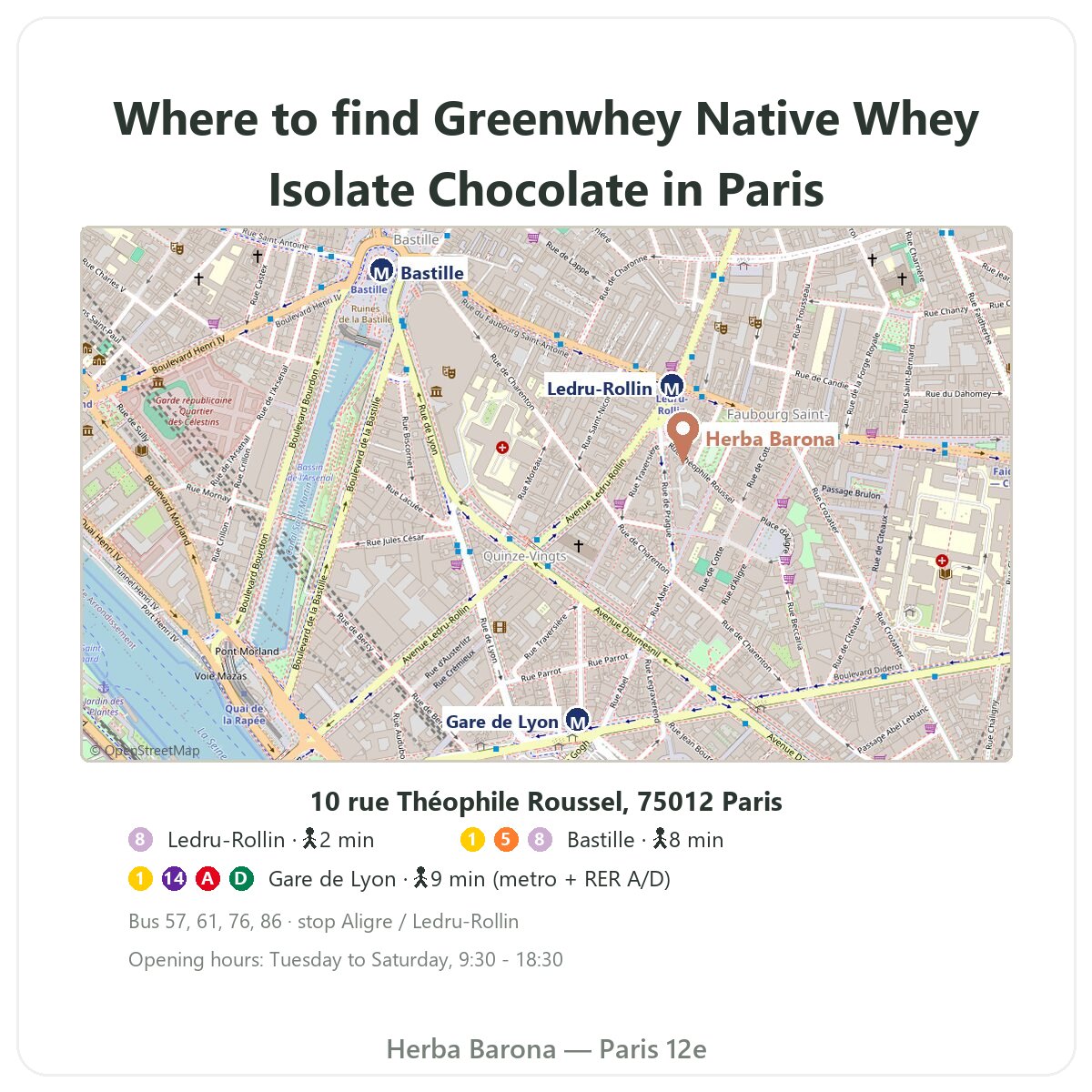
When it is in stock, yes: collection is at 10 rue Théophile Roussel, Tuesday to Saturday, from 9.30 am to 6.30 pm.
Herba Barona’s tip — blend one serving with a very ripe banana and 250 ml of almond milk: the cocoa and banana are enough to make a real dessert, with nothing else added.