The Herba Barona blog › Sem categoria
Which Shilajit Should You Choose in Paris? 2026 Comparison Guide
Shilajit (also known as chilagite or shilagite) is one of the most sought-after supplements for its energising, antioxidant and remineralising properties. But with so many products now on the market, how do you choose the right shilajit in Paris? This guide compares the main references available in our shop.
What is shilajit (chilagite)?
Shilajit is a natural mineral substance formed by the slow decomposition of plant matter in high-mountain rock (the Himalayas, the Altai and the Caucasus). It appears as a black or dark brown resin, extremely rich in fulvic acid (a powerful mineral chelator) and more than 85 trace elements.
In Arabic and in several French-speaking communities, shilajit is known as chilagite or shilagite. It’s the same product, simply transliterated differently. The most sought-after variants are pure resin and capsules dosed for fulvic acid content.
Its traditional use dates back more than 3,000 years in Ayurvedic medicine. It is reputed to support energy, vitality, cognitive function and the body’s mineral balance.
The key criteria for choosing a good shilajit
Not all shilajits are equal. Here are the 5 criteria that make the difference:
1. Fulvic acid content: this is the main quality indicator. A good shilajit should contain at least 50% fulvic acid. The best reach 70–79%. Below 40%, effectiveness is questionable.
2. Independent analysis (COA): a Certificate of Analysis issued by an independent laboratory guarantees purity, the absence of heavy metals (lead, mercury, arsenic) and the actual fulvic acid content. Favour brands tested by Eurofins or ISO 17025-accredited laboratories.
3. Regulatory declaration: in France, a food supplement must be declared to the competition and consumer protection authority (DGCCRF, under article 15 of decree 2006-352). An undeclared shilajit is potentially illegal and uncontrolled — a useful marker of quality wherever you buy.
4. Geographic origin: shilajit from Kashmir (the Indian Himalayas) and the Altai (Siberia) are the most reputed. Be cautious with untraceable origins.
5. Form: pure resin (the most concentrated) or capsules (more convenient). Resin generally offers better value for money and superior absorption.
Comparing the shilajits available in Paris
Here is our selection, ranked by decreasing fulvic acid content:
Shilajit Resin SIHO 30 g: 79% fulvic acid, sourced from the Altai (2,700 m altitude), 30 g pot (~250 servings). Eurofins-tested, DGCCRF-declared. The highest fulvic acid content in our selection.
Shilajit Resin Feel Pure 30 g: 75% fulvic acid, sourced from Kashmir, 30 g pot. Eurofins-tested, DGCCRF-declared. Our best-seller.
Chilagite Capsules SIHO 60 caps.: 72% fulvic acid in vegetable capsules. Convenient, tasteless, ideal for travel.
Shilajit Capsules Feel Pure: 70% fulvic acid, 1,000 mg per dose (2 capsules). Economical format lasting 45 days.
Shilajit NaturaMedicatrix 60 caps.: 50% fulvic acid, 300 mg. Good value for money to get started.
Shilajit Ayur-vana 60 caps.: extract standardised to 20% fulvic acid. The benchmark Ayurvedic brand.
Shilajit Resin SIHO 15 g: same quality as the 30 g, in a small starter format.
Our verdict: the Feel Pure resin remains the best shilajit in our selection for the balance between purity, traceability and price.
Resin or capsules: which should you choose?
The resin is the purest, most concentrated form. It dissolves in warm water or milk. Its taste is strong (bituminous, mineral). It’s the most economical form per gram of fulvic acid.
Capsules are more convenient and tasteless. They suit people who travel or who don’t like the strong taste of the resin. The cost per dose is slightly higher.
Our advice: start with the smaller SIHO resin pot to try it, then move up to the 30 g format if the product suits you.
Why buy your shilajit in Paris?
Buying in-store has several advantages over buying online: you can see the product, check the analyses on display, and ask a professional for advice. Many shilajits sold online are questionable (untraceable origins, no analysis, no regulatory declaration).
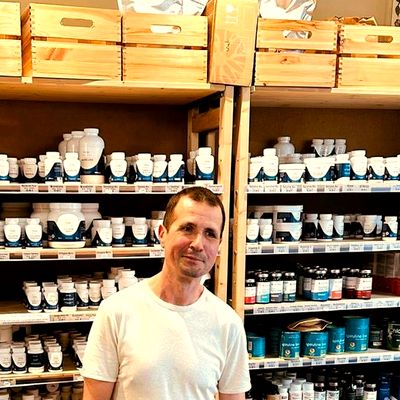
Our shop at 10 rue Théophile Roussel, Paris 12e (metro Ledru-Rollin or Bastille) is one of the few outlets in Paris to offer shilajit certified with a Eurofins COA. Every batch is checked for the absence of heavy metals, fulvic acid content and regulatory compliance.
We’re open Tuesday to Saturday, 9:30am to 6:30pm.
Frequently asked questions about shilajit (chilagite)
Is shilajit legal in France?
Yes, provided it is declared to the DGCCRF in accordance with decree 2006-352. All our shilajits are declared and compliant with French regulations.
Are chilagite and shilajit the same thing?
Yes. Chilagite (or shilagite) is the Arabic transliteration of the word shilajit. It is exactly the same product: a natural mineral resin from high mountains, rich in fulvic acid.
Where can you buy shilajit?
Rarely. Shilajit is an over-the-counter food supplement, but it’s not widely stocked in pharmacies. At Herba Barona in Paris 12e, it’s available immediately, in resin or capsule form, with the analyses available for inspection in-store.
How long does a shilajit course last?
A typical course lasts 4 to 8 weeks. The recommended dose is one portion of resin (about the size of a grain of rice to a small pea) or 1 to 3 capsules per day depending on the dosage. Effects are generally felt after 10 to 15 days.
Does shilajit contain heavy metals?
Raw shilajit can contain traces of heavy metals. That’s why independent analysis is essential. Our shilajits are tested by Eurofins for lead, mercury, arsenic and cadmium, with results compliant with European standards.