Phycocyanin
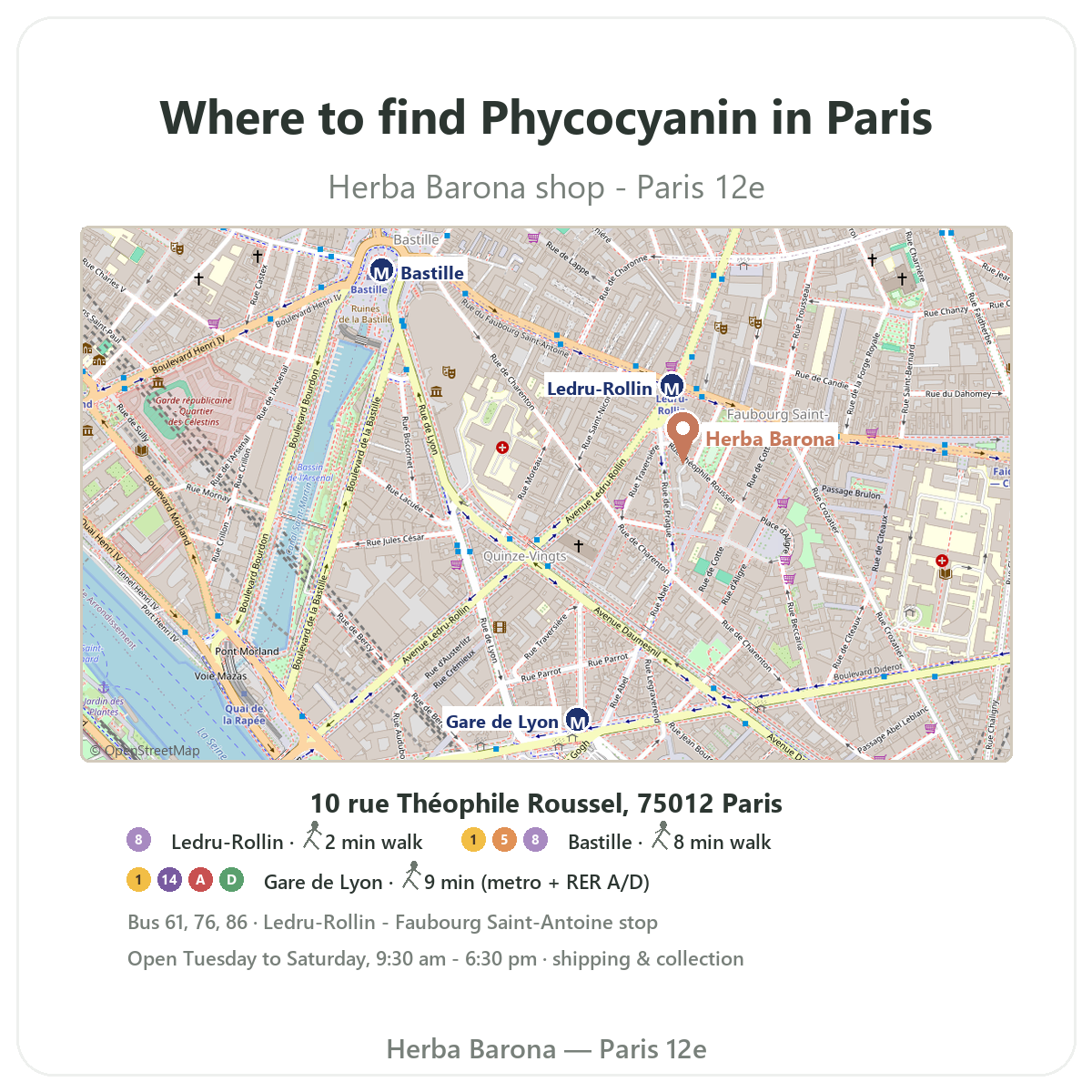
Phycocyanin in Paris — Phycocyanin is the natural blue pigment of spirulina (Arthrospira platensis). This pigment-protein, extracted from the algae and then concentrated, is available as capsules or as a blue powder at Herba Barona, 10 rue Théophile Roussel, Paris 12e.
What is phycocyanin?
Phycocyanin is a phycobiliprotein — a protein bound to a pigment — responsible for spirulina’s characteristic blue-green colour. Its name comes from the Greek phyco (algae) and cyanine (blue). It is one of the spirulina compounds most studied by researchers.
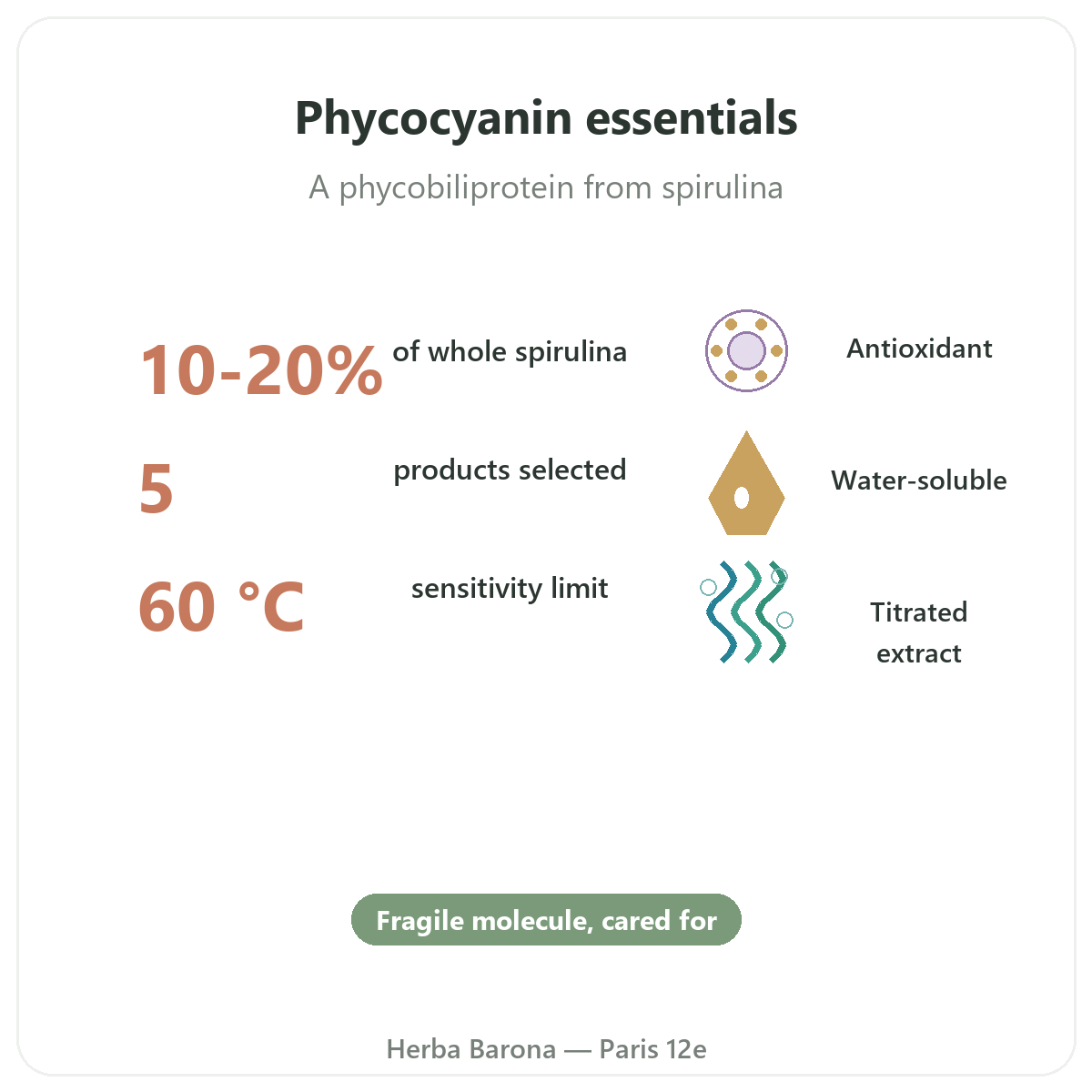
Whole spirulina contains around 10 to 20% phycocyanin depending on growing conditions. Concentrated extracts let you know the exact amount, stated in milligrams on the label. A few characteristics worth knowing:
- A coloured protein: its pigment, phycocyanobilin, belongs to the same broad family of molecules as the chlorophyll in plants
- Water-soluble: unlike astaxanthin or CoQ10, phycocyanin dissolves in water, which makes it easy to use in drinks
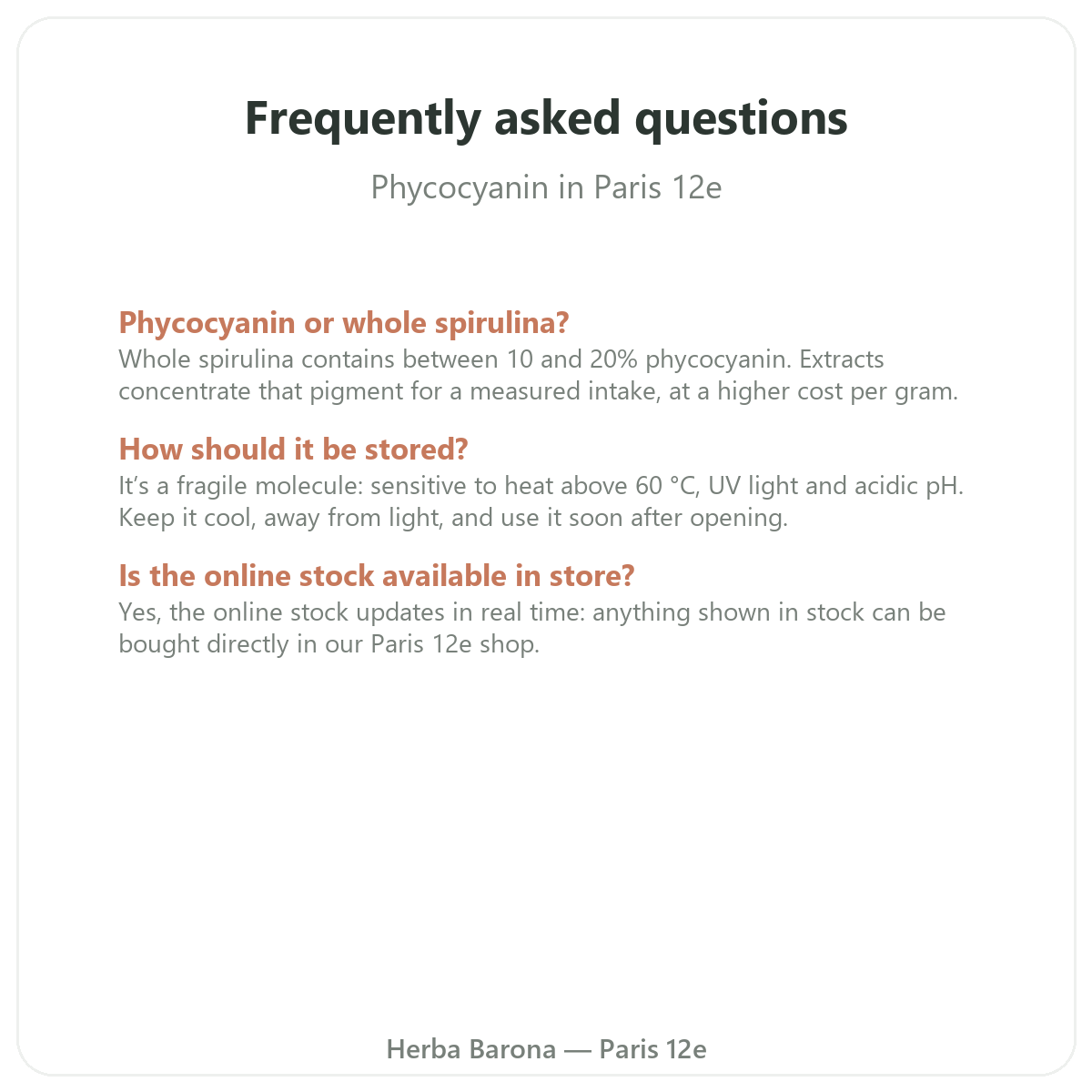
- A fragile molecule: sensitive to heat above 60°C, UV light and acidic pH. Extraction and storage methods are critical to preserving its colour and quality
Phycocyanin: what you should know
Phycocyanin is the subject of a great deal of research, mostly carried out in the laboratory. To date, no health claim is authorised for phycocyanin in the European Union. So we present it for what it is: spirulina’s natural blue pigment, extracted and concentrated.
A natural colouring — Spirulina extract is used in food to colour sweets, ice creams and drinks blue, in place of synthetic dyes.
An ancient tradition — Spirulina has been eaten for centuries around Lake Chad, and Spanish chroniclers reported that the Aztecs harvested it from Lake Texcoco. Phycocyanin is its blue fraction, isolated by extraction.
A matter of quality — Phycocyanin content, extraction method and the purity of the extract make all the difference between two products. A bright, stable blue is a good sign.
Our phycocyanin products in our Paris shop
At Herba Barona in Paris, we offer phycocyanin in several forms:
- Phycocyanin 200mg Life’s Code — 90 capsules: concentrated extract in vegetable capsules, 200mg of phycocyanin per capsule. A 3-month format
- Phycocyanin 200mg Life’s Code — 30 capsules: same formula, a one-month starter format
- Organic blue spirulina powder 50g — Bioptimal: blue spirulina powder rich in phycocyanin, for smoothies and bowls. Intense, 100% natural blue colour
Our in-store team can help you choose between capsules (convenient, precise dosage) and blue powder (culinary use, visual effect).
How to choose and use phycocyanin
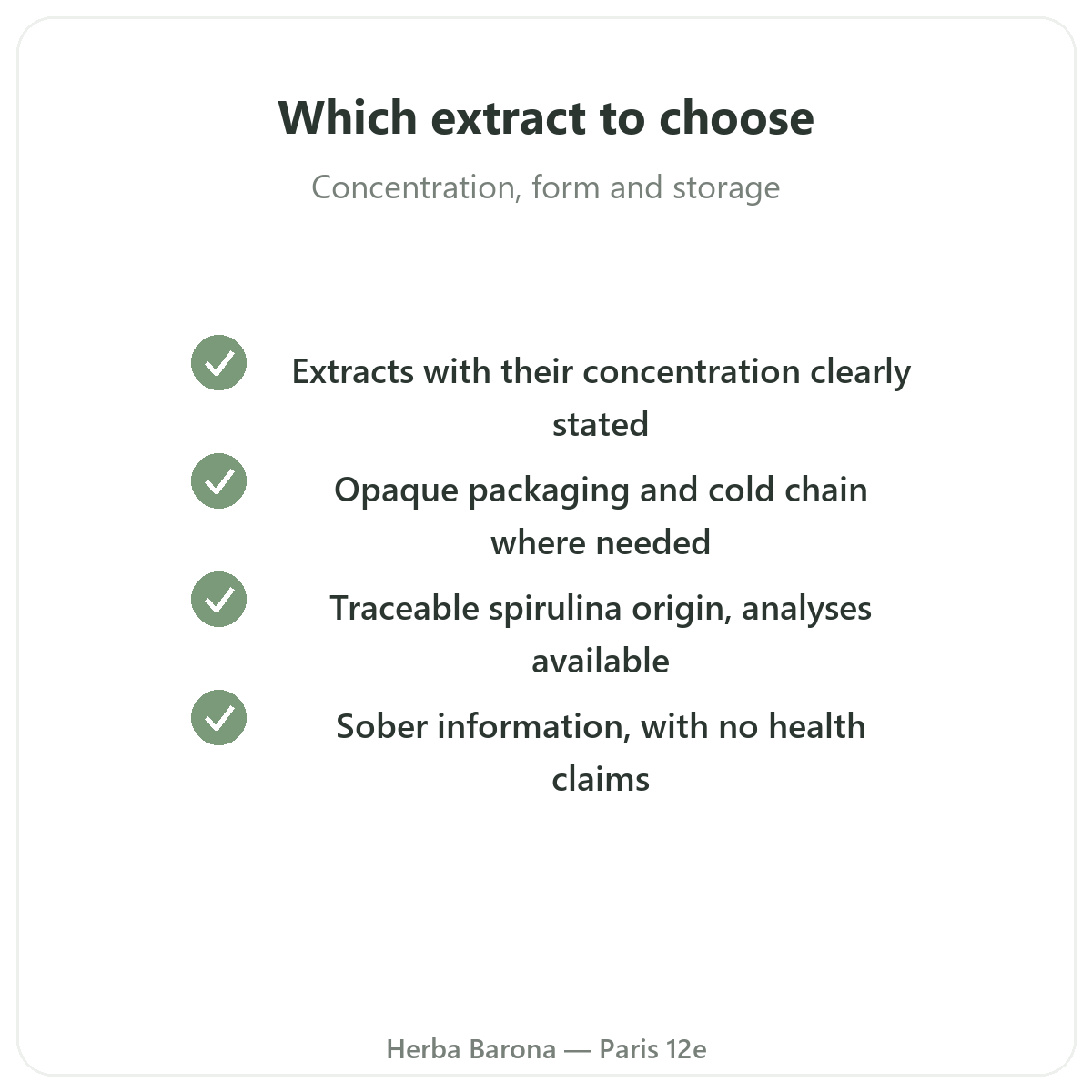
Several criteria set a quality phycocyanin apart:
- The phycocyanin content: choose products that clearly state the amount of phycocyanin per capsule in mg, not just the amount of spirulina
- Cold extraction: phycocyanin does not like heat, so cold extraction preserves the pigment
- Liquid or capsule form: the liquid form is fragile and keeps for less time. Capsules are more stable and convenient
- No preservatives or additives
How to use: follow the dose shown on each product’s label, usually 1 to 2 capsules a day with a meal, or 1 teaspoon of blue powder. Add the powder cold, without cooking, to keep its colour. Do not exceed the recommended daily dose.
Precautions: a food supplement is no substitute for a varied, balanced diet and a healthy lifestyle. Not recommended for people allergic to spirulina. If you take anticoagulants, ask your doctor for advice. Keep out of the reach of young children.
Blue spirulina in the kitchen and day to day
Blue spirulina powder is valued above all for its colour. A few ideas for using it:
- Smoothies and lattes: half a teaspoon is enough for a lagoon blue, with a plant-based milk or a fruit juice
- Bowls and yoghurts: stirred into a yoghurt, a porridge or a fruit bowl
- No-bake desserts: icings, creams, raw cheesecakes or energy balls
- A subtle taste: much milder than green spirulina, it is quickly forgotten in a recipe
Many athletes prefer the capsules, which are easy to slip into a bag. Phycocyanin is not a doping substance and does not appear on any list of banned substances.
Frequently asked questions about phycocyanin
Where to buy phycocyanin in Paris?
Phycocyanin is on sale at Herba Barona, a dietary-supplement shop in Paris 12e, at 10 rue Théophile Roussel. Tuesday to Saturday, 9:30am to 6:30pm.
What’s the difference between phycocyanin and spirulina?
Spirulina is the whole algae, which contains protein, iron, vitamins and phycocyanin (10-20%). Phycocyanin is its blue pigment, extracted and concentrated.
Can phycocyanin and spirulina be used together?
Yes, the two go well together: green spirulina for its full composition, phycocyanin or blue powder for the colour and a milder taste. Many of our customers use both.
Why is blue spirulina blue?
The intense blue colour comes from the naturally present phycocyanin. The bluer the spirulina, the richer it is in phycocyanin. It’s a visual indicator of quality.
Showing all 5 results
-
Organic Blue Spirulina Powder 50 g – Bioptimal
27,95 € incl. VAT Add to cart -

Phyco-500 – Freeze-Dried Phycocyanine – 30 Capsules
79,90 € incl. VAT Add to cart -
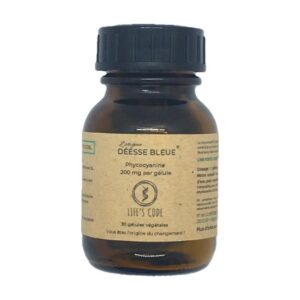
Phycocyanin 200mg – Life’s Code – 30 Capsules
44,90 € incl. VAT Add to cart -
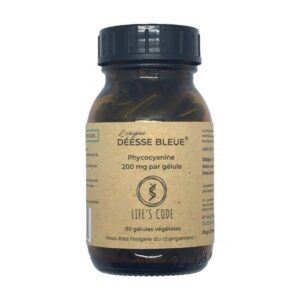
Phycocyanin 200mg – Life’s Code – 90 Capsules
105,90 € incl. VAT Add to cart -
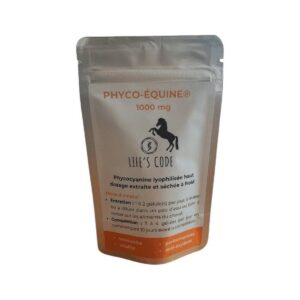
Phyco-Équine 21 Capsules – Phycocyanine for Horse Performance
59,90 € incl. VAT Read more