
Home › Podcast › The resin that seeps from cliffs
The resin that seeps from cliffs
Episode in French. The full text can be read below in English.
The text of the episode
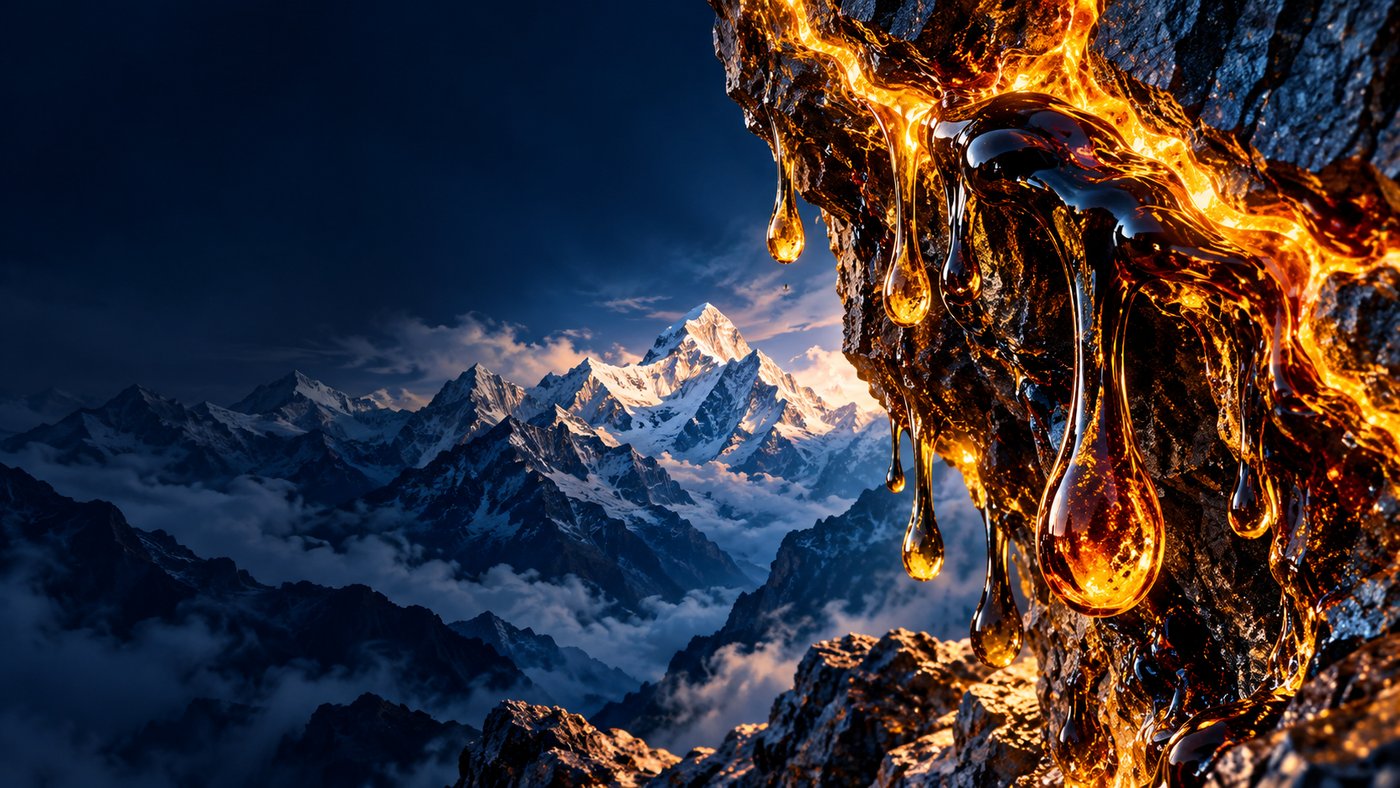
Imagine a wall of black rock, somewhere above the clouds. It is warm, for once. The summer sun beats down on the stone. And in a crack, slowly, something begins to flow. Not water, not sap. A dark, glossy substance, thick as tar. The mountain is sweating.
A black tear with a thousand names
You are in the Himalayas, or in one of its neighbours: the Karakoram, the Pamir, the Altai. And the peoples of these mountains have given this black tear dozens of names. In Sanskrit it is “shilajit”: literally, “conqueror of the rock”. Further north, in Central Asia and Russia, it is called “mumiyo”. The Mongols speak of mountain oil.
Where does it come from? Even scientists still hesitate. The most widespread hypothesis: plants and mosses, trapped in rock fissures, which decomposed over centuries, packed down, pressed, transformed by the stone itself. What you see flowing on a summer afternoon may have started forming long before your great-grandmother was born.
And how was it discovered? Here we enter legend. The story goes that monkeys, high in the mountains, came to lick this resin off the rocks, and that intrigued shepherds copied them. Nobody can prove it. But the tale has circulated for so long that it is part of the journey.
Gathering on a cliff face
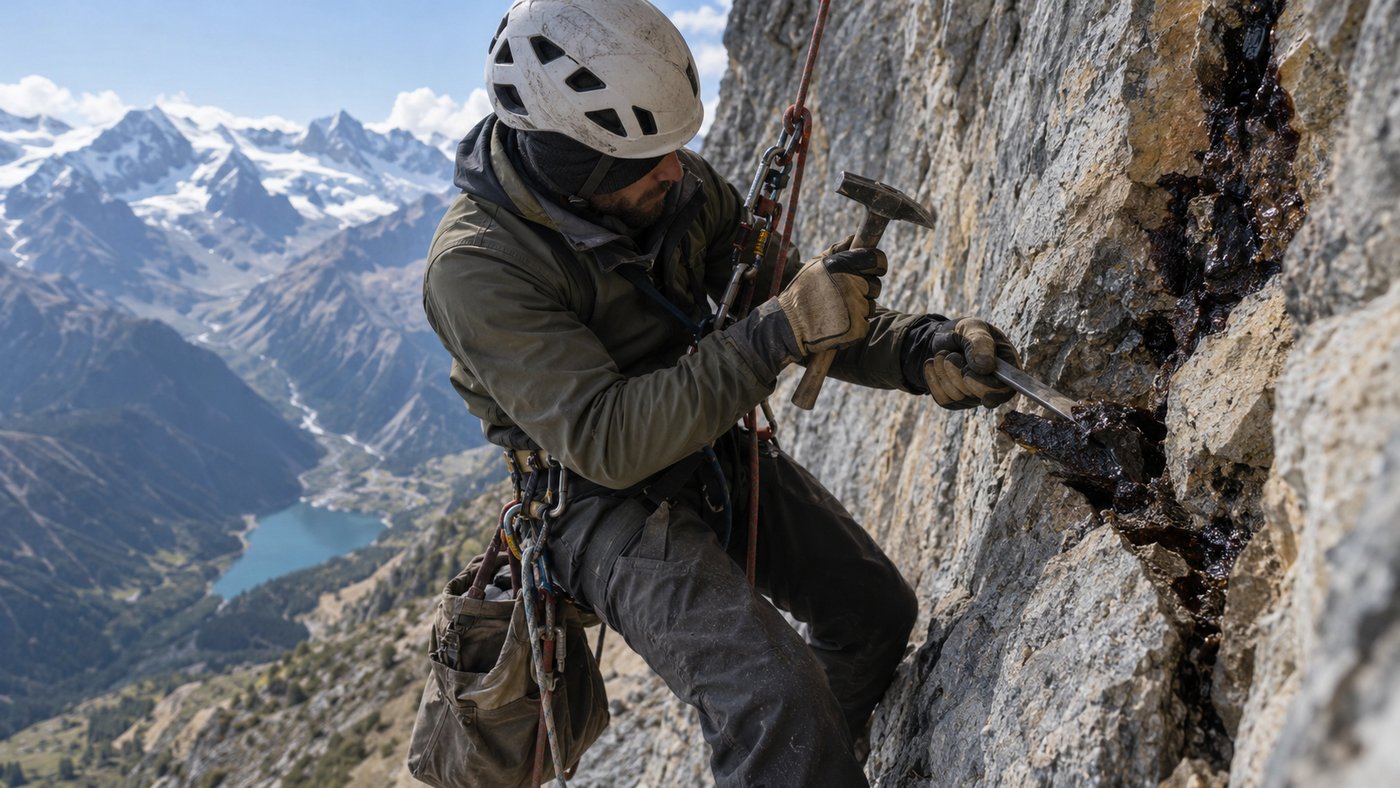
What is certain is that gathering it is no stroll. The resin only comes out in the warm season, when the heat softens it. You have to climb, sometimes very high, spot the black flows on the rock faces, then detach them by hand, with a knife or a chisel, without tearing off too much stone along with it. A window of a few weeks a year. The rest of the time, the mountain keeps its secret under the snow.
The ancient texts of the Indian world list it among the rasayana, those preparations that Ayurveda associated with longevity. And great scholars writing in Persian and Arabic, such as Avicenna or al-Biruni, already mention it in their works. A mountain product, then, but one that has been travelling through books for a thousand years.
Water, a cloth, sunshine
But here is the catch: what comes down from the cliff is raw. Resin mixed with earth, sand, rock chips, plant debris. Impossible to use as it is. So begins the second part of the journey, the most patient one: purification.
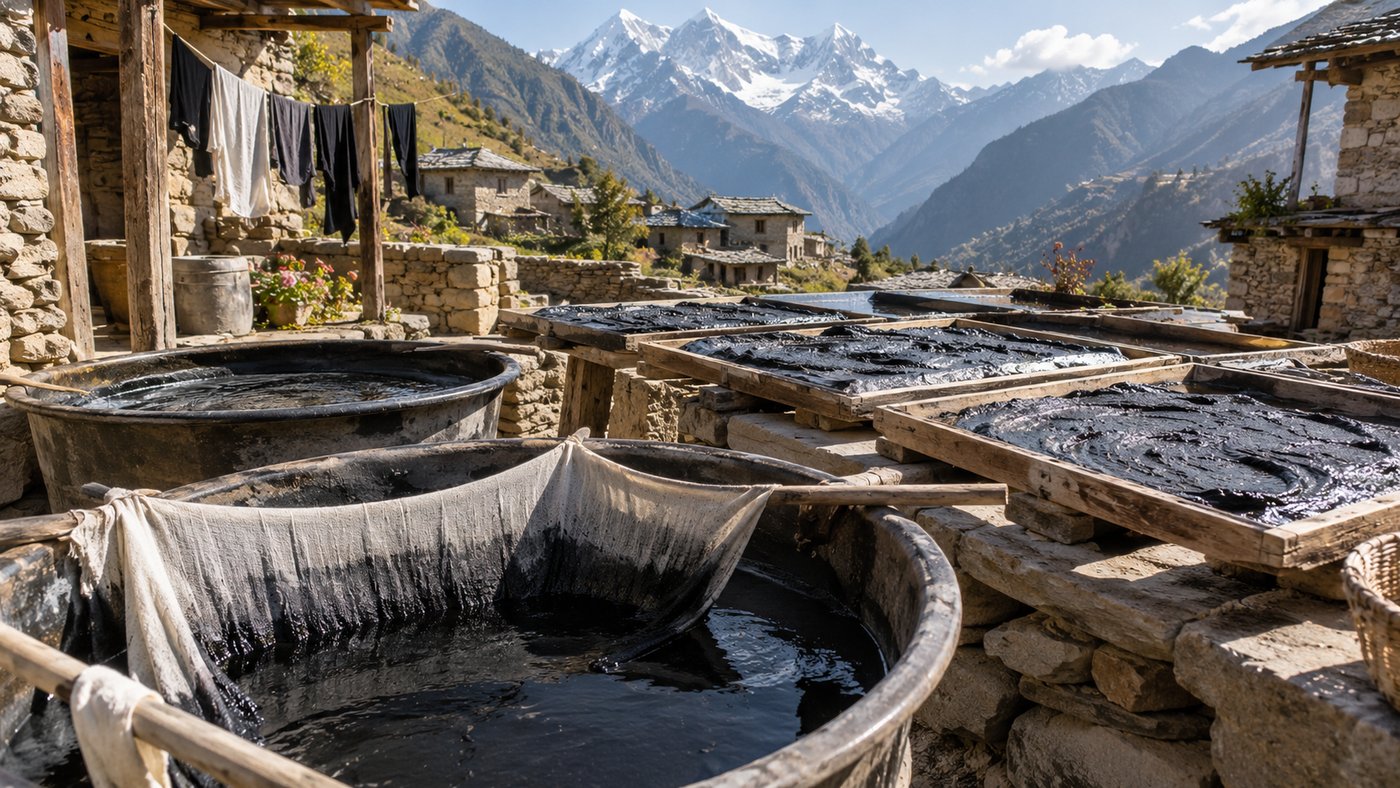
The traditional method is disarmingly simple. The blocks are plunged into water. The resin dissolves, while the stone stays at the bottom. It is filtered through a cloth, left to settle, filtered again. Then the water is left to evaporate gently in the sun, until all that remains is a black, dense, glossy paste. Days, sometimes weeks. Today, serious manufacturers add a step the ancients did not have: laboratory analysis, to check that nothing undesirable has travelled along with the resin.
Think of the road it has covered. A substance that took centuries to form in a crack. A handful of weeks a year to gather it. Days of water and sunshine to purify it. Then mountain roads, ports, planes, all the way to the shelf of our shop in Paris, where it fits in a small jar.
Next time you see that jar of black resin, remember where it comes from. Not from a factory. From a cliff that, one summer day, began to seep.