
Home › Podcast › The sailors, the lemon and the 42-year delay
The sailors, the lemon and the 42-year delay
Episode in French. The full text can be read below in English.

The text of the episode
In 1740, a British squadron leaves England to sail around the world. Nearly two thousand men on board. When Commodore George Anson comes home, almost four years later, more than half of his sailors are dead. Not under enemy fire. The great majority were carried off by an illness that all sailors dread: scurvy.
Scurvy is the nightmare of long voyages. After a few weeks without fresh fruit or vegetables, fatigue sets in. The gums swell and bleed. Teeth loosen. Old scars, closed for years, reopen. For centuries, this illness wreaks havoc in every navy in the world.
The Salisbury experiment
On 20 May 1747, aboard HMS Salisbury, a Scottish naval surgeon, James Lind, tries something new. He chooses twelve sailors suffering from scurvy, as alike as possible. Same bunk, same basic food. And he divides them into six pairs, with six different remedies.
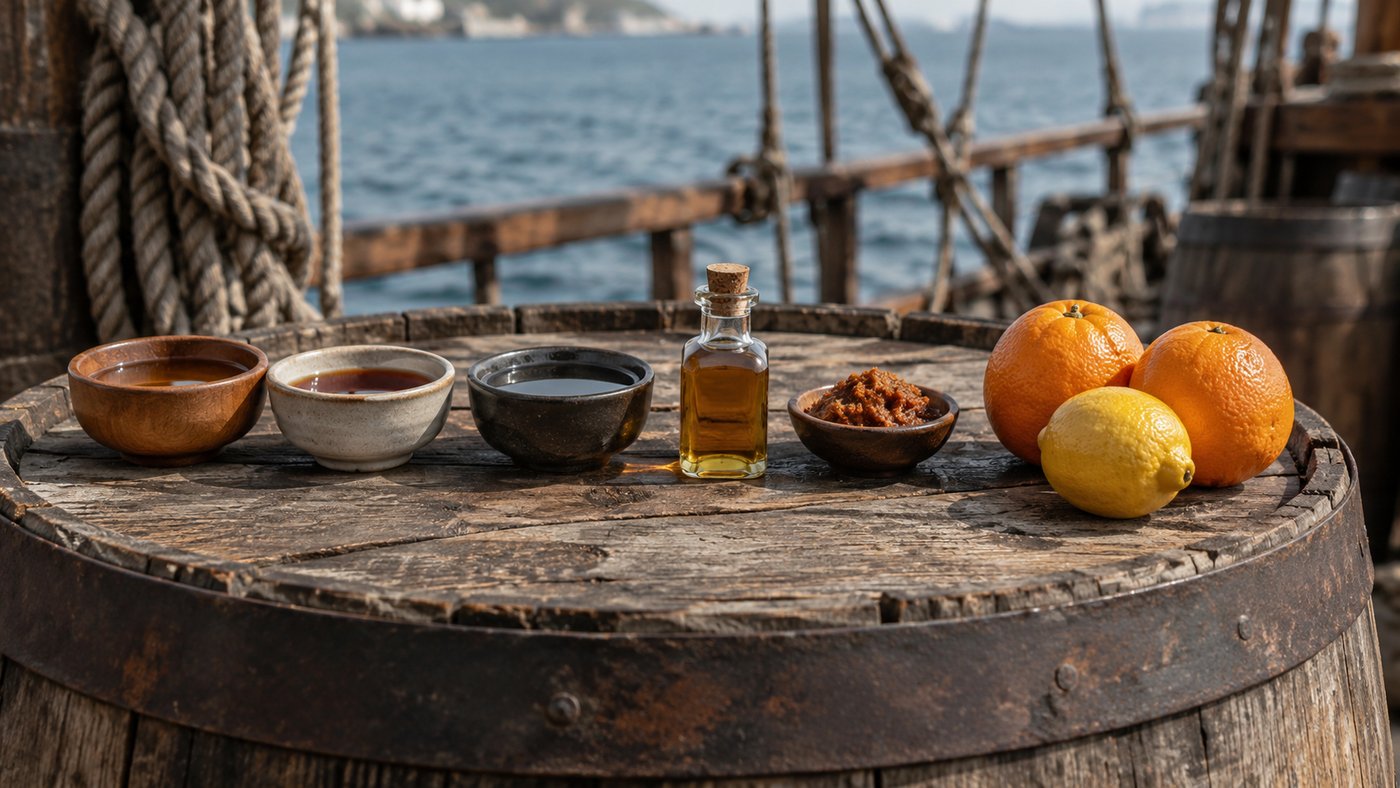
One pair receives cider. Another, an elixir based on sulphuric acid. The third, vinegar. The fourth, seawater. The fifth, a paste of spices. And the last, two oranges and a lemon a day.
The result is spectacular. After only six days, one of the two citrus eaters is declared fit for duty. The second recovers so well that he is put in charge of looking after the other patients. And that despite the fruit running out after six days. It is one of the first comparative experiments in the history of medicine.
Proof that sleeps
In 1753, Lind publishes his great Treatise of the Scurvy. And then? Almost nothing happens. For decades, the navy keeps losing men. How could such clear proof sleep for so long?
First, Lind himself is not clear. In his treatise, citrus fruit is drowned among other leads: damp air, poor digestion, lack of exercise. He also suggests preserving the juice by boiling it down for a long time over a fire. We know today that vitamin C does not tolerate heat and air well.
Then, the competition is tough. Other remedies have their supporters: sauerkraut, malt wort, vinegar. Lemons are expensive and spoil quickly. And above all, nobody knows why they work. Vitamins will not be discovered until more than a century later. Without an explanation, a good idea looks like one more superstition.
Forty-two years later
It takes an obstinate man: Gilbert Blane, physician to the fleet. He pushes, argues, insists. In 1795, a year after Lind's death, the Admiralty finally orders a daily ration of lemon juice on its ships. Forty-two years after the treatise was published. Forty-eight after the Salisbury experiment. Within a few years, scurvy becomes rare in the Royal Navy.
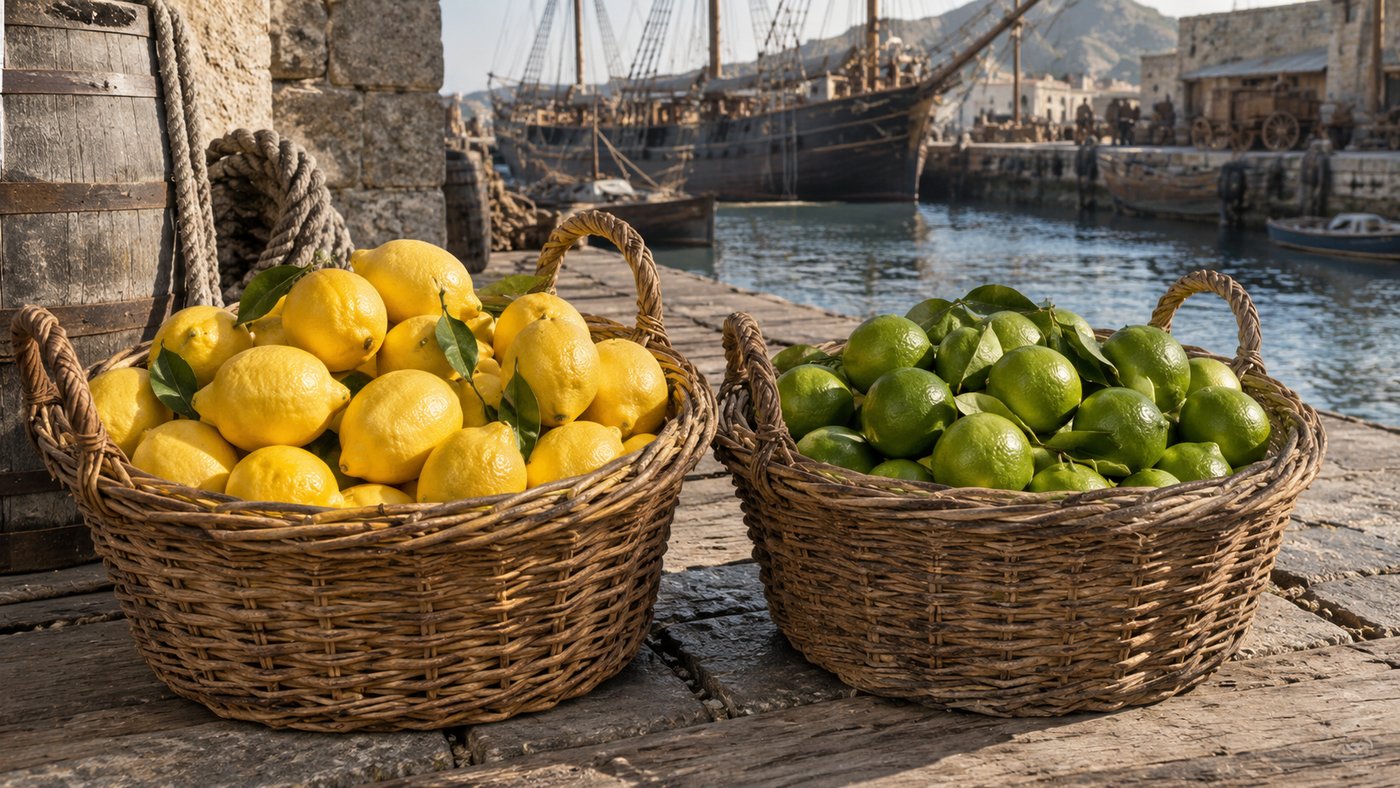
The story even has an ironic epilogue. Later, the navy replaces Mediterranean lemons with green limes from the West Indies, which are poorer in vitamin C. Scurvy reappears on some expeditions. That is where the nickname of English sailors comes from: the “limeys”.
It will take until 1932 for vitamin C to be finally identified. Today, we know that it contributes to the normal function of the immune system and to the normal formation of collagen. At Herba Barona, in Paris, you find it on many labels, far from the damp holds of the 18th century.
Forty-two years. The time it sometimes takes between a proof and a habit. The story of the lemon is not that of a discovery. It is that of a self-evident fact that took half a century to believe.