Home › Podcast › The alga that grows in soda lakes
The alga that grows in soda lakes
Episode in French. The full text can be read below in English.
The text of the episode
Imagine a lake whose water you cannot drink. It is so loaded with soda salt that it stings the skin. No fish, almost no plants. And yet, on the surface, a scum of deep green, almost blue. Women wade into the water with jars and baskets. They have come to harvest.
The ouaddis of Kanem
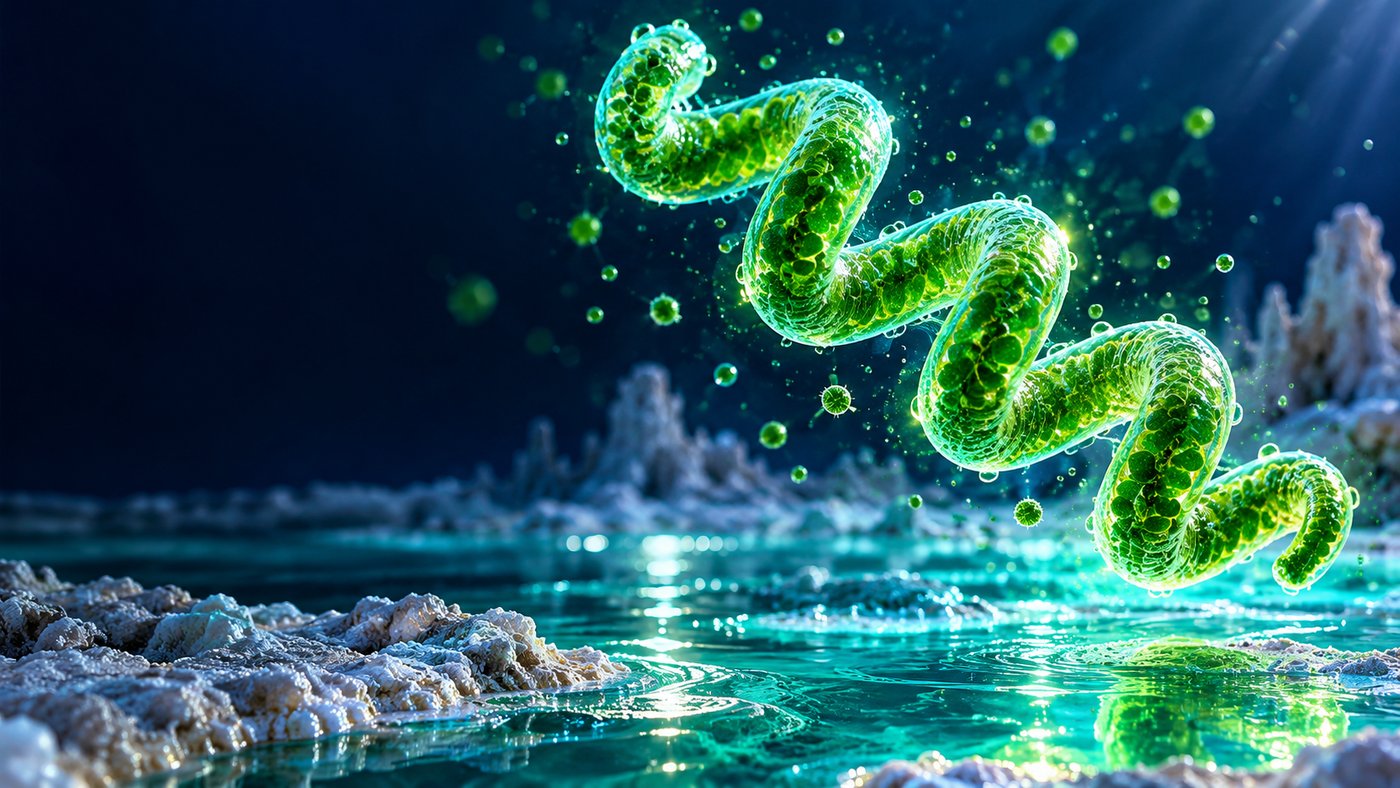
You are in Chad, east of Lake Chad, in the Kanem region. There, between the dunes, lie small stretches of water called ouaddis. Their water is saturated with natron, a natural salt that has been gathered in the region for centuries. A hostile environment for almost every living thing. Except for her: a tiny spiral-shaped organism that biologists class among the cyanobacteria and that everyone calls an alga. Spirulina.
During the rainy season, from June to September, it thrives. And it is the Kanembu women who, for generations, have taken care of the harvest. They wait for the wind to push the green scum towards the bank. They scoop it up, pour it through a cloth or a tight basket, and collect a thick purée, a green so deep it is almost black.
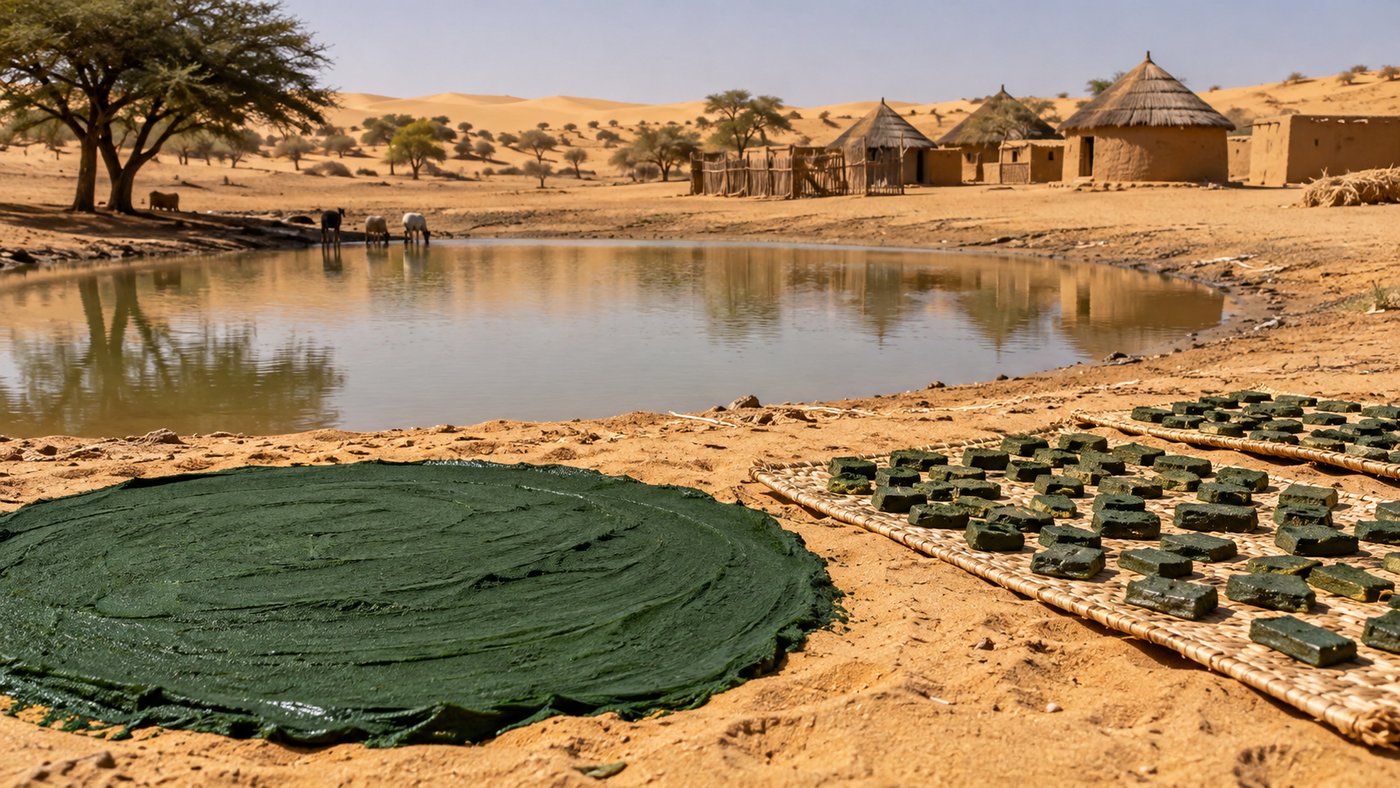
Then comes the most astonishing gesture. They spread this purée in the sun, on the hot sand, in a thin layer. A few minutes are enough for it to start setting. It is cut into small squares, and the drying is finished on mats, back in the village. The result has a name: dihé. Green cakes, sold in the markets, crumbled into sauces.
1940, then 1964
For a long time, the rest of the world knows nothing about it. In 1940, a French botanist, Dangeard, reports that strange sheets of dried algae are being sold in a market in Kanem. Almost nobody pays attention. We have to wait until 1964: a Belgian botanist, Jean Léonard, crosses the region with an expedition, and watches the women at work, their nets, their cakes. This time, Europe discovers, astonished, what the Kanembu women had always known.
And spirulina sets off on another journey. It needs only three things: alkaline water, warmth and light. It turns out that its lake can be recreated, in miniature, in ponds.
Ponds in the south of France
In France, the adventure begins in the South. In 1997, in the Hérault, a first craft farm gets started. Others follow, in the Var in particular, often under former flower greenhouses put to new use. In 2005, a training course to become a spirulina farmer opens in Hyères. In 2009, some thirty producers found their federation. Today, spirulina farms can be found almost everywhere in France.
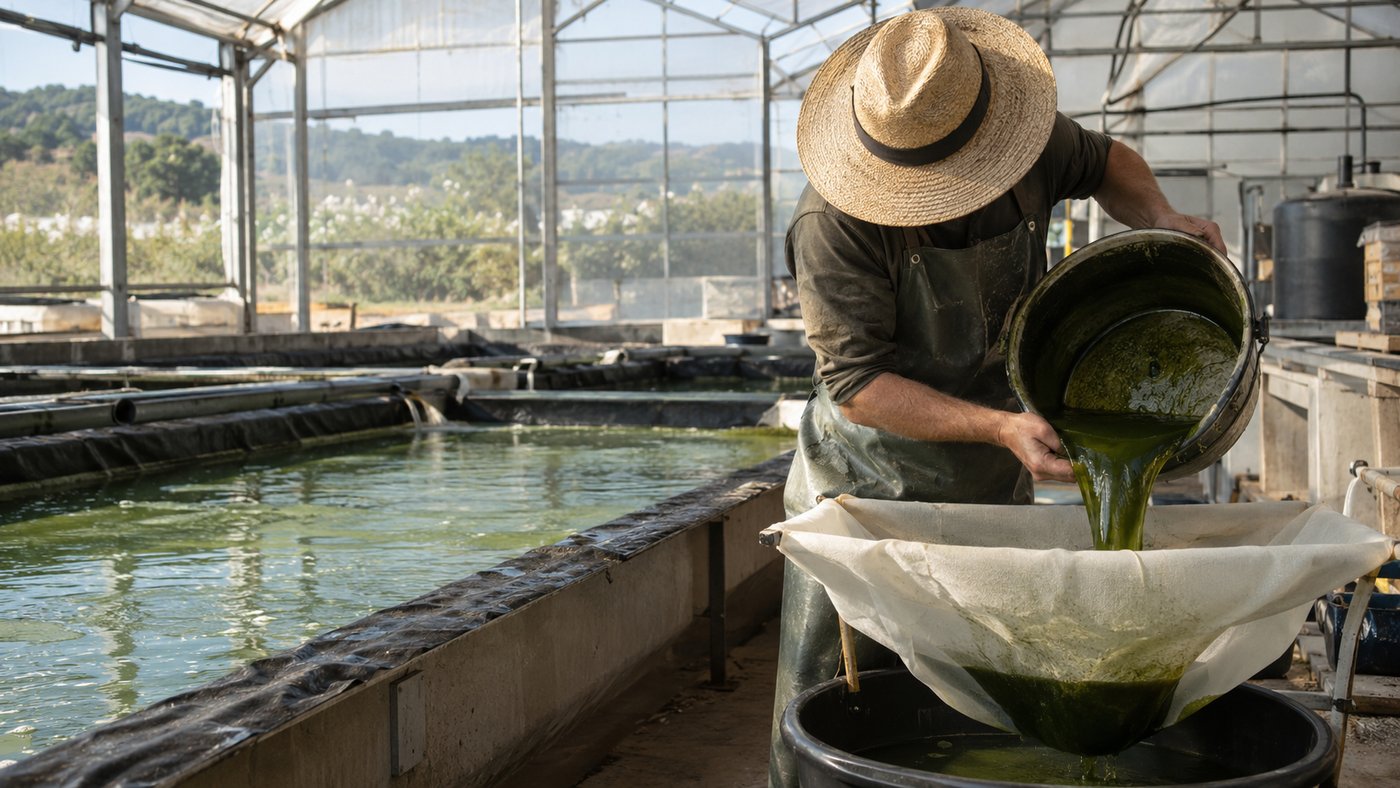
The gesture itself has not changed that much. The spirulina farmer stirs his ponds, watches the colour of the water, harvests by filtering through a fine cloth. He presses the paste, then dries it, often as small strands, like green spaghetti. Between the Kanembu woman bent over her ouaddi and the farmer of the South bent over his pond, there are thousands of kilometres. And the same cloth filtering the same green water.
From a soda pool in the heart of the Sahel to the shelf of our shop in Paris, it is one of the finest journeys in the plant world. An organism born in water where almost nothing lives, and become a food carried all around the world.
So next time you see a bag of spirulina, think of the ouaddis of Kanem. And of those women who, long before the laboratories, had understood that an undrinkable lake could feed a village.