
The Herba Barona blog › Sem categoria
Moringa: powder, capsules or leaves, how to use it
Moringa intrigues people. You hear about it, you see smoothies in a deep green colour go by, and when you reach the shelf, you find three forms: powder, capsules and whole leaves. Which to take, and above all, what to do with it once you’re home? Here’s what we answer at the counter every day. All our products are gathered on the moringa in Paris page.
Where does moringa come from?
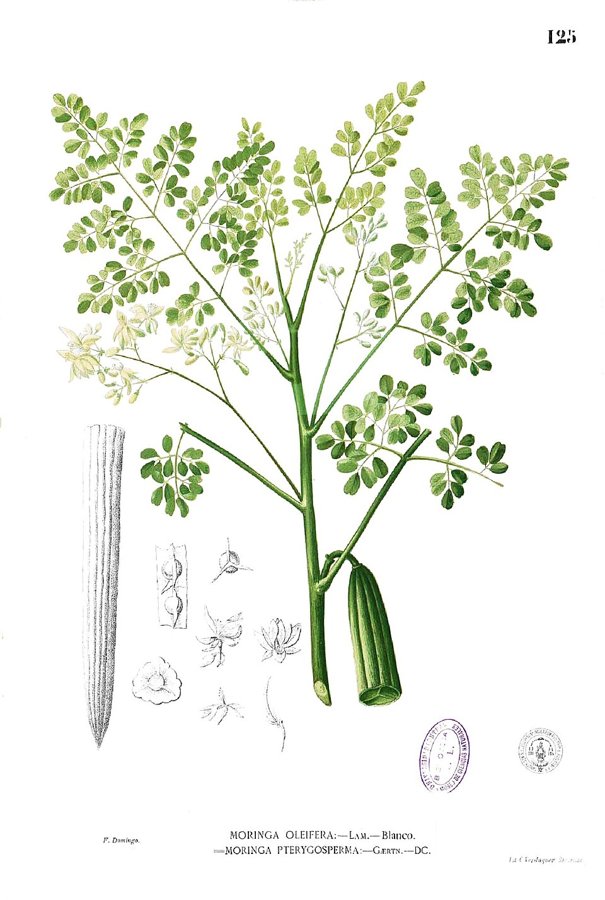
Moringa (Moringa oleifera) is a fast-growing tropical tree, native to northern India, at the foot of the Himalayas. It is now grown in many tropical regions, from Africa to Southeast Asia and Latin America. Ayurvedic tradition calls it “the tree of life”, which is also why it appears in our Ayurvedic plants range.
What’s consumed are its leaves. Once dried, they are either left whole or ground into a fine powder. They’re valued as a concentrated leafy vegetable: our product pages state 25 to 30% plant protein in the dried leaf, along with fibre, minerals and vitamins.
Powder: the most versatile form
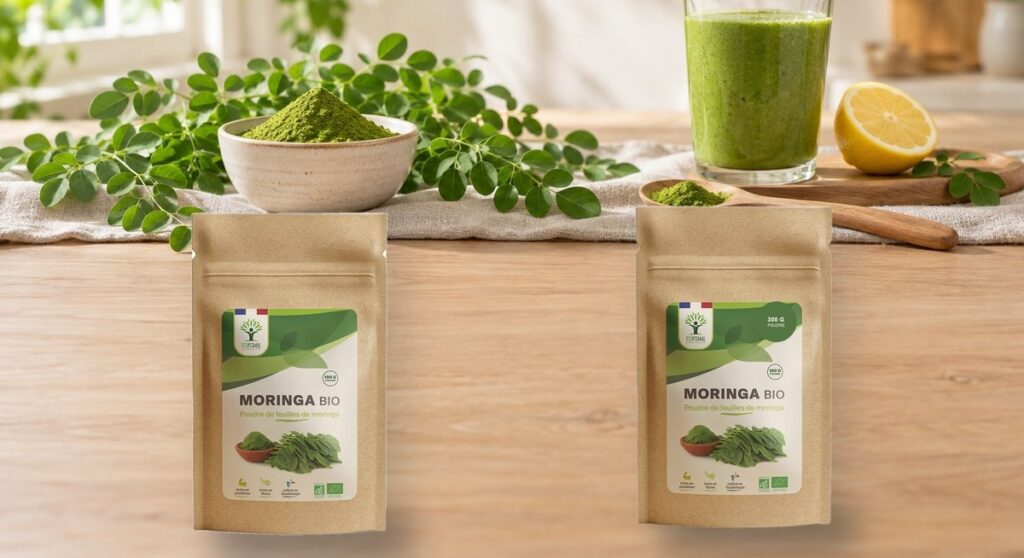
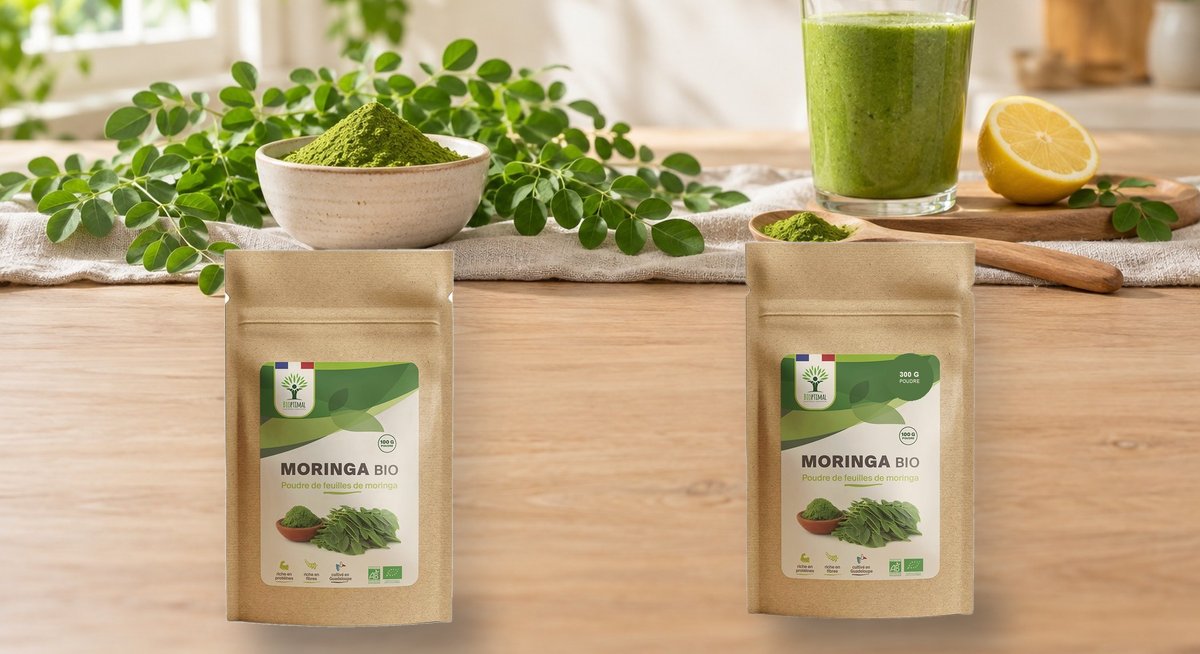
This is our best-seller. Bioptimal’s organic moringa powder is made of 100% organic moringa leaves grown in Guadeloupe, dried then finely ground, with no additives or preservatives. It comes in a 100 g pouch to try it out, and a 300 g pouch for those who take it every day.
Its taste is mild and grassy, and the product pages compare it to spinach or matcha tea. It mixes easily into a liquid or a recipe, without lumps if stirred well.
How to use the powder day to day
The starting rule is simple: one teaspoon a day, around 3 g, then up to two teaspoons (around 6 g) if you wish. For the rest, it’s all down to habit:
- In a smoothie with banana, mango and almond milk, or in a green juice with apple, celery and lemon.
- At breakfast, sprinkled over yoghurt, porridge or a bowl of fruit.
- In a glass of warm water with a little honey, for those who want to keep it simple.
- In cooking, in a soup, a sauce, a dressing or pancake batter.
A tip that comes up often on the product pages: add the powder cold or at the end of cooking, rather than boiling it with the dish. It keeps its colour and fresh taste better that way.
Capsules: for those who don’t like the taste
Some customers don’t take to the vegetal taste, or simply want something quick in the morning. Concentrated moringa capsules contain moringa leaf powder in a plant-based capsule. The stated dose is two capsules a day, or 600 mg of leaf powder. With 200 capsules, it lasts several months.
The difference with the powder is the amount: two capsules deliver noticeably less than a teaspoon. Capsules are chosen for convenience, at the office or while travelling, not to replace a teaspoon of powder gram for gram.
Whole leaves: as a tea
The third form is the oldest. Organic dried moringa leaves are used like an herbal tea: one to two teaspoons in a cup of hot but not boiling water, around 80 to 90°C, for 5 to 10 minutes. The infusion is pale green, with a mild taste, close to green tea. A little lemon, honey or fresh ginger pairs well with it.
The leaves can also be crumbled over a salad, a soup or a rice dish. If you like varying your hot drinks throughout the day, our article on tea or herbal tea: which drink for which moment will give you ideas.
A few precautions
Moringa is a food, but it remains concentrated. Our product pages note two points: pregnant women should ask a doctor’s advice before consuming it, and people on anticoagulant treatment should speak to their doctor, as the leaf contains vitamin K. For any other ongoing treatment, a word with your pharmacist is enough to clear up any doubt.
Frequently asked questions
Are powder and leaves the same thing?
It’s the same leaf, in two forms. The powder is finely ground and mixes better into a smoothie or a recipe. Whole leaves suit infusions and sprinkling better.
What time of day should moringa be taken?
There’s no fixed time. Many of our customers take it in the morning, in their breakfast smoothie or yoghurt, simply because that’s the easiest moment to stick to.
Can moringa powder be cooked?
Yes, in pancake batter or a soup, for example. Just avoid letting it boil for long: pour it in off the heat, just before serving.
How should the pouch be stored?
Properly closed, dry, away from light and moisture. Bioptimal’s resealable kraft pouch is designed for this. Avoid dipping a wet spoon into it.
Want to compare before choosing? Come and see the powder, capsules and leaves side by side at our Paris 12th shop, 10 rue Théophile Roussel, Tuesday to Saturday.