TMG Trimethylglycine in Paris: Dynveo beet betaine, 400 mg
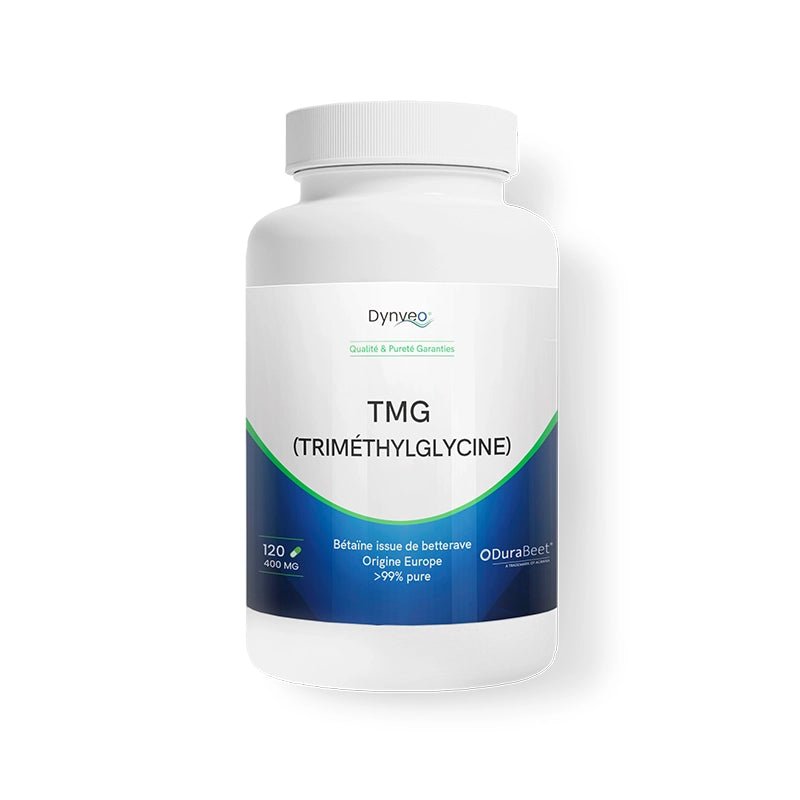
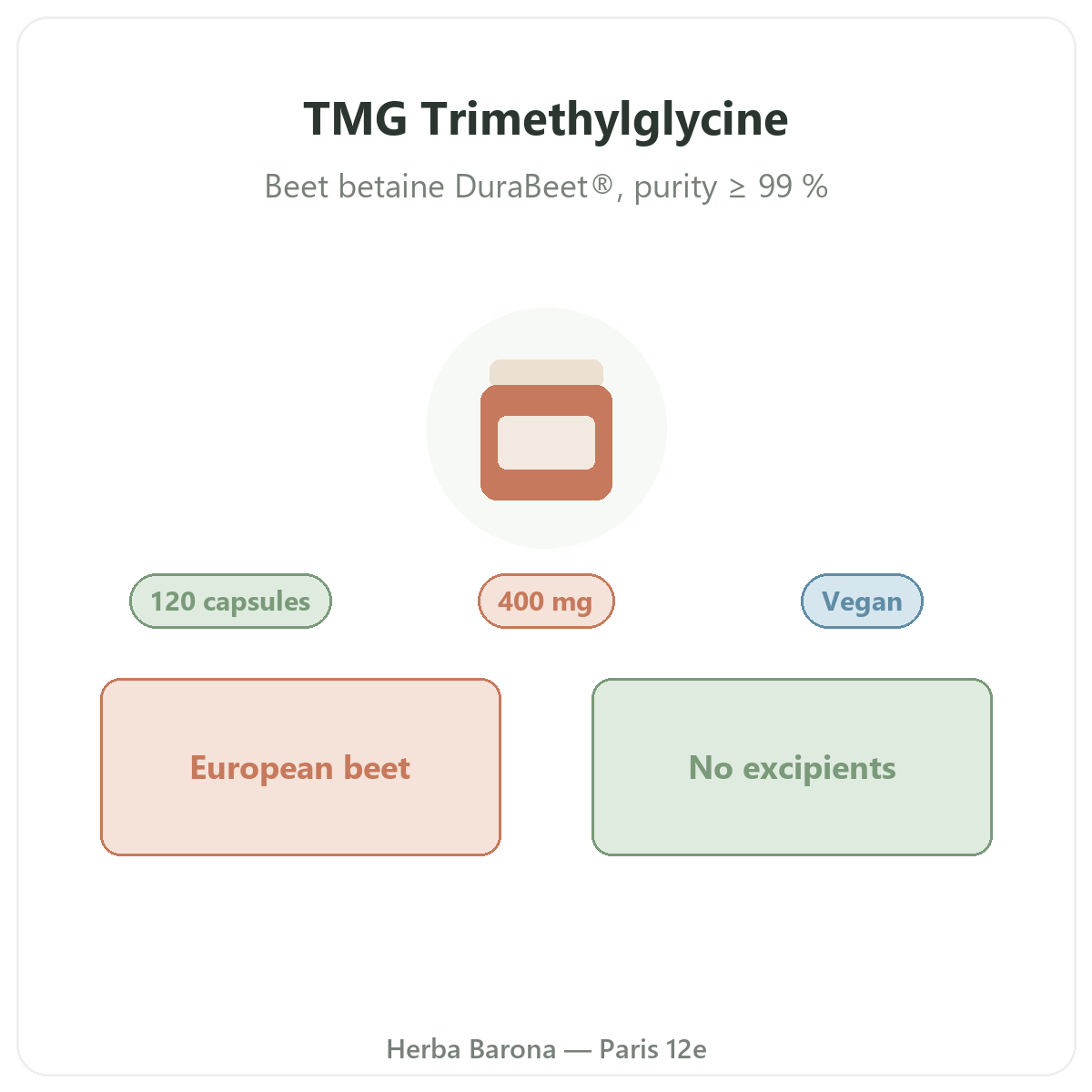
Dynveo‘s TMG delivers 400 mg of anhydrous betaine per capsule, sourced from European sugar beet and over 99 % pure. Available in Paris at Herba Barona, in a 120-capsule bottle.
📦 Product available in five days.
What is TMG, and why so many names?
TMG stands for trimethylglycine: a glycine molecule carrying three methyl groups. The same substance is also called anhydrous betaine, or simply betaine — the name comes from the Latin beta, the beet, the plant in which it was first identified in the 19th century. Three names, one single compound, and a regular source of confusion on the shelf.
Betaine is nothing exotic: it occurs naturally in food and in the human body, where it belongs to the family of methyl donors alongside choline and vitamins B9 and B12. It is also an osmolyte, meaning it takes part in the water balance of cells — a property plants rely on to withstand drought and saline soils. At Herba Barona in the 12th district of Paris, we present it as a quiet background supplement, well identified in nutrition protocols.
DuraBeet®: betaine from European sugar beet
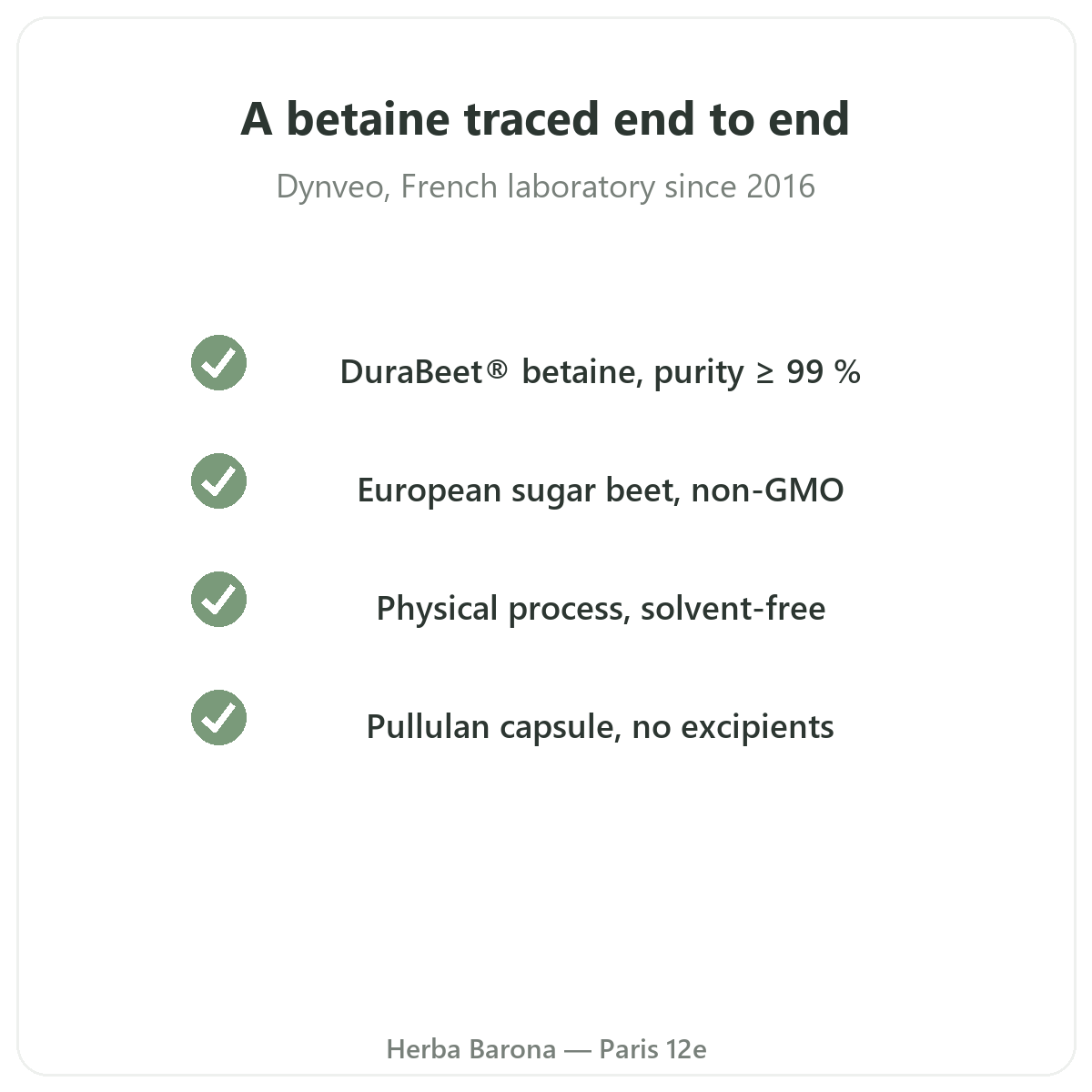
Not all betaines on the market are equal, and the gap comes down to two things: the starting material and the extraction process. Dynveo has chosen the patented ingredient DuraBeet®, produced in Tulln, Austria, from non-GMO European sugar beet. There, betaine is a natural by-product of the sugar industry: it is present in molasses, and the job is to separate it rather than manufacture it.
Extraction relies on a purely physical process — chromatography and crystallisation — with no chemical synthesis and no organic solvents. The resulting betaine is over 99 % pure. Many betaines sold elsewhere are, by contrast, produced synthetically from petrochemical derivatives: the final molecule is the same, but neither the traceability nor the process footprint is. The formula contains no additives and no excipients: the capsule is pullulan, a plant polysaccharide obtained by fermentation.
Where is betaine found in food?
Betaine is a dietary molecule before it is a supplement. The densest sources are beetroot, spinach, quinoa, wheat germ and wheat bran, along with some seafood such as shrimp. Daily intake varies enormously from one person to another, roughly between a few dozen and a few hundred milligrams.
Two factors push those intakes down. First refining: betaine concentrates in the outer layers and germ of cereals — precisely the fractions white flour leaves behind. Then boiling: the molecule is highly soluble and readily passes into the cooking water, which ends up down the sink. A diet low in root vegetables, leafy greens and whole grains is therefore mechanically lower in betaine. Those are the profiles most often interested in TMG, along with athletes in intensive training. In our Paris 12th shop, our team can talk through where it fits in your routine.
Why 400 mg per capsule: the French regulatory cap
This dosage is not a marketing decision, it is a regulatory constraint, and it deserves a clear explanation. French regulation caps betaine at 400 mg per day in food supplements. Dynveo’s TMG is therefore dosed at exactly the maximum allowed, with one daily capsule covering the whole ceiling.
An honest clarification belongs here. There is a health claim assessed at European level regarding betaine, but it is conditional on a daily intake of 1,500 mg — nearly four times the French cap. In other words, no health claim can be made for this product at the dosage authorised in France, and we make none. What we sell is straightforward: European beet betaine, over 99 % pure, dosed at the legal maximum, fully traceable. Higher dosages you may read elsewhere — 1,000 or 3,000 mg — belong to products sold outside the French framework.
How to use it
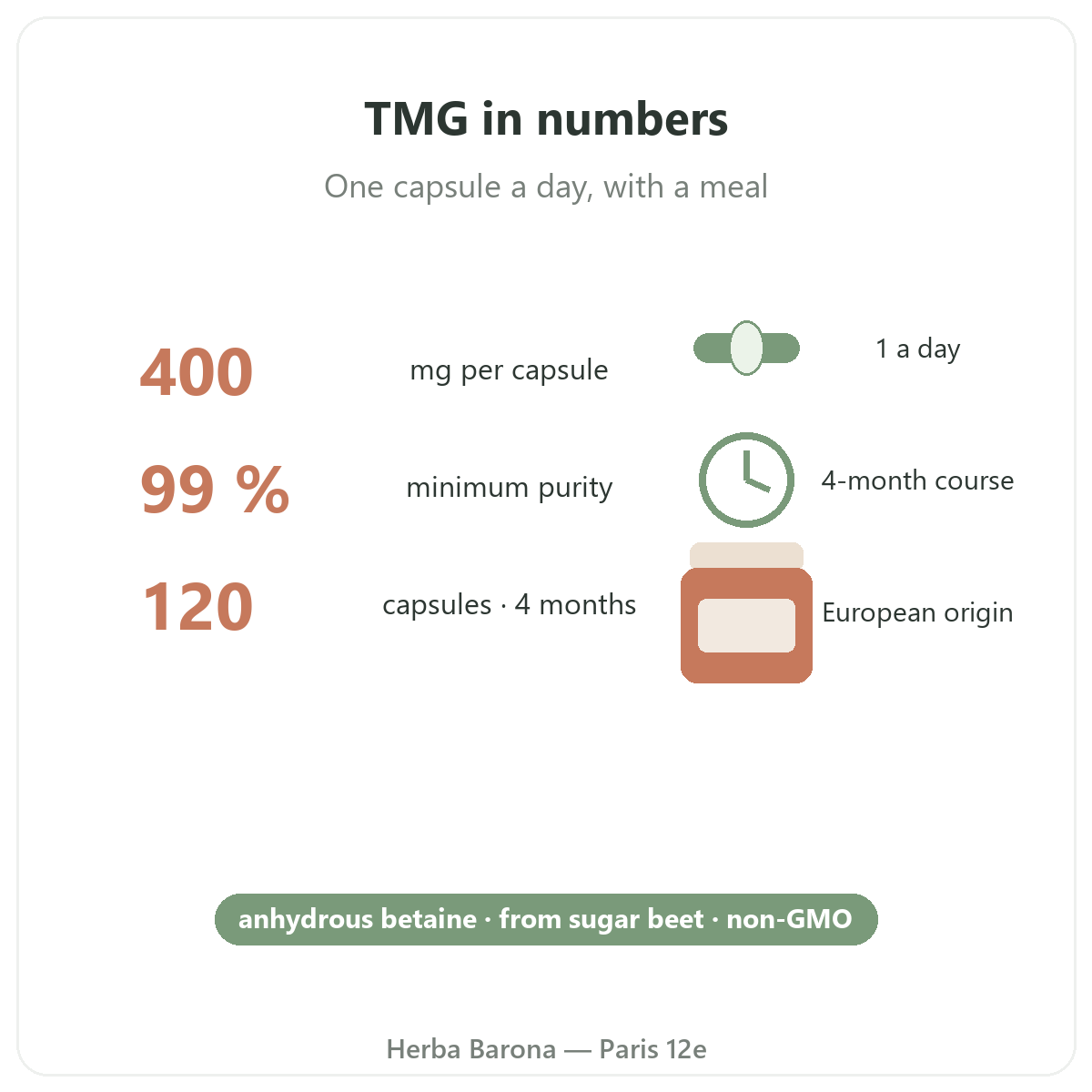
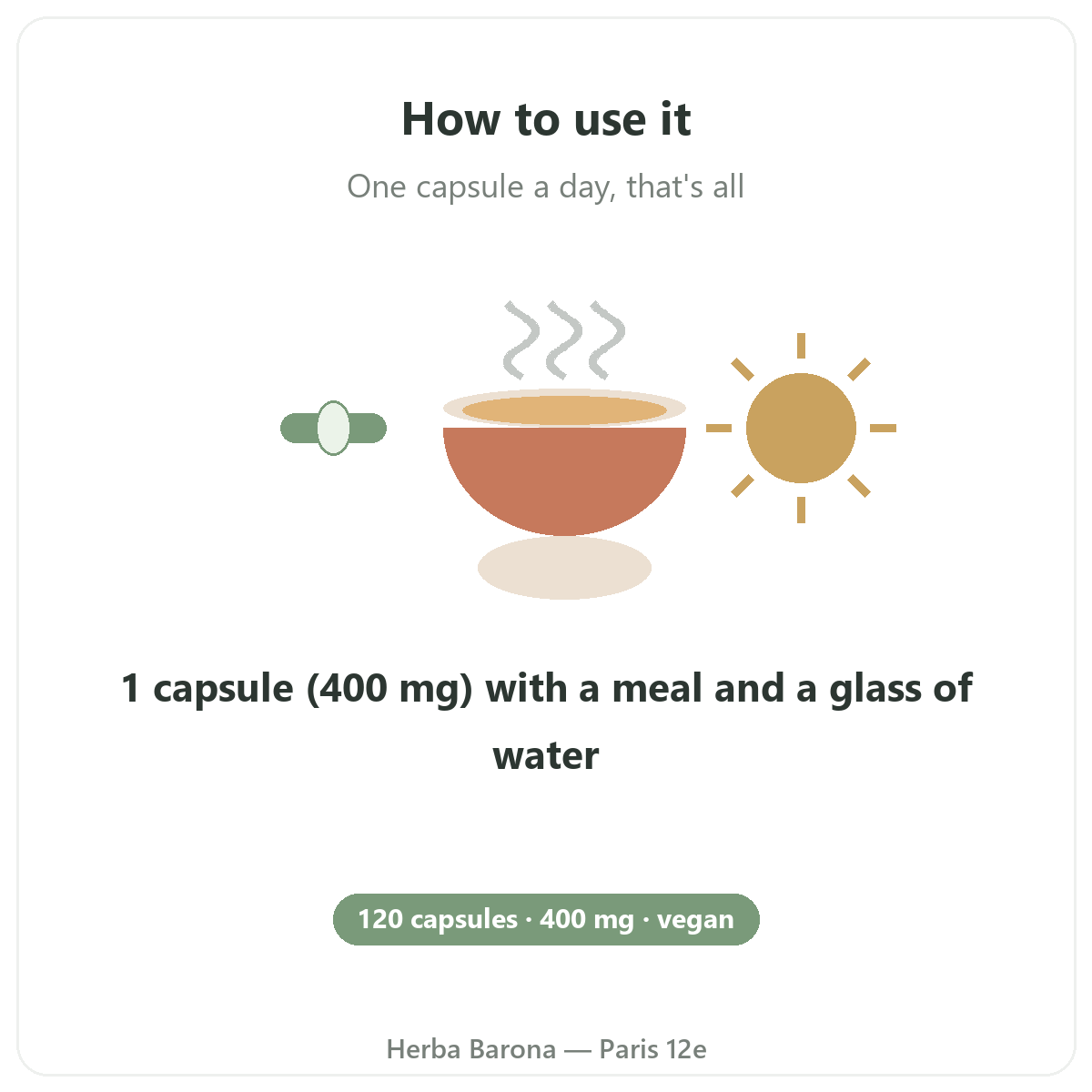
The recommended intake is one capsule a day, that is 400 mg of anhydrous betaine, swallowed with a glass of water during a meal. Taking it with food is the point to remember: it limits the mild digestive discomfort some people report when betaine is taken on an empty stomach.
The usual course runs one to three months and can be repeated. A 120-capsule bottle therefore represents four months of use at one capsule a day, which makes it a long and economical format. No particular time of day is required: lunch or dinner both work, consistency is what matters. In the same spirit within the range, see also the Dynveo taurine powder.
Dynveo, and where to find it in Paris
Dynveo is a French laboratory that built its reputation on a principle that is rare in this sector: saying where every ingredient comes from and how it was obtained. On TMG that means a named, patented ingredient rather than a generic betaine, a precise geographical origin, non-GMO European raw material and a documented extraction process. Every batch is tested for purity, heavy metals and microbiological quality, and the pullulan capsule makes the product suitable for vegetarian and vegan diets.
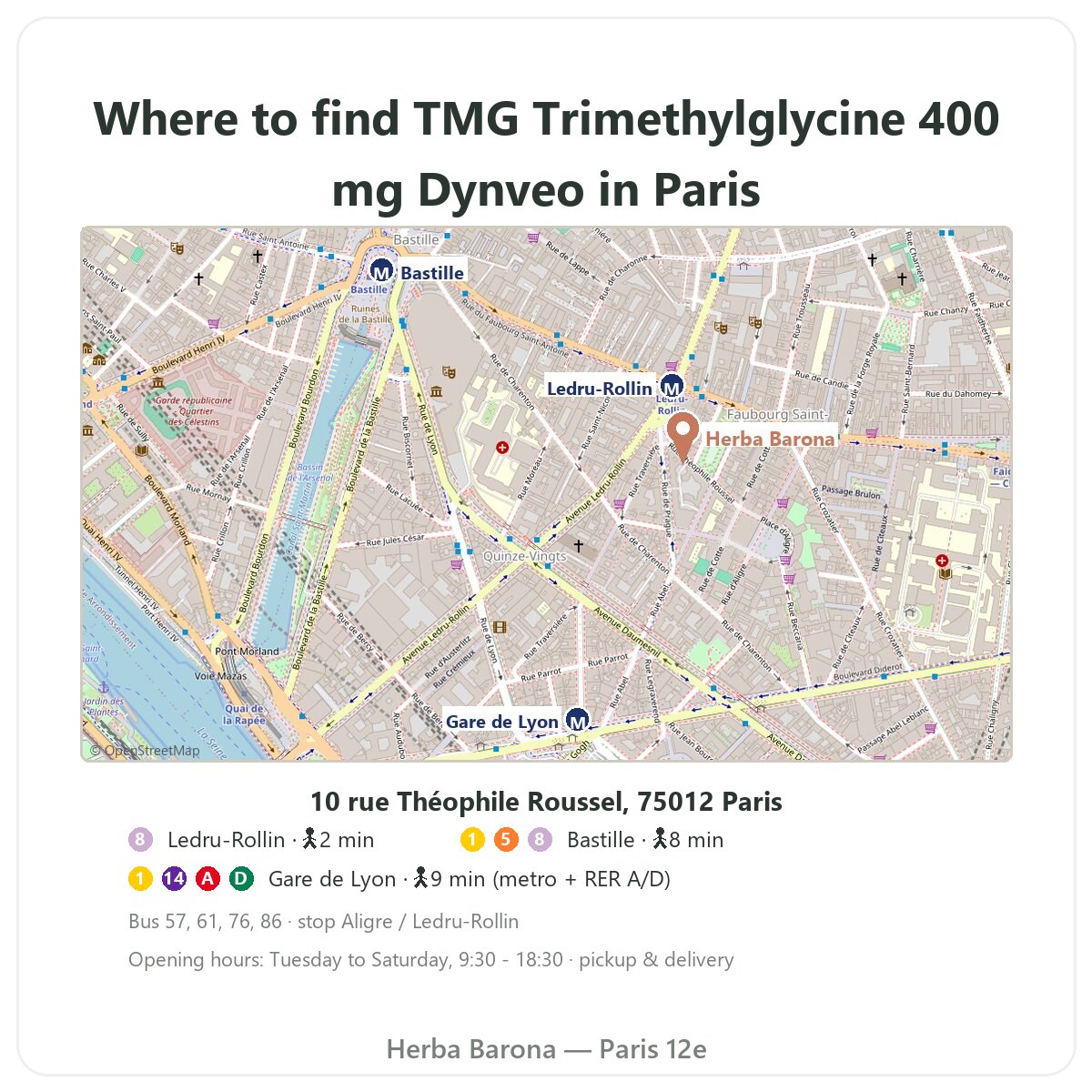
You will find it at Herba Barona, 10 rue Théophile Roussel, Paris 12th — metro Ledru-Rollin (line 8) or Bastille (lines 1, 5, 8). We are open Tuesday to Saturday, 9.30 am to 6.30 pm. Stock shown on the site is live: you can collect in store or order online. Browse the whole Dynveo range.
Frequently asked questions
TMG, betaine, trimethylglycine — are they the same thing?
Yes, three names for one and the same molecule. « TMG » is short for trimethylglycine, and « anhydrous betaine » is the regulatory name, the one printed on the label. Do not confuse it with betaine hydrochloride, which is a different compound used in an entirely different context.
Why is this product only dosed at 400 mg?
Because French regulation caps betaine at 400 mg per day in food supplements. The product is therefore dosed at exactly the legal maximum. Higher dosages found on foreign websites do not comply with that framework.
When should I take TMG?
One capsule a day, during a meal, with a glass of water. Lunch or dinner work equally well: consistency is what counts. Taking it with food is preferable to an empty stomach for digestive comfort.
Is Dynveo TMG available in the Paris shop?
Yes, you will find it at 10 rue Théophile Roussel, Paris 12th (metro Ledru-Rollin, line 8, or Bastille). Stock shown on the site is updated live: collect in store or order online.
Brand: Browse the whole Dynveo range
Food supplement. Not a substitute for a varied, balanced diet and a healthy lifestyle. Do not exceed the recommended daily dose. Keep out of reach of young children. Not recommended for children under 3. Pregnant or breastfeeding women and people under medical treatment should seek the advice of a healthcare professional.